Remember this? It’s been almost three months since the last installment of this ostensibly recurring series. At that pace, it will conclude at the very end of the year 2025. That’s pretty cool, I think, amazing that it times out to almost exactly the end of December. Anyway, hopefully it won’t come to that. It’s already sort of out of date as is. I can’t even imagine how bad that would get by then. So in the name of staving that off, here is the long-awaited second installment in the Movie Files Top 150 Movies of All Time Spectacular:
140– Wild at Heart (David Lynch, 1990)

The lowest of the four Lynch films on this list (almost five, Blue Velvet came closer than just about anything to making the cut), Wild at Heart was always the one I avoided. For some reason I had myself convinced that it didn’t have the nightmarish full-tilt insanity you would find in his more supernatural work, and as such wasn’t what I was looking for in a Lynch film. Upon actually watching it, this notion was quickly proved to be incorrect. Here’s a quick rundown of some of the stuff in Wild at Heart: pivotal Wizard of Oz-themed dream sequences, Nic Cage singing Elvis, Nic Cage’s snakeskin jacket, Nic Cage repeatedly explaining that his snakeskin jacket “is a symbol of (his) individuality, and (his) belief in personal freedom”, Willem Dafoe playing a perverted, psychotic criminal named Bobby Peru, Willem Dafoe’s perverted, psychotic criminal character’s mustache (below). The film controversially won the Palme d’Or at Cannes, in what stands out today the festival’s finest hour.

139– La Dolce Vita (Federico Fellini, 1960)

Fellini takes an excessive amount of time (three hours) and goes to work just whaling on the excesses of celebrity culture and high society. For a movie without much of a plot, the three hours are put to good use, with the film following Marcello Mastroianni’s journalist around Rome as he looks in on one debauched display after another, the highs he gets from the nights melting into unforgiving days in which he’s forced to confront the unfulfilling nature of his lifestyle. It’s a draining experience by design, and one that manages to ring eerily true in its depiction of celebrity six decades on. The film cuts to a fundamental human truth about the predisposition towards artificiality that manages to render it impossibly timely. Also, by the way, a pretty breezy three hours.
138– A Better Tomorrow (John Woo, 1986)

I had an epiphany during A Better Tomorrow, action maestro John Woo’s breakout. Somewhere in the middle of the ludicrously stylized shootouts and cop-criminal interplay, it occurred to me that every movie should simply be this. There’s no reason why any movie should forgo scenes of Chow Yun-Fat lighting a cigarette with a 100 dollar bill while wearing sunglasses, or of Chow Yun-Fat gleefully setting up for a shootout in a restaurant in slo-mo while cantopop music plays, or of Chow Yun-Fat then executing said shootout on his own against like a dozen guys with ridiculously over-the-top violence and fake blood. There has never been a cooler movie, and there never will be. It’s time that the film industries of the globe band together and surrender all of their resources to John Woo, in acknowledgement that he is the only one who understands what cinema really is.
137– 2046 (Wong Kar-Wai, 2004)

I thought there were four Wong films on the list, but as it turns out, there are only three. Happy Together must’ve been another late-stage cut. Anyway, this is the first of three, but you won’t be seeing the other two for a loooooooooong time. 2046 is one of Wong’s more polarizing films, with some put off by the intense undercurrent of emotional desolation. It marks the final chapter of a trilogy, perhaps literal, perhaps simply thematic, that began with 1990’s Days of Being Wild and continued in 2000 with In the Mood for Love (although Wong now claims that his upcoming project, Blossoms Shanghai, will be the third part in the ITMFL/2046 trilogy, so who knows what’s going on anymore). Taking this in the initial context, it’s Wong’s most pessimistic film, tracking the end result of a progression from romantic volatility in Days to romantic repression in ITMFL to, finally, romantic unavailability. The film follows Tony Leung, in what might be the finest performance of the greatest actor to ever live, as a science fiction writer channeling his personal frustrations into his work. It oscillates between Leung’s loosely-gripped real world and his dreamlike visions of the titular year as he reflects on his past mistakes, forming a typical Wong rumination that’s far less grounded in reality than anything else he’s ever made. It’s also the last collaboration between Wong and visionary cinematographer Christopher Doyle, and a fitting send-off to cinema’s greatest creative partnership– the film is beautiful, with Doyle making the most of the futuristic landscapes to create some of his most hypnotically surreal work. For a certain stripe of Wong fans, which I count myself among, this is a straight-up delicacy, like watching the inside of his brain churn out art in real time.
136– The Exorcist (William Friedkin, 1973)
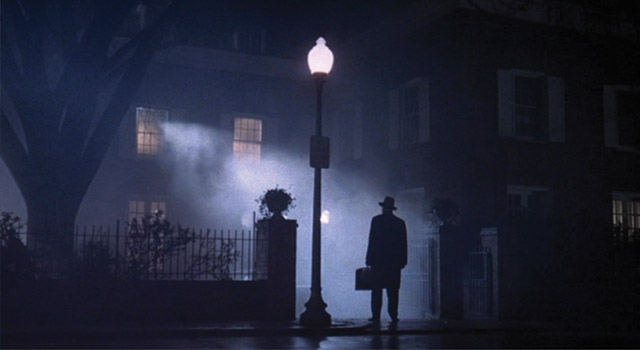
If ever a film has benefitted from becoming a myth, it’s this one. You hear stories as a kid, everyone does, and then those stories ferment in the impressionable, easily terrified minds of children and they take on new lives. And entire generations are raised in fear of demon children and spinning heads and whatever possibly overstated terrors one expects to find in this film, and it becomes The Scariest Movie Of All Time, and that means something. It’s now a rite of passage, a tradition partaken in by budding horror fans across the globe. Everyone sits there in the dark while those strings from your nightmares play over the opening title and it hits you that this is it, this is the be-all-end-all, the big one, the most notorious and frightening film ever made. Even if that doesn’t end up being the case, if there are bigger fish and scarier films, and there are, it doesn’t disappoint. Ever. Not in the slightest.
135– Brewster McCloud (Robert Altman, 1970)
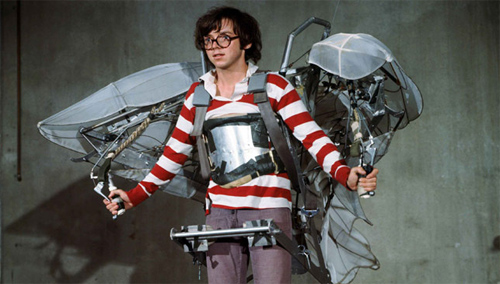
In 1970, legendary filmmaker Robert Altman directed M*A*S*H, an American classic that spawned an even more classic TV show and earned several Oscar nominations. He also made a far, far better film, decidedly not an American classic that did not spawn a spinoff TV show based around Rene Auberjonois’ lunatic ornithologist or any of the other madcap avian activity that punctuates what is, from one perspective, a surrealist hellscape akin to Hitchcock’s The Birds. But what makes Brewster McCloud great is its wholehearted commitment to nonchalantness in the face of total insanity. It’s a fever dream with the explicit aim of being offbeat, rather than intentionally confusing or oppressively dark. It’s the kind of thing that’s hard to explain, that can only be felt, except if you were to show it to someone with the goal of making them feel it they would likely feel that you were insane.
134– Millennium Mambo (Hou Hsiao-hsien, 2001)
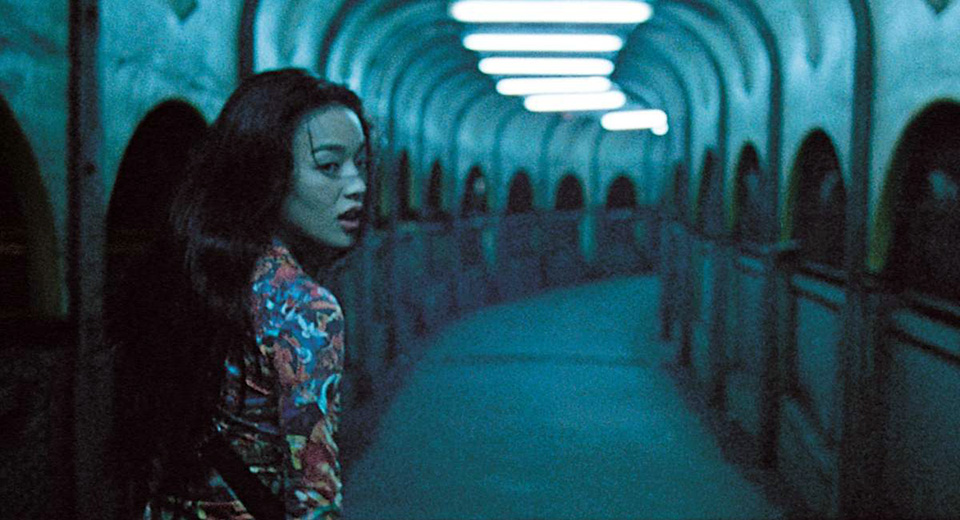
Taiwanese master Hou Hsiao-hsien has had a career-long fixation on retrospection. The idea of being haunted by the past, of living in it, defines his body of work. 2001’s Millennium Mambo, set at the onset of the 21st century, manages to apply this conceit to a contemporary setting with a simple twist: the film is narrated by the main character from ten years in the future as she looks back on her life in the year 2000. It allows Hou to examine a period of time with a rare urgency while not sacrificing the lament and regret that mark the rest of his work. Sleepwalking through life while actively regretting your choices as you make them. One of Hou’s sharpest films, and possibly the one that lingers the most.
133- The Earrings of Madame de… (Max Ophuls, 1953)

Two notes on this underseen masterpiece:
- For a while I had no idea why her last name wasn’t given in the title, and was intentionally blocked out in the movie. Then it hit me that it’s a commentary on her lack of identity and individuality in her married life, because this movie is completely committed to devastation to its very core and also perfect.
- They really did just kinda have duels back then, huh? Like it was just a thing that could happen, and nobody could really do anything about it? Like “oh, did you hear what happened to Jacques? Yeah, dead, duel. Some guy parked his horse in his spot and he just couldn’t let it go.”
Watch this movie!
132- Woman on the Beach (Hong Sang-soo, 2006)
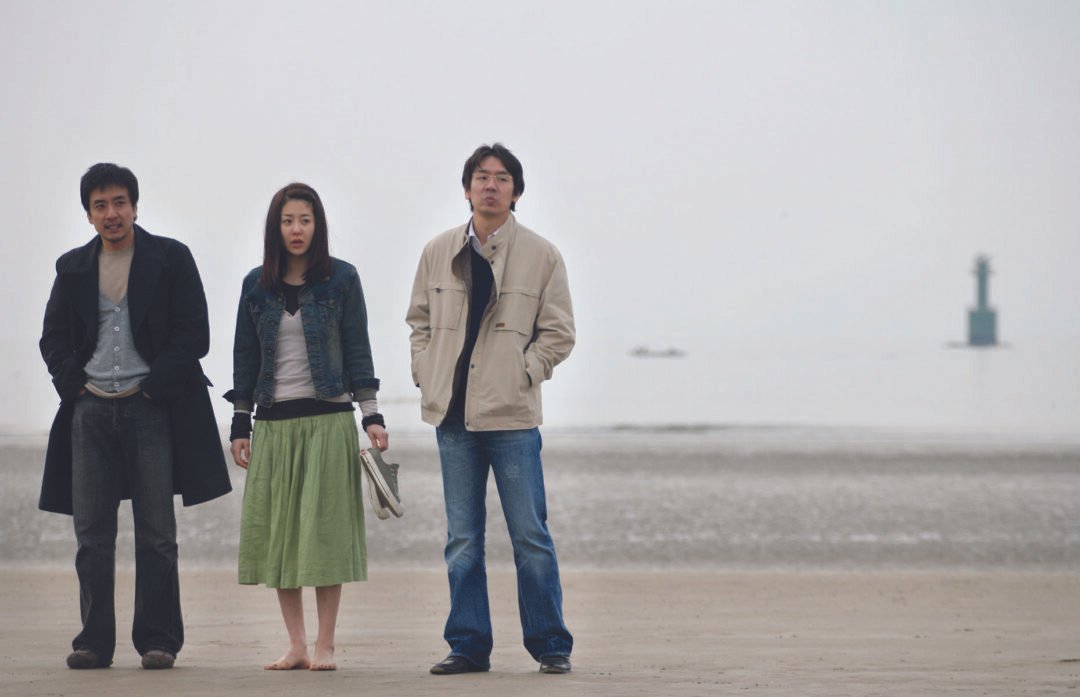
For those unfamiliar with the work of Korean weirdo Hong Sang-soo, here’s a quick, overly deprecating, and unfairly simplistic explanation from a massive fan: all of his movies follow a person or group of people wandering around South Korea being sad and occasionally pausing to consume large quantities of alcohol. They all feature the same style and signature use of the zoom (well, all of them since like 2004, but that’s a digression from my promise of keeping it unfairly simplistic). He reuses the same actors frequently. Almost all of his films feature one character who is a film director. This character will tend to wander around being sad and consuming alcohol with exceptional commitment. They are never portrayed with anything other than total loathing. He is often labeled as simply making the same movie over and over again, which is false, but any attempts on my part to explain the importance of the minute differences from film to film would, perhaps rightly, get me labeled as insane. Woman on the Beach is one of my favorites of his films, both lacerating in the way his work can often be and possessing of the uniquely comforting vibes that only his very best movies manage to communicate. It’s kind of hard to talk about Hong in a vacuum, as so much of his work is best discussed within the context of his other work. But don’t worry. He’ll be here again.
131- If Beale Street Could Talk (Barry Jenkins, 2018)

Jenkins, perhaps the most exciting contemporary American filmmaker, does Baldwin, perhaps the greatest American of the 20th century, and completely kills it. Beale Street inevitably suffered in the public eye due to the unfortunate task of having to follow Moonlight, which is a shame, because while it might not be better per se, it has stayed with me just as vividly if not more so. While Moonlight is a towering masterpiece about a lifetime within an unkind world, Beale Street is content to be a smaller, quieter movie about existing both within that world and away from it. Moonlight is a collection of moments, while this film feels like an extended look at one long one. As a result, we see Jenkins taking more time to breathe, to look around and examine the film’s world, give a sense of place and character that’s completely singular, not necessarily more intimate than Moonlight, but intimate in a different sense. This is a beautiful, compassionate, towering work of art in its own right, one of the very best films of the last few years.

 The Movie Files