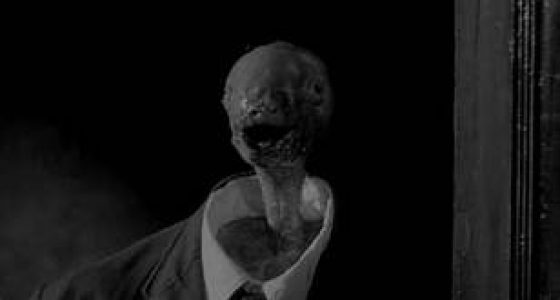
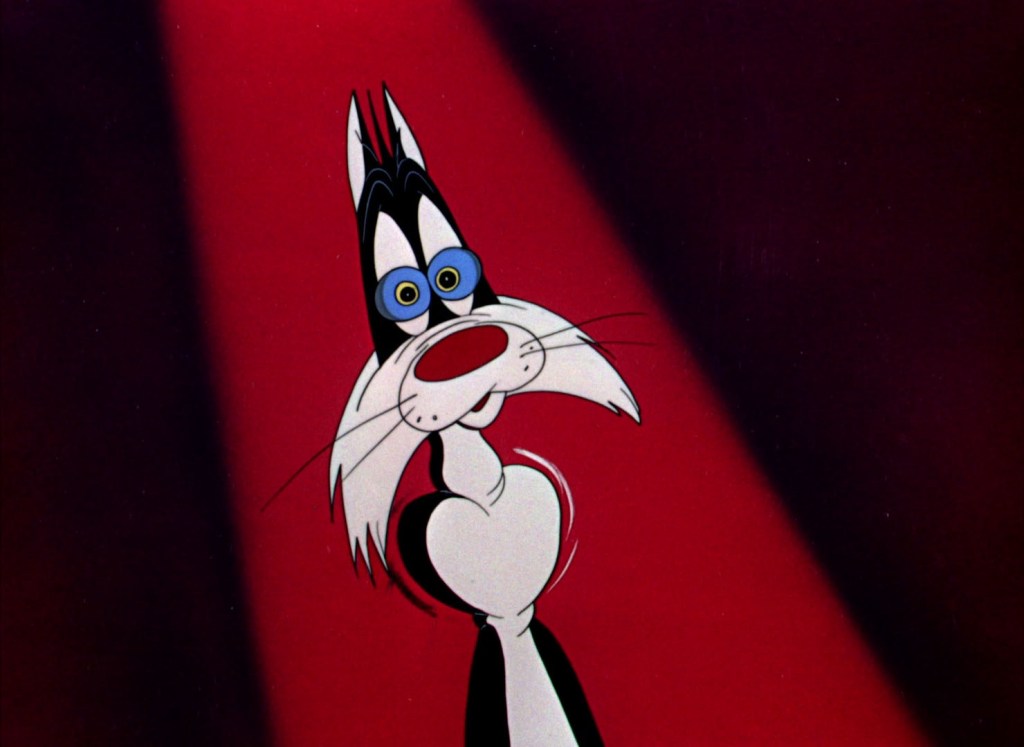
In the annals of Looney Tunes and Merrie Melodies scholarship, the idea of auteur-driven sensibilities in the cartoons tends to peak with one name: Charles M. “Chuck” Jones. The man behind the likes of Duck Amuck and One Froggy Evening cultivated an image as an unimpeachable titan of animation, and among acolytes of the Warner Brothers shorts, as one of the greatest filmmakers of all time.
Yet for all the adulation, there’s a measure of pushback to Jones’s domination over the history of the Looney Tunes that I find compelling. There’s an entire world of other directors who, many feel, get unfairly overlooked in favor of Jones: Frank Tashlin, Bob Clampett, Tex Avery, Friz Freleng, all responsible for some of the most iconic shorts and moments across the Tunes golden age. While Jones’s highs are indisputably tremendous, his lows can get aggravating for not breaking out of a given formula, visually or narratively. And his collaboration with another genius in writer Michael Maltese leads some to believe he may not have even been the most important part of that pairing.
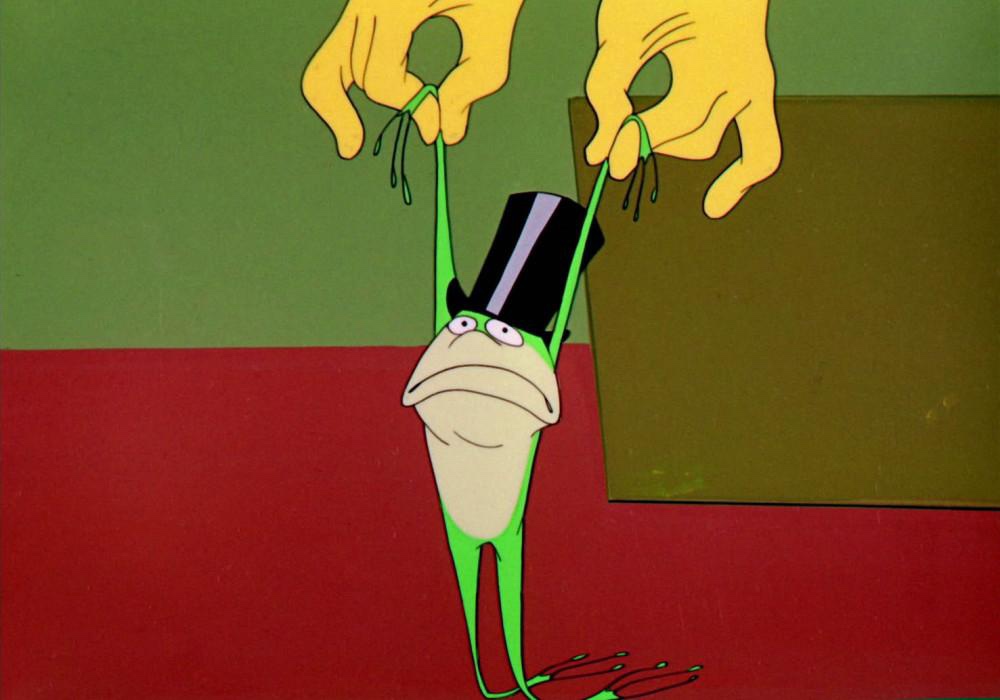
So how does it make sense to look at Jones’s place among this group? It could be reasonably argued that his output is the best of all of them because of how many canonical classics he made. The same point could be argued because of the immense quality of his lesser-known work, such as Scaredy Cat and Haredevil Hare. If you were in the business of determining a top spot for these things, you could even give it to Jones on the basis of One Froggy Evening, the greatest Tunes/Melodies short (and on this point, I feel, there’s no rational argument). But you could just as easily mount cases for Clampett’s visual invention, Tashlin’s handle on comedy, or Freleng’s character work.

This is about Jones, but it’s also about all of those filmmakers, and their place in elevating idle entertainment to high art. I’m here to state my opinion that Jones deserves his acclaim and popular opinion, but I’m also here to make a broader point about the Looney Tunes, which is that they are high art. And perpetuating the idea that Jones is the only source of that is doing a disservice to those other names. Friz Freleng, for example, is constantly lost in the shuffle despite directing one of the most iconic shorts of all time in Baseball Bugs. Ballot Box Bunny provides yet another example of his phenomenal handle on Bugs as a character, taking the already-loaded premise of a Looney Tunes political campaign and elevating it through his ingenious characterization. Yankee Doodle Daffy shows off his ability to feel fresh with the ubiquitous Daffy-Porky relationship, intercut with Sleepy LaGoof-centric visual gags that add another layer of depth to his abilities.

Jones’s Duck Amuck is (rightfully) held up as a high water mark for animation that plays with the lack of visual boundaries of the medium, but its reception again shuts out other deserving cartoons and directors. Bob Clampett built a career on relentlessly compelling visuals packed into every short. The above Porky in Wackyland is his most well-known example, but his conception of a criminal underworld in The Great Piggy Bank Robbery and a living bookstore in Book Revue show that he was reliably producing this. Yet his work on something like The Old Grey Hare is what convinces me the most that he was a total master: less reliant on visuals but still wonderfully animated, while selling the broader character-based strokes with precision.

Jones is seen as a jack of all trades who combined elements of animation, storytelling, and character work to master what the Looney Tunes were all about, but it’s unfair to suggest that these other guys weren’t. Was Chuck Jones the best Looney Tunes director? Who cares. He may well have been, but what I’d posit, after working through some of the work of the other WB luminaries, is that it doesn’t really matter. Chuck Jones, like Friz Freleng, like Frank Tashlin, like Bob Clampett, like Tex Avery, contributed so much to animation, film, and culture as a whole that I find his work pretty unimpeachable. But it’s a crime that the films of the others are less widely seen. The Looney Tunes and Merrie Melodies deserve to be celebrated as the height of American cinematic invention, a true art form unto themselves, and one that manages to further film as an art itself.

 The Movie Files