Every Martin Scorsese movie (that I’ve seen), ranked

I need a few more days to fully come to terms with Midsommar before I write about it, and the thing I’ve been planning to write for a while about the films of Claire Denis isn’t all the way there yet, so in the interim I’m gonna rank some stuff. Namely, (most of) the filmography of one of my absolute favorite filmmakers: Martin Scorsese. When I say most of, I mean I haven’t seen all of his films. The ones that will not be appearing on this list are- Who’s That Knocking at my Door, Boxcar Bertha, Alice Doesn’t Live here Anymore, New York, New York, The Color of Money, The Last Temptation of Christ, The Age of Innocence, Kundun, Bringing Out the Dead, The Aviator, and Silence. Which, now that I write it all out, seems like too much to leave out. But I’ve already written all this, so away we go. Also, only narrative feature films. So no New York Stories, Shine a Light, The Rolling Thunder Revue, The Last Waltz, etc. This list will be updated as I watch more of Scorsese’s films. Anyway for real now let’s go.

Honorable mention- Quiz Show
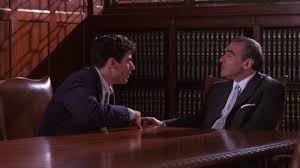
I’d like to use this opportunity as a reminder of two things- Martin Scorsese is in Quiz Show, and Quiz Show rules. I promise the list is about to start.

14- Casino (1995)

Blech. I don’t understand what people love about this movie. I mean, it has its moments. Joe Pesci’s narration cutting out mid-sentence because of his character’s death is straight-up brilliant. The blueberries scene is good. There’s a Saul Bass title sequence. And that’s it. Casino isn’t exactly a Goodfellas retread, but it isn’t not. Everything great about Goodfellas is duller and more mediocre here. The narration is overdone. De Niro is more subdued, less dynamic. Pesci is playing the same character but… less. It’s just less than Goodfellas. It’s also too long and weirdly boring. It’s like a predictive text Scorsese movie, and that’s not a good thing.

13- Hugo (2011)

I gotta be honest- I don’t really remember this one. Which, while it’s true that I saw it when I was very young, probably isn’t that good. What I do remember isn’t spectacular. The feeling I got kinda reminds me now of a 2010s Spielberg movie- not bad by any measure, but really unremarkable (shoutout to Bridge of Spies, however, that movie owns). It gets a pass over Casino because Casino sucks. Hugo, in my memory, is unremarkable at worst. Everything above here is phenomenal, so there’s nowhere else it could’ve been.

12- The King of Comedy (1983)
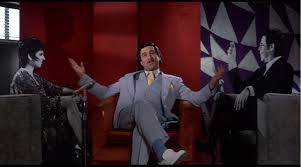
11 out of the 13 films on this list are masterpieces, this one is just the least amazing. It’s De Niro’s best against-type performance, and the story remains extremely relevant. The King of Comedy was what Scorsese settled on when De Niro expressed his desire to do a lighter film, after the two had collaborated on Mean Streets, Taxi Driver, and Raging Bull, among other things. The King of Comedy is as dark as any of them. But much funnier.

11- Cape Fear (1991)
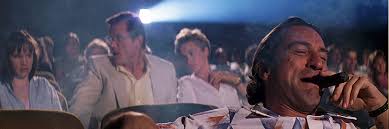
Robert De Niro being one of the greatest actors in the history of film is a common theme on this list (part of why Casino is so bad is because his performance really isn’t that good). But taking on a role made iconic by Robert Mitchum, another of history’s greatest actors and improving on it (I won’t get into that now but there’s an argument to be made either way)? That’s an achievement on an impressive level. De Niro’s tour de force here powers Cape Fear to the status of one of the greatest remakes of a classic film ever, but the film succeeds for other reasons too. Nick Nolte is fantastic, and the neo-noir atmosphere is just so much fun. It’s a perfect follow-up to Goodfellas– scaled down and not trying to top it. And in doing so, it creates something of its own, something fantastic and brilliant.

10- Gangs of New York (2002)
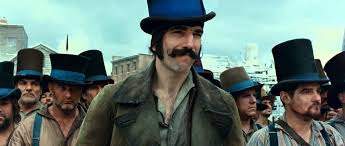
We interrupt this Robert De Niro appreciation-fest to bring you Daniel Day-Lewis. Day-Lewis dominates the film so much as the diabolical gangster Bill “the butcher” Cutting that he received an oscar nomination for Best Lead Actor (it’s totally a supporting role. A big one, but still a supporting one). It’s a career highlight that clearly laid the groundwork for his absolute best role in There Will be Blood. Outside of Day-Lewis, there’s still a lot in this one. Gangs is an epic film that was the start of Scorsese’s collaboration with Leonardo DiCaprio. It also features turns from Cameron Diaz, John C. Reilly, Liam Neeson, and Brendan Gleeson, all of whom are various degrees of great. It’s visually brilliant, which is even more impressive when you find out that there’s exactly one piece of CGI: the elephant (which they wanted to do practically!). At its worst, Gangs of New York drags a little. At its best, it’s a masterwork, an odyssey of redemption and honor that serves as maybe the most integral part of Scorsese’s chronicles of New York besides Taxi Driver. Scorsese is the best New York filmmaker, by the way. Sorry Woody Allen. Also, Gangs of New York is one of the most nominated films in oscar history to not receive a single award (It had 10 nods. True Grit in 2010 and American Hustle in 2013 also had 10, while the record is shared by The Turning Point in 1977 and The Color Purple in 1985).

9- Shutter Island (2010)

Image result for shutter island

Mysterious, eerie, and dark as hell, this period stunner wouldn’t work as well as it does in the hands of a lesser filmmaker. While Scorsese’s films aren’t typically this genre-specific, he kills it with this one. Gorgeously shot by Tarantino regular Robert Richardson, Shutter Island is entirely atmospheric. And WOW what an atmosphere. I first saw this one knowing nothing about it except that it was directed by Scorsese and it had a great twist (it does). I wasn’t expecting the masterpiece of a slow burn thriller I proceeded to experience. It was after watching this that I first realized that DiCaprio is one of the greatest actors of all time (this was before having seen The Wolf of Wall Street and The Revenant). Mark Ruffalo is great as usual, as is Ben Kingsley. And MAX VON SYDOW is in it. It’s a perfect movie. Also, it’s almost a shame to mention this because it takes away from what a gloriously brilliant achievement the film is, but the twist is all-time. Up there with Fight Club and The Sixth Sense.

8- Mean Streets (1973)
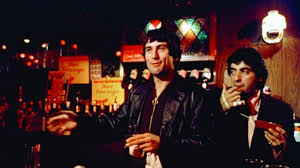
Eighth place feels incredibly low for the movie that, in one scene, invented both movies and music. Seriously, watch it.

Oh, and also it was Martin Scorsese’s first commercial success and it launched the career of Robert De Niro. Richie Aprile from The Sopranos is in it. I’m not sure I have to say any more, but I’m gonna. It features a brilliant opening scene (below), one of Harvey Keitel’s greatest performance (although he is outdone by De Niro to the point that Scorsese replaced Keitel as his leading man in the next movie he did). It features brilliant examinations of some of Scorsese’s most important themes, such as masculinity and Catholic guilt. And it’s seventh on this list. That should tell you something.

7- After Hours (1985)
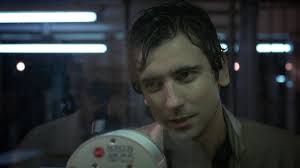
Is this the most underrated film of all time? Considering it’s directed by a legendary auteur and is solidly well-known, probably not, but it’s up there simply because it’s SO GOOD. The true essence of a midnight movie, this one works best when watched at night (In my experience, Eraserhead and Kill Bill are other great midnight movies, if you’re looking for recommendations). The brilliance of After Hours is that it’s absolutely nuts. Guy meets girl, guy goes to girl’s apartment to buy magnet, guy is wrongfully blamed for girl’s death, guy spends the night on the run, guy gets built into a sculpture that is then stolen. Not exactly a classic story. Directed by Scorsese, but you would never know it. He’s having fun here- you can see it in the camera angles (think the falling keys), in the general absurdity of the comedy, and in the fact that it’s focused on entertaining before making a broad statement about human nature. In this case, that isn’t a problem. There’s truly nothing like it.

6- The Wolf of Wall Street (2013)
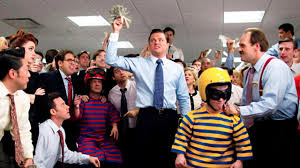
This list has been going through masterpieces since the 11 spot, but this is where it gets real. The Wolf of Wall Street is many things, which is only fitting because it’s a film that deals entirely in excess. The sex, the drugs, the length, the language (record for uses of “f**k” in a movie that isn’t about swearing), they all serve one purpose: to further the theme of excess. Jordan Belfort’s lifestyle isn’t presented this way by Scorsese just because, it’s to tell the story accurately. The story is one of American greed in its purest form. How quickly greed takes over and the kind of things it does to people. It’s like Goodfellas, if the violence were traded in for financial scams. Also, DiCaprio has never been as good and Jonah Hill is revelatory. The Wolf of Wall Street is a glorious, phenomenal sensory overload of a movie. One of the greatest films of the 2010s. And it only gets better from here.

5- The Irishman (2019)

Scorsese’s latest is clearly one of his masterpieces. It earns every second of its titanic length with brilliant performances across the board (Pacino is a god), masterful storytelling, and a brilliant commentary on human mortality. It’s a late-career work in every sense, but that doesn’t mean he’s slowed down. The Irishman could probably be ranked below Wolf of Wall Street, but it could also be one or even two spots higher. It’s a breathtaking feat of cinematic excellence, the kind of thing that Scorsese does far more often than he has any right to. Reviewed in greater depth here.

4- The Departed (2006)
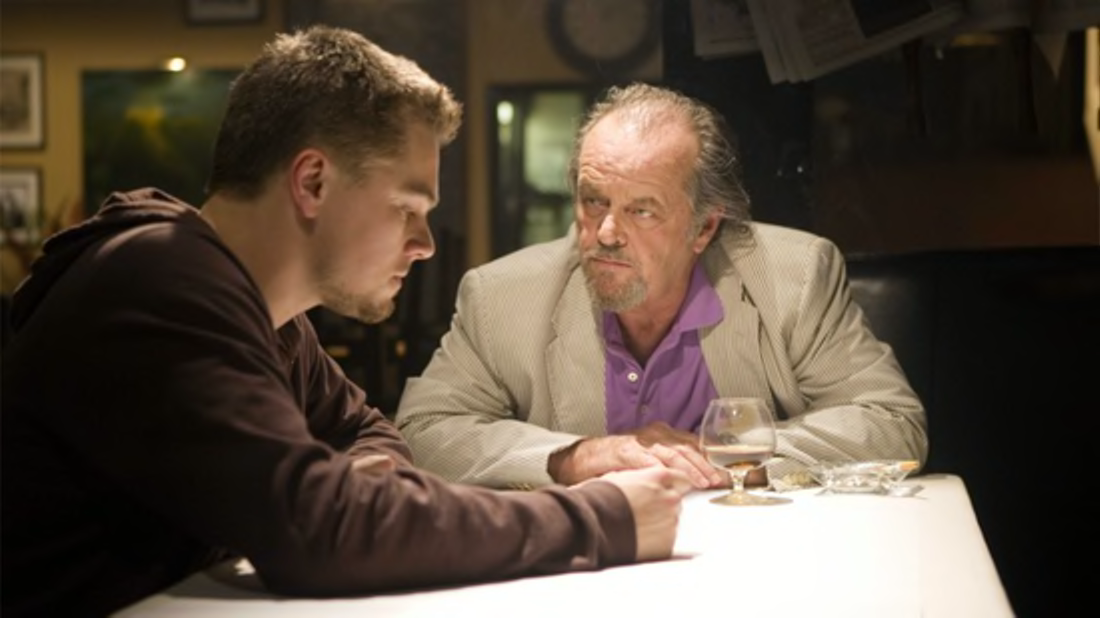
*Insert depahted joke*. Now that that’s out of the way, let’s talk about this, my second favorite Scorsese movie. The plot is so genius, complex, and Scorsese-an that it’s crazy that Scorsese didn’t think of it (for those uninitiated, it’s a remake of Infernal Affairs, a 2002 Hong Kong film). With the combination of director and plot, the least The Departed could’ve been was only slightly great. Instead, it’s an all timer. Matt Damon and Leonardo DiCaprio are equally brilliant as the gangster inside the cops and the cop inside the mob, respectively. Mark Wahlberg is awesome. For real, the only other place the guy is this good is Boogie Nights (another of my favorite films. Huh.), and you could argue that he should’ve won the oscar for supporting actor over Alan Arkin for Little Miss Sunshine (but damn is Arkin great in that). But the true best performance goes to the one and only Jack Nicholson (this has become a rundown of the greatest actors ever. All that’s missing is Brando). Nicholson is so unbelievably entertaining, over the top, and just plain great. I’ve seen it said that he tanks the movie and isn’t good. To that I simply say no. It’s one of the best performances of his career, and I understand the gravity of that statement. Also, in the last like 20 minutes it devolves into a Shakespearean tragedy. Huge plus.

3- Raging Bull (1980)
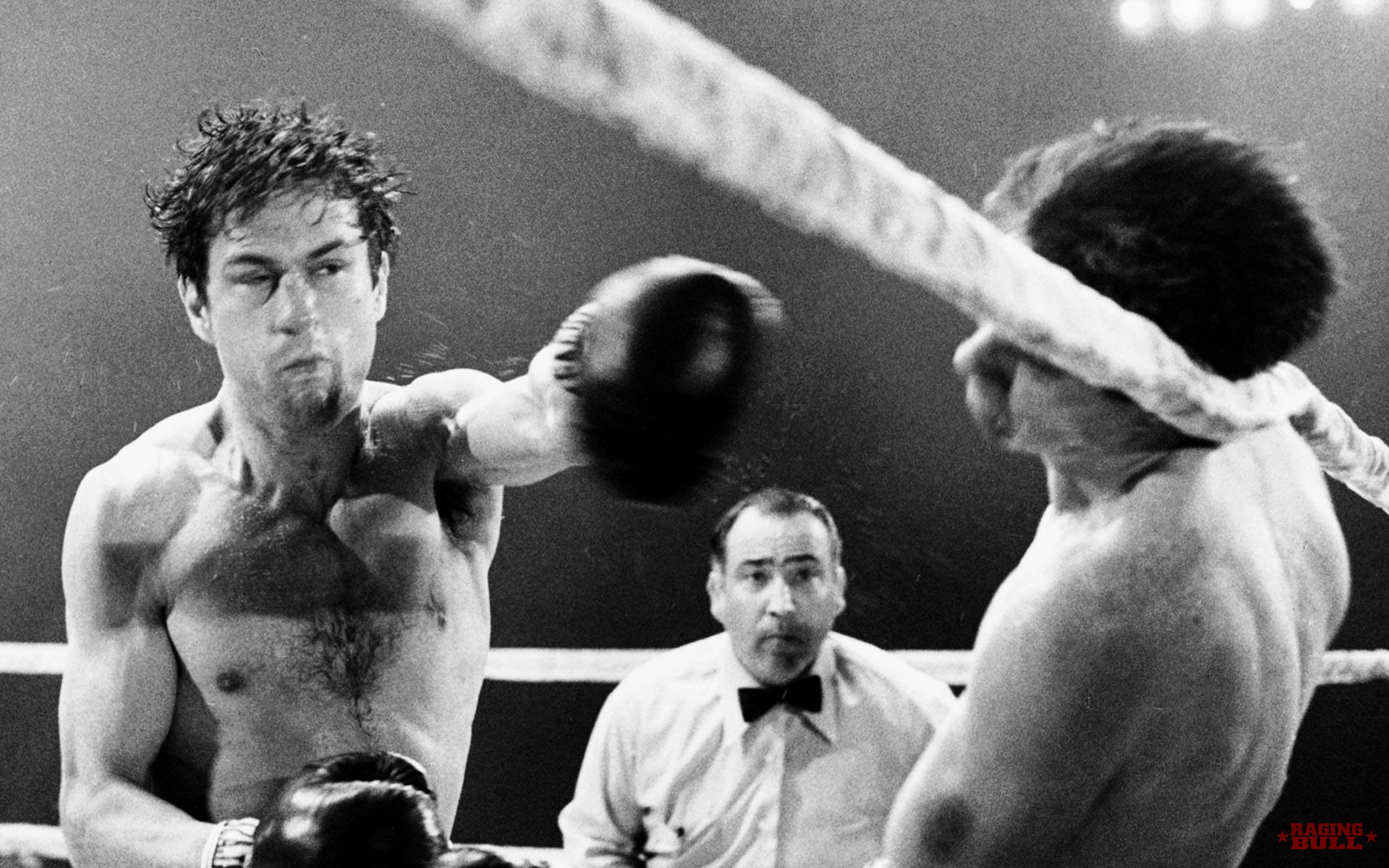
The greatest sports movie of all time. The (tied) greatest ever De Niro performance (I can never decide between this and Taxi Driver so I’ll call it a tie). The greatest study of self ruination that Scorsese ever accomplished (the two films above this are studies of ruination by other things). Raging Bull‘s one-two punch (sorry) of De Niro and technical wizardry (commonly referred to as the best edited film of all time. In my opinion, that’s probably correct, but Thelma Schoonmaker’s best work is the Sunday, May 11th sequence in Goodfellas. Rant over) cements it as a legendary work. It’s a boxing movie on multiple levels- sure, it deals with Jake LaMotta’s career inside the ring, but it’s also the story of his fight outside of it. And the technical genius of all involved elevate it into a masterpiece (in a way quite similar to the 2009 Claire Denis film White Material, which I will be discussing in a later post. Yeah I’m plugging my own stuff, so what?).

2- Taxi Driver (1976)

A visionary exploration of madness unlike any other. There’s so much going on within Taxi Driver: the film is simultaneously an indictment of the Vietnam war, the vigilante mindset, politics, and child prostitution. And yet it’s an indictment of none of these things. It presents them not positively or negatively, they are. Is Travis Bickle a hero, as he believes himself to be, or is he a violent psychopath? Is he actually lauded for his crimes, or is he imagining this reality as he dies? The film not only refuses to answer these questions, but it doesn’t provide a way to feel about it. It’s a film so important to cinematic history that anything else would feel like piling on. Peter Boyle, who plays “Wizard” in this, is the monster from Young Frankenstein.

1- Goodfellas (1990)
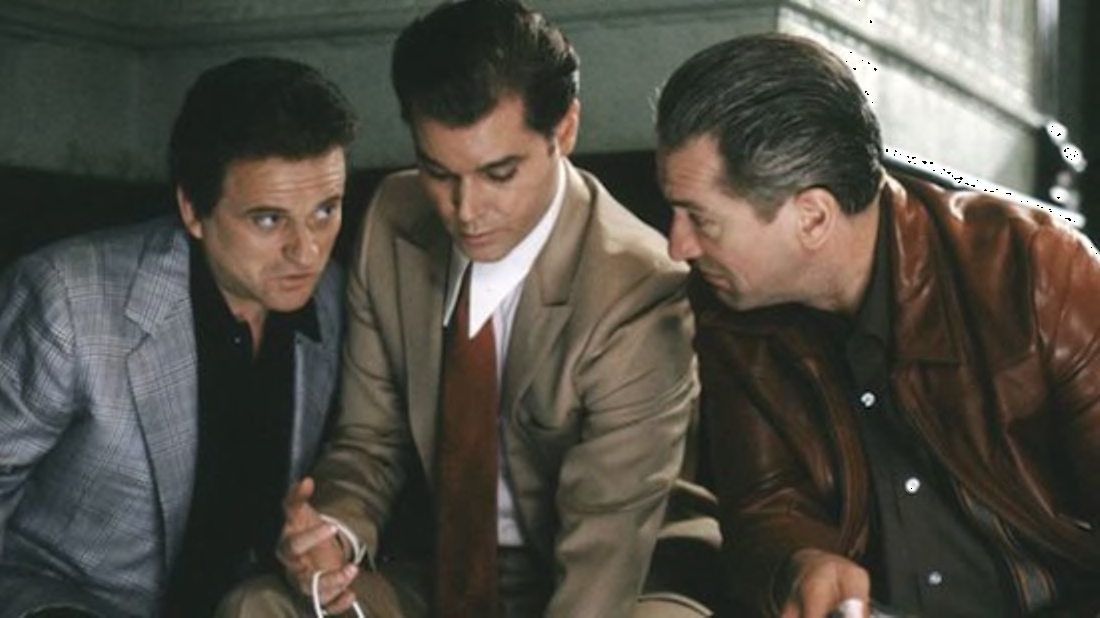
Full disclosure: this is my absolute single favorite film of all time. Nothing else comes close. So it was impossible for me to rank the films of Martin Scorsese with total objectivity. Even so, I have to feel that this would come in first if I could. It’s perfect in every way: Schoonmaker’s aforementioned editing is at its peak, Scorsese’s direction is as good as it’s ever been, the acting all around is brilliant. Liotta, Pesci, Bracco, and Sorvino turn in career bests and De Niro is amazing too. His facial acting in the bar when he decides to whack Morrie is completely incredible. That scene is a microcosm of why the film is so great- it’s the epitome of Scorsese’s cinematic sensibilities. That acting combined with the brilliance of the Sunshine of your Love needle drop and the use of slo-mo is a perfect example of the singular style that propels it into the annals of all time greatness. I could go on listing moments for days- Billy Batts’ death, the tracking shot through the Copacabana, the May 11th sequence, the opening scene, the third wall break, the Layla montage- but the point is already made. The film is perfect, and it’s the summation of Scorsese’s career and the highest peak he’s ever reached. And now we wait for The Irishman.

Alright, I’m gonna talk about Enemy for a little while

Image result for enemy 2013

Before I begin, let me be clear that this is not just going to contain spoilers, but it’s really gonna be about spoilers. If you haven’t seen Enemy, go watch it without knowing anything about it. It’s on Netflix. Go now.

Denis Villeneuve’s 2013 film Enemy is peculiar, to say the least. In it, Jake Gyllenhaal (in maybe his best performance, second only to Nightcrawler) plays a burnt-out history professor who discovers his exact double in the background of a movie. He meets up with said double (also Gyllenhaal), an aspiring actor, who is a jackass who proceeds to blackmail teacher Gyllenhaal into swapping places so actor Gyllenhaal can have sex with teacher Gyllenhaal’s girlfriend. Actor Gyllenhaal and teacher Gyllenhaal’s girlfriend die in a car crash and teacher Gyllenhaal assumes actor Gyllenhaal’s identity. It’s a bizarre plot, and it creates a totally unique atmosphere of unease and confusion. No explanation is given as to any confusing plot elements, and it wraps up as an incredibly well-done thriller with a lot to think about.

Oh, I forgot one thing: Enemy concludes with teacher Gyllenhaal, having taken on actor Gyllenhaal’s identity, asks his wife (Sarah Gadon, in an unreal performance), if they have anything going on that night, because he needs to go out to his weird spider sex club thing (more on that later). She doesn’t reply, Gyllenhaal goes to check on her and instead finds A GIANT GODDAMN TARANTULA in her place. Fin.

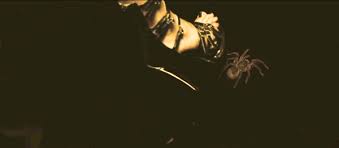
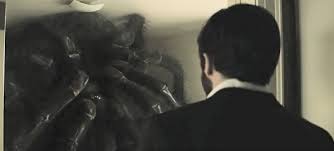
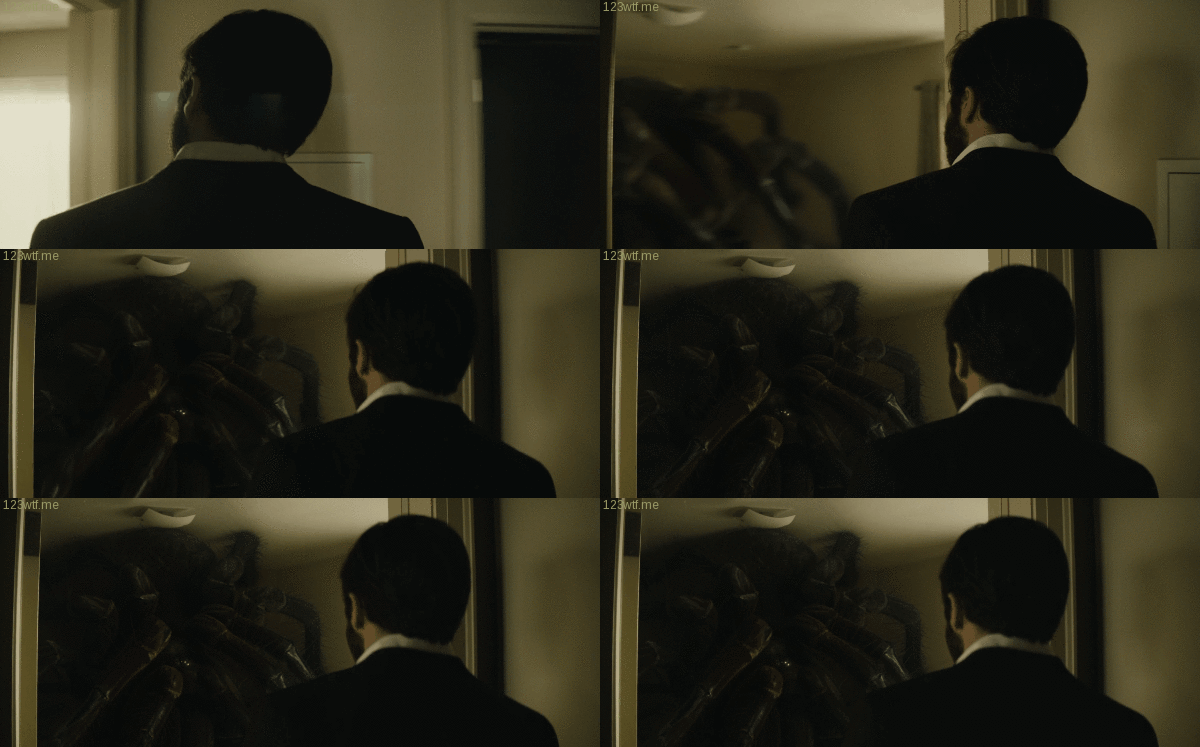
So what I will attempt to discern, in the following series of inane ramblings, is the answer to this simple question: what the actual hell does it all mean? First, some background on the spider: spiders are something of a theme throughout Enemy. The opening scene takes place in a strange place (the aforementioned spider sex club, which I promise I will address in greater detail) in which there is a spider shown (as well as Jake Gyllenhaal). There is a very notable scene in the middle of the film in which a giant spider-like alien thing is shown atop the city of Toronto, the setting of the film (see image below). And in the climactic car crash, the camera slowly zooms towards the windshield, which is prominently cracked in the shape of a spider web. So there is some precedent for the spider at the end, it just isn’t clear what the spiders all represent. Or is it?

Obviously it isn’t. It’s a total nightmare to try to figure out what it all means, but I think I’ve landed on something. There are countless interpretations of the ending, and they all depend on where you stand on one important issue in the film- if teacher Gyllenhaal, named Adam Bell, and actor Gyllenhaal, named Anthony Claire, are two sides of the same person. Adam is the character that is introduced first. His life doesn’t seem to be going too great, he’s shown to be living in a small apartment and working a repetitive job. His apartment is dimly lit and illuminated by a tan-yellowish hue (this is, in fact, important). Adam is timid, and presented as something of a nice guy. Anthony, by contrast, is a brash jerk who spends his time lecturing his wife on the importance of keeping blueberries in the house (somehow, also important) and driving around on a motorcycle. His apartment is shown to be more spacious and, notably, better lit. The lighting of Adam’s apartment is the shade in which most of the movie is shot, except for the scenes in Anthony’s apartment- with a few exceptions. I’ll get back to that, as the main concern right now is if Adam and Anthony are the same person. In my opinion, they are, and here’s why.

Personality-wise, Adam and Anthony are polar opposites, yet physically they are the exact same, down to identically placed scars and, oddly, the same exact style of beard. One could make the argument that they are separated twins, but two things disprove this. The first is the beard- it’s the exact same. That would be a huge coincidence if they were just twins. The second is the better evidence. Towards the end of Enemy, Anthony goes to meet with his mother (Isabella Rossellini) who adamantly debunks the idea that he had a twin or even a brother. This conversation also yields a few more interesting things: Anthony has historically had trouble committing to women (SUPER important), that she’s proud of his good job, and that she disapproves of his “dreams of becoming a third rate actor”. So obviously, being an actor is not his primary job. But being a professor could be. This is pretty good evidence that they’re two sides of the same person, but there is a lot more. In every scene in which they are seen together, there are no other characters present. The only exception is when Adam is driving away from their first actual meeting and Anthony drives past him on his motorcycle… with a helmet on. Additionally, in the scene where Anthony’s wife Helen goes to see Adam at his work, Anthony picks up her call immediately after Adam disappears from view. Finally, after Adam and Anthony switch places, Helen asks Adam the question “How was school?”. Now this is a tricky one, as there is a case to be made that Helen realized that they had switched and, not caring, targeted the question at Adam. While this makes sense, there is also a different (and super long) explanation.

My theory as to what happens in the movie (up to the spider part) goes like this: Adam is the real person. It’s Anthony’s life that’s real, and Anthony is his actual name, but Adam is his actual conscience. He teaches history at a local college and on the side aspires to be an actor. He cheats on his wife, runs spider sex clubs (soon, I promise) and is just generally a bad person. His wife gets pregnant and, whether it’s out of a fear of commitment or a realization that he’s probably unfit to be a father, creates an alter-ego (Adam). In Adam’s life, he cheats on his wife with another woman and totally rejects his career as an actor (hence Adam saying that he doesn’t really like movies). It is stated that he has been absent from his talent agency for six months, the same amount of time Helen has been pregnant. His actual life, as Anthony, disgusts his Adam persona, who attempts to reject everything about Anthony (he doesn’t like blueberries, which Anthony is shown to love, as well as the movie thing). Helen, concerned, goes to see him at work and is shaken up, not because Adam looks exactly like Anthony, but because Anthony doesn’t recognize her. Eventually, Adam realizes that he can’t run from his life any more and slips back into his actual role. The car crash represents the killing of one split personality (the Anthony half) as well as the end of his relationships with other women, as his girlfriend is also killed in the crash. When Adam returns home, an important thing happens. Anthony’s apartment takes on the lighting that had been previously confined to Adam’s apartment for the duration of the movie. Why does this happen? Look at Anthony’s fear of commitment. While he’s Adam, his apartment takes on that shade to represent the sleaziness of what he’s doing (in abandoning his wife and cheating on her). Anthony’s apartment is more appealing, as it’s where he’s being faithful to his wife and doing what he should be. So why does the apartment take on this quality? He intends to return to his old ways. And this is where the spider sex club comes into play.

An unfortunate disclaimer- I cannot provide any guesses as to what exactly goes on in what I’m referring to as the spider sex club, but it feels like a safe guess to say that it involves the nouns in the title. What he do know is that Anthony runs this club. He is seen there during its only actual appearance in the opening scene, and his landlord makes a reference to needing to get back because he couldn’t stop thinking about it. The landlord also mentions that the key has been thrown out. In the final scene, Anthony opens a package that contains a new key. He promptly decides to reopen the club that night, leaving Helen alone (“I have to go out”). The club represents his failure to stay faithful to Helen, as right after he decides to reopen it, she turns into a giant spider. Or at least, I originally thought she turned into a giant spider. In my first interpretation of the ending of the film, the spider represents his fear of commitment. He sighs when confronted with it because he knows that, now that he has returned to his life, he has to face this fear. This isn’t far off from what I believe now, but it also differs in two major ways. The way I see it now, she doesn’t turn into the spider, she is eaten by it. And the spider doesn’t represent Anthony’s fear of commitment, it represents Anthony. So to summarize- the spider, representing Anthony, eats Helen following Anthony’s decision to return to his life as an underground club operator behind her back. This represents Anthony sacrificing Helen to pursue his own interests, and also his reluctance to commit to her. Anthony sighs after seeing the spider, because he realizes that he has to face what it represents: himself. He comes face to face with himself. Sound familiar?

In conclusion, Enemy is nuts. If you’ve seen it, I hope this makes it a bit clearer (even though it almost definitely won’t). If you haven’t, come on. My instructions were so clear. Watch it anyway, because it rules. Join me next week, or whenever I’ve gained the required energy (probably never), when I tackle Mulholland Drive. Also Jake Gyllenhaal is one of the greatest actors of his generation. Now to end this post the only way it could possibly end:

The 25 greatest shots in cinematic history

I should begin this list with a disclaimer: it isn’t really meant to be taken seriously. At some point the ranking becomes pointless, as some shots aren’t deceptively better than others, or it’s too hard to choose. This was a fool’s errand, and I don’t necessarily stand by my ranking. Except number one, that one is absolutely and indisputably correct.

There are a lot of factors at play here- how well they fit in with their individual films is a big one, as is visual stunning-ness (I think that’s a thing). However, because of the former, I didn’t feel as though I should incorporate shots from films I haven’t seen. So before the list begins, a quick look at a few absolutely stunning shots from films I haven’t seen yet:

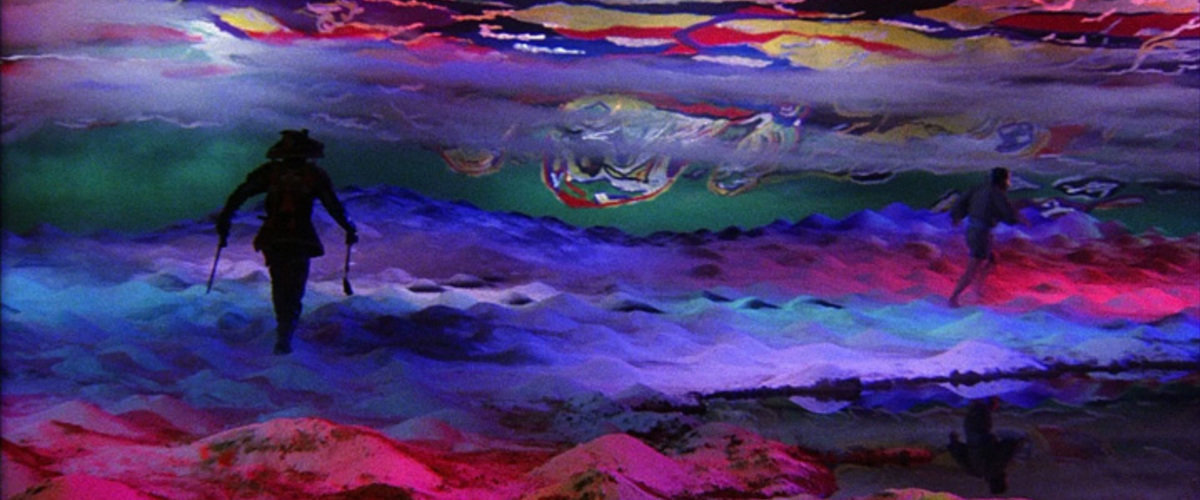
Kagemusha, 1980, Akira Kurosawa
Barry Lyndon, 1975, Stanley Kubrick
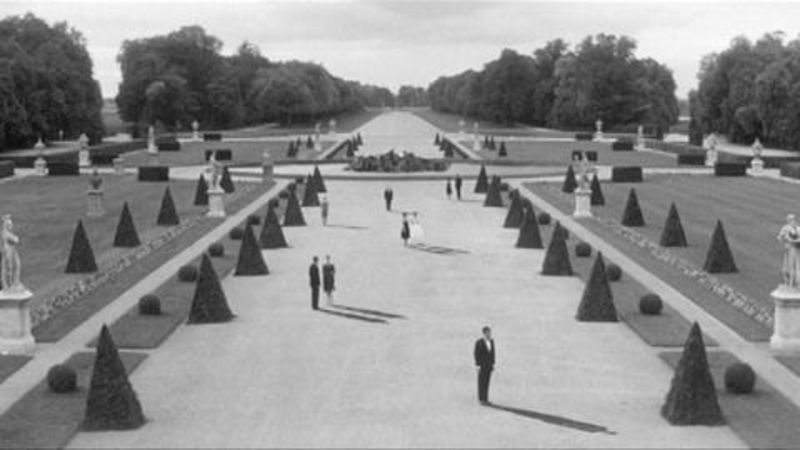
Last Year at Marienbad, 1961, Alain Resnais
Blade Runner 2049, Denis Villenueve, 2017

And now for the list (and again, this is a largely arbitrary ranking):

25- The Grand Budapest Hotel (2014, Wes Anderson)

Wes Anderson’s magnum opus possesses his trademark visual perfectionism in intense and overpowering excess. The use of color in the film is one of its more notable qualities, and this is on display in the above shot.

24- L.A. Confidential (1997, Curtis Hanson)

Curtis Hanson’s brilliant look at corruption in the 1950s LAPD, adapted from the James Ellroy novel of the same name, isn’t known for its visuals- the film is one of the all time greats (and very high up on my list of all-time favorites) due to the masterful character study at its center. And the culmination of the arc of one said character, Guy Pearce’s Ed Exley, takes place immediately preceding this shot. The moment that it’s associated with doesn’t entirely get this shot on the list- it’s pretty fantastic visually, too.

23- There Will be Blood (2007, Paul Thomas Anderson)

There Will be Blood is a dark movie (massive understatement). In this shot, the idyllic blue sky is violently interrupted by a manifestation of Daniel Plainview’s thirst for oil- an explosion of darkness, flame, and smoke that disrupts its peaceful surroundings. It’s hard to think of a better metaphor for There Will be Blood’s central conflict.

22- Kill Bill vol. 1 (2003, Quentin Tarantino)

I just want it to be known that the House of Blue Leaves scene at the climax of Kill Bill’s first half is an awesome, perfect scene in which stuff like this happens every so often and also hundreds of people lose limbs and lives in swordfights. Nuts.

21- Blue Velvet (1986, David Lynch)


I couldn’t explain the significance of the central metaphor of Blue Velvet in a paragraph that’s supposed to be this short, so suffice it to say that if you haven’t seen this film, this image isn’t as haunting to you. If you have, you know why it’s up this high. If you haven’t, you probably shouldn’t watch it unless you can handle some upsetting stuff.

20- Reservoir Dogs (1992, Quentin Tarantino)

Reservoir Dogs’ opening credits sequence is pure style- the slo-mo, the music, the close-ups. The first shot of said sequence is iconic, and it lands on this list as both a perfect intro to the film and to Tarantino’s career.

19- Seven (1995, David Fincher)

By now you know the finale of Seven- even if you haven’t seen it, you probably know what happens after this. But if you have seen it, it holds more weight- it’s the first shot that isn’t drenched in the perennial rain, smog, and despair of the unnamed city in which the majority of the film takes place. This is a reprieve from that, although it’s soon revealed that just as much sinister stuff can happen in brightness as in darkness.

18- Sunset Boulevard (1950, Billy Wilder)

Man, the guts it takes to open your film with narration from the main character’s dead body floating in a swimming pool. Sunset Boulevard was directed by legendary auteur and Super Gutsy Filmmaking Guy™ Billy Wilder, who completely redefined the American cinema for decades. Shots like this go a long way towards explaining why.

17- A Clockwork Orange (1971, Stanley Kubrick)

By FAR the most represented filmmaker on this list is Stanley Kubrick, and his A Clockwork Orange (based on an equally astounding book by Anthony Burgess) is one of four films to be represented twice (one of those was also directed by Kubrick). A Clockwork Orange’s opening scene ranks among the greatest ever- the slow pan back accompanied by Malcolm McDowell’s menacing narration and the chilling synth score form something legendary, indelible, and terrifying.

16- Moonlight (2016, Barry Jenkins)

This list’s most recent film, and a deserving one- Moonlight is, in my opinion, the greatest film of the 21st century, and one of the greatest of all time. Jenkins, between this and last year’s If Beale Street Could Talk (robbed of a best picture nod), has cemented himself as maybe the best filmmaker in the world, mainly due to his gift at creating brilliant and beautiful imagery, much like one of his greatest influences…

15- Fallen Angels (1995, Wong Kar-Wai)

…Wong Kar-Wai, who rules. There’s no way to differentiate between any given artistically brilliant frame in Wong’s masterpiece, In the Mood For Love, so I opted for this shot from the ending scene of Fallen Angels, a movie drenched head-to-toe in the auteur’s legendary and intense style, yet in possession of the same inner longing as ITMFL. I almost prefer Fallen Angels (well, it’s obviously not better, but I almost like it better), if only because of that final scene, which is one of the all time greats. The collaboration between Kar-Wai and longtime DP Christopher Doyle has rarely been better. The neon green of the tunnel that has been seen many times before in the film finally reaches its conclusion, its final purpose, before the camera pans upwards to reveal a glimpse of sunlight, a first in a movie completely bathed in neon and darkness.

14- Vertigo (1958, Alfred Hitchcock)

There isn’t much more to be said about Vertigo, the king of the most recent Sight and Sound poll. There is no misplaced step, no frame unnecessary. The scene where Madeline jumps into the water is incredible, because it displays this shot, illustrating the beauty of San Fransisco and the surrounding scenery before immediately depicting an attempted suicide. Alfred Hitchcock, ladies and gentlemen.

13- Apocalypse Now (1979, Francis Ford Coppola)

Apocalypse Now’s vibrant, surreal, and dangerous atmosphere is its most important quality, as the film’s crux is the slow descent of everything in its universe into madness, into hell on earth. The visuals of Coppola and cinematographer Vittorio Storaro go a long way towards turning the film into what it as become, as it has two spots on this list.

12- Fight Club (1999, David Fincher)

David Fincher’s dark visual style is incredibly effective in films such as Seven and The Social Network, but it’s at its apex in Fight Club. The best shot in the film is the last, as the film’s themes- of inner conflict and lunatics causing destruction- come full circle in the last scene. The narrator and Marla Singer look out on the mayhem that’s been caused, The Pixies’ Where is My Mind plays, “You met me at a very strange time in my life”, it all comes together to form one of the all time great endings. I’m just now realizing I shouldn’t have said any of that.

11- The Shining (1980, Stanley Kubrick

Out of all of the brilliant shots in The Shining (in the snow, “HEEEEEEEEERE’S JOHNNY!), this is the greatest and most haunting one. Kubrick deploys his trademark one point perspective and fames this scene in an unforgettable way. It’ll stay with you forever, and ever, and ever (sorry).

10- The Third Man (1949, Carol Reed)

Honorable mention to the final shot, but my love of the final scene will have to wait for another time. The one that makes the cut is this one, at the conclusion of the climactic chase in the sewers. Reed’s legendary noir puts Joseph Cotten’s Holly Martins through hell, but at the end of it all, there is a way out. There’s a light at the end of the darkness.

Ok I couldn’t help it here’s the last scene.

9- The Seventh Seal (1957, Ingmar Bergman)

Ingmar! This shot has ingrained itself into popular culture more than any other from Bergman’s legendary career (thanks Bill & Ted, I guess), and come on- it’s a guy playing chess with death. That’s awesome. This shot rules, this scene rules, this film rules.

8- Apocalypse Now (1979, Francis Ford Coppola)

The vast majority of Apocalypse Now’s imagery can be described best as haunting. The film portrays Vietnam as a hell unlike anything else, and it all comes down to that one symbol- the helicopters. They are the lasting legacy. Out of all of its most parodied moments, the helicopters rank near, if not at, the top.

7- Vertigo (Alfred Hitchcock, 1958)

One of Vertigo’s defining aspects is the revolutionary and hypnotic use of color. The use of green in this scene, when Judy “becomes” Madeline, is downright trance-inducing. It’s the kind of visual artistry that causes the viewer to experience a bit of the titular condition. On a side note, Hitchcock is one of the greatest directors ever in terms of visuals, and it’s a pity he didn’t make more appearances on this list (this is it).

6- 2001: A space odyssey (1968, Stanley Kubrick)

Well, here it is: the most visually stunning film of all time. This list could’ve pretty much been “Top 25 shots from 2001” (I held myself to 2). Kubrick’s supreme artistry has never been better, as he creates a masterpiece by stringing together awe-inspiring and astounding images. More on 2001 to come, but I’d like to take this opportunity to push my propaganda that HAL has one of the greatest deaths in movie history.

I mean COME ON.

5- A Clockwork Orange (1971, Stanley Kubrick)

Seriously, a fifth of the entries on this list are from Kubrick films, and one of the four from before the list. That’s insane. This Clockwork Orange shot is one of the best from his illustrious career. It frames Alex and his droogs in the background, their shadows occupying the foreground. It’s ominous, brilliant, and it does so much to communicate the themes of the film, which (hot take time) is Kubrick’s best. Don’t hold me to that, I could change my mind in favor of 2001 or even The Shining tomorrow.

4- Mulholland Dr. (2001, David Lynch)

I couldn’t tell you what Mulholland Dr is actually about, but it seems pretty clear that one of the themes is, in some extremely twisted way, being lost in the nightmare that is Los Angeles. This shot puts the figure at its center in at the very bottom, allowing her to occupy an extremely little amount of space. What fills the rest? Towering palm trees, telephone poles, and eerie light. Mulholland Dr is an astounding, dumbfounding, totally nonsensical, brilliant, perplexing film that makes no sense and compels an insane amount of thought (I saw it five months ago and still dedicate a lot of time to trying to crack it). This shot communicates both the alluring beauty and sinister atmosphere of the film, which is why I love it so much.

3- Ikiru (1952, Akira Kurosawa)

Ikiru, Kurosawa’s best film (fight me), culminates in heartbreaking fashion. The protagonist, resigned, spends his final night basking in the result of the only thing that he did in his life- his government work. He enjoys the park he helped make possible, and this act is the most fun he’s ever really had. It snows, and he gets one final moment of beauty in his life. If you needed confirmation as to how great this scene is, it gets homaged in Scott Pilgrim vs. The World. For real, watch this movie, even if you’ve never seen a foreign film in your life. It’s so great.

2- 2001: A Space Odyssey (1968, Stanley Kubrick)

I’ve said all I can about 2001 and about Kubrick. This is one of the film’s most legendary shots, and with good reason. Kubrick’s one point perspective returns, and the sci-fi brilliance of the film shines through in this iconic, fantastic shot. It probably would be number one on the lists of most people dedicated enough to make one. But it has to settle for number two here, taking a backseat to…

1- The Exorcist (1973, William Friedkin)

C H I L L S. The Exorcist spends most of its runtime building to a conclusion in which nothing good can happen. It reaches that conclusion with this- the arrival of Father Merrin. This is the last thing that happens before the exorcism, and everything about it works. The silhouette of the priest, the streetlight, the mist coming from the house. Perfection.

That’s it. Again, I take no responsibility for the rankings except number one, which I completely stand by. Feel free to disagree, and if you take one thing from this, let it be that Stanley Kubrick was a god.

American Beauty: an infuriating and at times brilliant movie

Today I decided that it was time to finally get to watching American Beauty. The 1999 film won the Oscar for best picture, and is fiercely debated up to today, 20 years later. Some call it a classic, some going so far as to label it one of the worst movies ever made.

It’s kind of both.

There are moments, moments of phenomenal acting or filmmaking, that elevate it to the status of a truly great film (see Kevin Spacey’s delivery of “I rule”, which is one of my favorite movie moments ever and which I will be referring to multiple times). And there are moments, like oh I don’t know EVERY FREAKING SCENE WITH WES BENTLEY’S ATROCIOUS CHARACTER, that are war crimes and ruin the film. So what I’m trying to say is that my feelings on American Beauty, a couple hours removed from my first watch, are complicated. I’ve more or less settled (for now) on the idea that it’s equal parts masterwork and dumpster fire. So let’s get into why.

I’ll start with the good: the acting is among the best ever (save for Peter Gallagher and Thora Birch, who does have some good moments. Wes Bentley doesn’t turn in a bad performance, it’s just that the character makes me want to hurt something). Spacey (setting aside the fact that he’s an awful person who deserves what he’s getting) is amazing in this film, and deserving of his Oscar. His scenes are darkly comic and his acting is spellbinding (the line deliveries on “I Rule” and “Don’t interrupt me” are amazing). Maybe even better is Annette Bening, who was robbed of the Oscar. Chris Cooper, even though he’s playing Every Chris Cooper Character, nails it and steals all of his scenes as an abominable homophobic possible-nazi. The scenes concentrated around these characters are brilliant and eminently entertaining and thought provoking.

Which brings me to the bad. Some scenes, and there’s no better way to put this, SUCK. The plastic bag scene? GARBAGE. The scene where Cooper erroneously thinks his son is sexually involved with Spacey’s character (aged super poorly, by the way) due to a poorly-placed wall? STUPID AS HELL. COMICALLY DUMB. “Why did you film the frozen hobo? Because it was beautiful” OH MY GOD SHOOT ME IN THE FACE. This is a case of a film that thinks it’s super smart but isn’t (some took issue with Vice last year for the same thing, but that one actually is smart). It’s in these moments when it feels like Crash, which (unlike American Beauty) is wholly awful and has no redeeming qualities (OK, one: Matt Dillon is pretty great). Again, the Wes Bentley character is a pestilence.

So that leaves the ugly. Which, of course, is the movie’s treatment of its characters. It’s a great film when it seems like it doesn’t condone the actions of Spacey’s or Bentley’s characters. These are, like every other character, reprehensible, awful people. If the movie had realized this and depicted them as such, then there would be few to no issues. But it didn’t, so it ends up a deeply flawed movie that also happens to be really good. The ending seems to serve as redemption, of sorts, for Spacey’s character, or at least it establishes him as a good person. And this is where it lost me. Up to that point, you could subscribe to the interpretation that it’s presenting its characters as the despicable people they are. But it diverts from this and presents Spacey’s character as a hero, glamorizing the awful things he does for the vast majority of the runtime. This is without even mentioning the ugliest part, which is the Lolita-esque plot that feels as though it’s painting Mena Suvari’s character as equally, if not more, responsible. Also, Bentley doesn’t get excused for being a massive creep and total sociopath just because Chris Cooper’s character is far worse. Like I said, deeply flawed.

So American Beauty is difficult. I wanted to love it, and there’s so much of it to love, but there’s also way too much that dwarves that and makes it hard to view at as truly great. It ends up falling in the middle, getting a rating that’s pretty much average. Except it’s anything but. It’s thoroughly bipolar, with every scene being either great or painfully bad. The message it’s trying to get across is heavy-handed and feels wrong. Its morals are hard to get past, and it does feel somewhat dated. But there are spots of brilliance and mastery (I need to say this again: the plastic bag scene isn’t one of these). There are spots that feel like they’re taken from a masterwork, and they kind of are. Yet they’re also from a garbage movie. It’s still not super clear to me. Maybe it will be at some point. I don’t know. Whatever. I just love the “I rule” scene.

What an excellent day for a post about The Exorcist

I can’t be exactly sure what it is, but the power of something or other keeps compelling people to go back to The Exorcist. It’s been out for over 45 years, a time period in which it built a reputation as the scariest movie ever made and cemented itself as a touchstone, a rite of passage for horror fans. Debates abound about, after four and a half decades, it’s still as scary- whether it has managed to maintain its terror factor despite its pop culture ubiquity and (debatably) dated special effects.

Yes. Yes, it is still straight-up terrifying, and if you think otherwise you may have watched a different movie. It exudes an atmosphere of pure, unmitigated horror. It’s the ultimate 4-AM first-time viewing experience, especially if you are (like I was) still a horror-averse idiot who thinks “oh, this won’t be so scarring”. And then it starts. And everything you’ve heard about it, every “scariest movie ever” claim and every “you won’t sleep for a week” assertion comes back to you and then there’s the title screen and OH GOD THE TITLE SCREEN and that score and the string instruments that have come directly from the pits of hell hit and you’re thinking “i can’t do this I can’t do this I can’t do this” and then it spends like 10 minutes on an archeological dig in the middle east. I think I went off on a tangent there but my point is as following: The Exorcist is life-changing. It’s as great and as bat-s**t terrifying as you’ve heard. It’s disturbing and super scarring. After my first watch, I swore off ever watching it again. As of today, just over 8 months later, I’ve seen it three times. It’s that alluring, that fantastic, that great.

William Peter Blatty’s 1971 novel The Exorcist drew buzz. The book was upsetting to people on a level that nothing had really been before. It was protested by religious groups and caused an insane amount of controversy. So naturally, Hollywood (70’s Hollywood ruled) decided that it needed to be filmed.

While Blatty’s book was becoming a huge success (or at least extremely well-known), another guy named William was dominating another medium. William Friedkin’s The French Connection grossed $51.7 million (unadjusted, the 2nd highest grossing film of that year) and won 5 Oscars, including best picture and best director for Friedkin. He had recognition, and the ability to direct what he wanted.

After being turned down by Arthur Penn, Mike Nichols, and Stanley Kubrick (side note- while the movie is perfect as is, a Kubrick interpretation would’ve been cool to see), Blatty (a producer of the film) pushed the studio to hire Friedkin to direct because he liked the style of The French Connection. So began the most cursed production until Apocalypse Now began shooting 3 years later.

Friedkin was brutal. He manipulated his actors in extreme ways, including but not limited to: Slapping William O’Malley to achieve a solemn mood, lying to Jason Miller about where he was getting hit with pea soup before having it be his face, fired blanks randomly to elicit scared reactions from the crew, and turned the set of Regan’s room into a freezer during the exorcism scene. The atrocities of the film don’t stop there, as many people associated with it died during and after filming, causing many people to believe that it was cursed. It was boycotted and banned in several countries. Theaters provided barf bags at every showing. And it, adjusted for inflation, became the 9th highest grossing film ever made.

Which begs the question: How? The short answer is that it’s completely incredible. The long answer is that it was more or less completely different from anything else ever, and represented a huge change in a time when movies were changing rapidly. Prior to 1973, there’s not too much precedent for pure horror the likes of which The Exorcist is. Psycho in 1960 is far less sinister, more crowd-friendly (this is not a knock on Psycho, which is an even better film than The Exorcist is). 1968’s Rosemary’s Baby is probably the closest thing to it, but even that is more of a drama (also not a knock, it’s pretty unbelievable as well). So The Exorcist was different and new, and that’s attractive to a wide audience, no matter how nauseating and upsetting that new thing may be. There’s a different answer as to the critical and awards success it achieved, including ten Oscar nominations, including best picture and director (it won for best adapted screenplay and best sound). The reason for that is simply that it’s that good. Friedkin’s extreme methods paid off big time, as the final product is still the high-water mark for the genre, the thing that every great new horror movie (see last year’s Hereditary, which ascends to the level of such films as The Exorcist and The Shining). Images, lines, scenes from this film stay with every viewer, and for all of the great things about it, one of the best things you can say about The Exorcist is that it stays with you. That eerie atmosphere that is created with that first scene never leaves, it’s there long after the credits roll. For all of its incredible technical aspects, for every great performance, for every shot that’s the greatest single movie frame ever (it’s just the one (see above picture), but that’s enough), the triumph of The Exorcist is how damn unnerving it is. That’s what makes it the greatest horror movie ever made. 45 years on, we’re still waiting for something to top it.

Chilll-dren? Why “The Night of the Hunter” is still so great

The Night of the Hunter is remarkably ingrained into popular culture for something that so few people have heard of. Everyone knows the Love/Hate tattoos thanks to Do the Right Thing, although the majority of people would likely attribute them to the latter film. Robert Mitchum’s character has been parodied often enough that the average person watching the film for the first time would recognize him. Among its devotees, the story behind The Night of the Hunter is legendary: the great English actor Charles Laughton directed exactly one film, one that was panned by critics at the time to the point where he never directed again. Today it’s considered by some to be the equal of the likes of Citizen Kane or Vertigo. So why has perception of the film changed so drastically in the 60+ years since its release? Because it’s simply amazing, and people were bound to wise up to that at some point.

Everything about The Night of the Hunter works, from The Magnificent Ambersons cinematographer Stanley Cortez’s striking black and white photography and Laughton’s unfortunately never-repeated direction. But everyone knows who the real star of the film is: Robert Mitchum, in his career-best performance as deranged reverend Harry Powell. Powell is among the absolute greatest screen villains ever, on the same tier as Hannibal Lecter, Annie Wilkes, Anton Chigurh, and Darth Vader. He terrorizes the children at the film’s center in a way that’s so abhorrent yet so much fun to watch. Mitchum turns in one of the all time greatest performances as he charms and kills his way through the film in pursuit of $10,000. The duality of his character is represented best by two scenes: the first is the love/hate tattoo scene in which he makes it clear that his intentions are to charm everyone around him. The second is the scene in which he murders his wife. The first scene is far more ubiquitous (again, Do the Right Thing), yet the second displays Mitchum’s acting ability better. The image of him, leaning over his wife, with a knife in his hand extended in the air is imprinted into my mind, and a lot of that has to do with Mitchum’s acting in the scene. Certain examples of facial acting in scenes stand out, such as Robert De Niro’s decision to kill Morrie in Goodfellas or Orson Welles’s first appearance in The Third Man. But what Mitchum does in the scene is not just facial acting, or verbal acting. He brings his entire body into it, inhabiting the personification of undiluted evil that is his character. It is in this scene that the film truly becomes great. It’s the first time we see Powell kill, the first time his charming facade is truly shown to be a lie. Sure, the first time that the character is introduced, he’s in jail, but this is a confirmation that the guy is who we thought he was. From this point forward, the dynamic between Powell and the townspeople who so admire him provides the film with an incredible amount of dramatic irony, which serves as the basis of the rest of the story. From that point forward, the journey of the children has a new kind of urgency. Mitchum’s twisted father figure feels like the polar opposite of Gregory Peck in To Kill a Mockingbird, and his performance is far and away the best part of The Night of the Hunter. But that doesn’t mean that it’s the only great aspect of the film.

The cinematography of The Night of the Hunter is astounding, giving the film an alluring yet dangerous atmosphere. So much of the film is that unique atmosphere, a cocktail of all-time cinematography and a terrifying villain and central plot. It really does play out like a bizarro To Kill a Mockingbird, from Mitchum’s aforementioned murderous father figure to its depiction of southern life. The film radiates terror, even if it’s not particularly terrifying to watch. This terror starts off hidden. Something is off, and Powell certainly isn’t how he presents himself (notice how he always wears black and nobody else does), but overall, prior to his murder of his new bride, the atmosphere is docile, and there’s no reason for concern. After the killing, the terror feels like a real thing, as the children begin to run for their lives. They end up with silent star Lilian Gish, who steals the latter part of the film as a shotgun-toting senior citizen, but Powell isn’t far behind. By the time he shows up where the children are and confronts Gish, the terror that has punctuated the film to a small degree to that point is there, it’s in the faces of the audience. There’s no more avoiding it, there’s no more hiding. That’s why it’s such a shame that Laughton never directed again, he creates so much tension in this film that it’s elevated to masterpiece status. Even after the film concludes and Powell’s threat has dissipated, that terror stays with you. The Night of the Hunter doesn’t wash off easily. And although the film is incredible based on its content alone, that staying power might be the most incredible thing about it. That’s why it’s a classic. And that’s why it needs to be more widely seen. It’s a hard world for little things, but The Night of the Hunter is far from that.

Looking back on some notable cinematic mothers

In honor of Mother’s day coming up in a few days, I’ve decided to write about some of the most touching mother-child stories in cinematic history: Alfred Hitchcock’s Psycho and Notorious, the original The Manchurian Candidate and Friday the 13th, and Brian de Palma’s Carrie.

By now, you have realized that the word “touching” is inaccurate. So rather, stay put for some of the most… let’s say interesting mothers in film history. (Spoilers ahead for all those mentioned above, but I mean come on, if you haven’t seen at least Psycho, if not all of those, by this point, then what are you doing?)

The Manchurian Candidate (1962)

In a performance that should’ve won her an oscar (although nominated, she lost to Patty Duke in The Miracle Worker), Angela Lansbury portrays the mother of Korean War hero Raymond Shaw, a woman obsessed with only one thing: power. She marries a senator (reminiscent of Joseph McCarthy) and acts as a sort of twisted puppeteer behind his rise to power through fear. To this end, she brainwashes her son to carry out an assassination for political purposes. Shaw, upon having this plot revealed to him (by none other than Frank Sinatra), takes the somewhat extreme (although reasonable, due to the events of the film) step of killing his mother and the senator, before he kills himself. It doesn’t take a genius to figure out that a mother who drives her son to this ins’t exactly the best. And again, Lansbury is completely fantastic.

Psycho (1960) & Notorious (1946)

As one could discern from pretty much any of his films, Alfred Hitchcock had kind of a rough relationship with mothers. In his films, the mother is almost always an antagonistic character, which is a product of his complicated relationship with his own mother. The two most prominent examples of this are in his landmark Psycho and his classic Notorious.

In Notorious, Austrian silent film star Leopoldine Konstantin plays the scheming mother of Claude Rains (in his best performance after Casablanca), a nazi war criminal hiding out in Brazil. When Ingrid Bergman’s Alicia Huberman gets married to Rains as part of a government operation and Rains finds out, his mother suggests poisoning Bergman’s character. While the main conflict of the movie is Huberman’s twisted relationship with Cary Grant, the climax of the film (and second most intense scene after the scene in the wine cellar) features Rains carrying out his mother’s plan and poisoning Alicia. She suffers throughout the remainder of the film before Grant’s character comes to rescue her. The conclusion of Notorious brings the film full circle in something of a typical, twisted, Hitchcockian romantic way. Yet the cause of the action that brings the film to its end it spurred on by the mother. This cements Hitchcock’s distaste for mothers in Notorious, and in doing so pushes the film over the finish line and creates one of his greatest accomplishments.

In Psycho, obviously, the mother/son relationship is a little different than most other movies. Norman Bates’s relationship with his mother is… intimate. In fact, a lot of the reason that Psycho works as well as it does, which is to say about as well as anything does, is because of the dynamic created by the hidden (or, as it turns out, not hidden) antagonist throughout the majority of the movie. The “mother” is responsible for some of the greatest moments in the whole movie, such as the brilliant ending monologue (she wouldn’t even harm a fly), the reveal of the real mother (one of the most frightening moments in the whole film), the murder of Milton Arbogast (the single most terrifying moment in the whole film and an absolute masterwork of direction) and of course, the shower scene (I don’t think I have to give any explanation here). While Anthony Perkins turns in a great performance as Norman Bates and Janet Leigh is exceptional as Marion Crane (well, while she’s alive), it could be argued that the mother steals the film and makes it what it is, and that’s a testament to Hitchcock’s skill as a director.

Friday The 13th (1980)

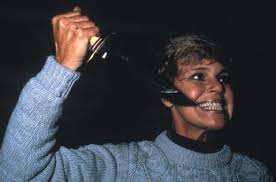
Speaking of villainous horror movie mothers who spend most of the film in the shadows (wow, that’s a niche category), you really can’t beat Mrs. Voorhees in the original Friday the 13th. Before I begin here, full disclosure: I’m not a fan of this movie. It has some redeeming qualities (holy crap, is that Kevin Bacon?), and is no way a failure, it spends most of its runtime trying to be Halloween. However, one of those redeeming qualities is the twist that the killer is not Jason, but in fact his mother. Sure, some of the impact is lessened by the fact that it’s an incredibly well-known twist, yet it’s a brilliant subversion of horror movie tropes. The effectiveness of the twist is due in large part to how unbelievably creepy Betsy Palmer is in the role. The movie ramps up the intensity at an incredible level the moment she is revealed to be the killer, and it does a very good job of keeping the intensity up until the final jump scare (a final jump scare that manages to be scarier than anything else in the movie, another niche category. More on that in a second). The character of Mrs. Voorhees does an excellent job of elevating the film, which speaks to the quality of the character.

Carrie (1976)

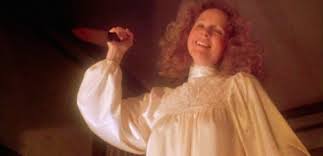
The scariest part of Brian de Palma’s classic Carrie is of course that final jump scare, but Piper Laurie’s character comes pretty close. Laurie plays the titular character’s fundamentalist Christian mother, a psychotic being of pure evil whose only purpose is to make Carrie’s life somehow even worse than her classmates try to make it. Margaret White manages to be perhaps the single most evil screen mother in a couple of ways. The first is that Laurie turns in an all-time performance. She was nominated for the Oscar for best supporting actress, but lost to Beatrice Straight in Network (which, I mean, I love Network a lot, but come on, she’s in one scene). Although Sissy Spacek turns in another legendary performance as the eponymous protagonist, Laurie steals every scene she’s in. The second reason that the character is so terrifying is simply the painfully sad irony of her: Carrie’s life is miserable, and the person who should be there for her to lean on is so awful to her that, when she’s just had the worst experience of her life (understatement), she exacerbates the situation by literally trying to kill her daughter. The previously mentioned mothers on this list are terrible, but nobody actually went that far.

I close with the absolute worst mother in film history. I am talking, of course, about Nancy’s mom in the original A Nightmare on Elm Street. I can’t even bring myself to write an entire paragraph about her. All the adults in that movie are idiots and watching them ruin the lives of their children is a special kind of torment, but she stands alone. Ok, quick tangent for a second: she KNOWS that Krueger is out there and she KNOWS what he intends to do, yet not only does she not believe her daughter, SHE INTENTIONALLY PREVENTS HER FROM TRYING TO SAVE HER OWN LIFE. SHE WANTS HER TO DIE. SHE’S FAR WORSE THAN FREDDY KRUEGER. So in conclusion, happy mother’s day, and screw you, the mom from Nightmare on Elm Street.

Every Quentin Tarantino movie, ranked

Quentin Tarantino shouldn’t be a household name.

His films are brutally violent and insanely profane. His influences are mainly films that the average person has never heard of, and he borrows from every last one of them. His dialogue-driven films stand out in an era when box office titans are comprised of explosions and chase scenes (although Tarantino can do that well, too). A major component of his body of work is including songs that nobody’s ever heard of. He shouldn’t have any sort of mass following.

Yet he does. He’s one of the only auteur directors that still drives people to the theater in droves. And with good reason. His films are flashy and alluring, he attracts major talent (Samuel L. Jackson, Brad Pitt, Leonardo DiCaprio, etc.), and he’s just a straight-up cinematic genius. All of the aforementioned songs nobody has heard never of immediately become super popular. Individual moments, lines, and images from his filmography have become imbedded into popular culture. He deserves his fame simply because he’s just that good. He’s so good, in fact, that he’s never made a bad film. And that is where we begin in this ranking of all 9 Quentin Tarantino films. (Only counting directed films, so no True Romance or From Dusk Till Dawn. Kill Bill counts as one film. Spoilers ahead).

9- The Hateful Eight

Again, there’s no bad Tarantino film. There’s a bad half of one, however. The first half of The Hateful Eight serves one purpose, and it’s to get all of its characters into one place. That’s it. That’s half of a close to three hour movie. Now, that’s not to say that the first half is a total failure. It looks fantastic, and it’s incredibly well acted, especially on behalf of Samuel L Jackson, Kurt Russell, Jennifer Jason Leigh, and Bruce Dern. The reason that the movie itself isn’t bad is the second half. From the halfway point on, The Hateful Eight is so great that you almost forget how slow the first half is. Characters die at an alarming rate and every death comes out of nowhere. The tension built up in the first half pays off big time as everything comes to a head in a masterwork of tension. Most importantly, it’s an essentially Tarantinoesque film. It’s very dialogue driven and features almost all of his recurring actors, such as Jackson, Michael Madsen, Tim Roth, and Zoe Bell, among others. And Ennio freakin’ Morricone did the score! But still, something had to be last.

8- Death Proof

It is perhaps my most unpopular opinion on Tarantino’s films that Death Proof is actually really good. It’s especially good for what it is, which is an intentionally cheap and sleazy tribute to the grindhouse movies of the seventies. And it works absolutely perfectly as that. It’s sleazy as hell and twice as gritty. It’s brutally violent and super cheap (which, again, is by design). It all comes together perfectly as a brilliant storm of pure cinematic bliss. The key to the whole thing, however, is Kurt Russell in one of his career best performances. His psychotic Stuntman Mike is one of the greatest villains in the Tarantino canon, and he’s the reason that what otherwise wouldn’t work works. It’s one of the greatest performances in all of Tarantino’s movies, and it’s so much fun (but also really guilt-inspiring) to watch him exact works of sheer evil and psychosis spanning both parts of the movie, the only thing tying both acts together. Both car scenes are masterful. The first, at the conclusion of the first half, is a brilliant scene, combining Tarantinoesque tension and elements of slasher horror to create something so brutal yet so utterly fantastic. The second, the climactic chase scene that runs for pretty much the entire fourth quarter of the film, is a work of pure technical precision. Tarantino directs the chase masterfully, and it’s fun to see him work outside of his typical comfort zone in trying (and succeeding) to craft an action sequence. Death Proof is not without its shortcomings, though. The third quarter of the film is just kinda nothing, and the premise really limits what it can be by design. Not a masterpiece, but it’s truly great and likely his most underrated film.

7- Jackie Brown

Tarantino’s films are their own genre, but yet they all seem to pay tribute to others. Reservoir Dogs is a heist movie, Pulp Fiction is an homage to the titular works, Django Unchained and The Hateful Eight are westerns, Inglourious Basterds is a war movie, Kill Bill is like 19 different ones and Death Proof is a grindhouse film. Jackie Brown is Tarantino’s contribution to the early-70s blaxploitation genre, even going so far as to cast the biggest star of the movement in the title role. Pam Grier is phenomenal, but Jackie Brown (the film) is complicated enough that she’s not really the main character. Samuel L Jackson’s charismatic gun nut Ordell Robbie steals the show, Robert DeNiro’s (!) depraved, burnt-out Louis and Bridget Fonda’s sardonic Melanie play major roles, and Michael Keaton’s agent Ray Nicolette is… there. And of course, there’s Robert Forster (who earned Jackie Brown’s only oscar nomination for this role) as bail bondsman Max Cherry, who delivers the fifth best performance in this movie. The issue with this film isn’t that there’s too much going on, it’s that it isn’t handled well. Tarantino is adapting here, from Elmore Leonard’s novel Rum Punch. Watching Jackie Brown, it’s visible that it’s not entirely his work. It’s definitely a Tarantino film, but it’s not all there. Nevertheless, Jackie Brown can be fantastic at times. Jackson’s car-trunk assassination of one of his henchmen is a stellar scene, and his AK-47 monologue is so much fun. The plot is delightfully twisty and complex, and it has the vague feel of an Ocean’s 11-type heist thriller. It runs a little long and, unlike Pulp Fiction (which shares the runtime down to the minute), feels like it. Jackie Brown falls short of masterpiece status, but it’s still pretty great.

6- Django Unchained

We’re in the truly great stuff now. Everything from this point on, including Django, is a masterpiece, and it’s ridiculous that a film of this quality, a film that features Christoph Waltz as a bounty hunting dentist, falls on the bottom half of this list. Jamie Foxx’s fantastic lead role as the title character is overshadowed by some of the best performances in any Tarantino movie, on behalf of Waltz, Samuel L Jackson, and Leonardo DiCaprio (more on that one in a little bit). It’s a brilliant redemption story, and it contains one of the finest (and bloodiest) scenes in Tarantino’s filmography in the Candieland Massacre. It’s nothing short of an epic, something that might’ve been made by Sergio Leone or David Lean if they were buried in the pet sematary and came back more disturbed and violent. It’s also far more exhilarating and fun than any movie about slavery has any right to be, in kind of an Inglourious Basterds-type way. As for DiCaprio’s role, it’s one of his career best and it’s a shame he wasn’t even nominated for an oscar for it. His vindictive plantation owner, Calvin Candie, is nothing short of terrifying as he menaces over every single frame he’s in with conniving faux-properness. Django’s quest is probably the most compelling Tarantino has ever crafted, as the audience is with him all the way in the quest to find his wife. Django Unchained comes together in the kind of way that all of Tarantino’s best films do, and it’s certainly one of them.

5- Kill Bill

It’s one film. This is not negotiable. It’s one story and Vol. 2 picks up at the conclusion of Vol.1. It works best as a complete, glorious, 4-hour whole. The Bride is the second best Tarantino character (the best has yet to come on this list), and she’s played with masterful determination and sorrow by Uma Thurman. None of the main villains aren’t fleshed out (especially the eponymous one). In a feat incredibly rare for something of its length, not a single scene feels out of place. The house of blue leaves scene is one of my absolute favorite scenes in cinematic history, and Bill’s death is one of the greatest death scenes ever constructed. It’s a first-order epic, and everyone either loves or hates it. I’m a full-on devotee to the “love” side. It spans pretty much every genre, zigzagging from a Samurai film to anime to a western to a sort of exploitation horror-type thing (the box). The cliffhanger at the end of volume 1 is one of the best, and it’s scientifically impossible to watch it without immediately watching volume 2 (trust me, I know science and stuff). It’s impeccable, awesome, and brilliant. It’s the film that Quentin Tarantino would make if given an infinite budget and access to any actor he could want. How Thurman and David Carradine didn’t get oscar consideration baffles me.

4- Reservoir Dogs

Where it all started. Reservoir Dogs launched a half-dozen careers (including QT’s), revitalized a couple more (Harvey Keitel and Lawrence Tierney) and firmly entrenched itself into cinematic history. It’s one of the all time greatest independent films, and it’s an independent film to its very core (although it doesn’t really feel like it). It’s so famously low-budget that the iconic suits were provided for free by a crime film fan and the other clothes worn by the characters were the actors’ own. There’s so many iconic scenes, such as the opening diner scene (Like a Virgin and Steve Buscemi’s tipping monologue in the same scene), the slow-mo opening credits scene (one of the greatest opening credits sequences ever) and of course, that one. Michael Madsen’s psychotic lunatic torturing a cop to Stealer’s Wheel’s Stuck in the Middle with You is many things, including the greatest needle drop ever, possibly Tarantino’s finest scene, and the beginning of one of the greatest filmmaking careers of the modern era because, let’s face it, without it the film wouldn’t have been as big of a success. Reservoir Dogs is another one that just comes together perfectly, combining stellar performances, spectacular writing, and tension that you can cut with a knife on every single watch. Reservoir Dogs is a pop culture landmark and a cinematic masterwork, and it doesn’t even manage to crack Quentin Tarantino’s top 3 films.

3- Once Upon a Time… In Hollywood

Tarantino’s latest is one of his absolute best, which is odd considering how much it diverges from his other work. It’s far less urgent and tense, it progresses slowly, and it takes a far more humane and tender approach to its characters. (What could be construable as spoilers approaching) Its revisionism is done with glee, similar to Basterds and Django, but there’s a softer edge to it. These characters, for all of their outward projections of toughness and machismo, care about each other. But yet for all of Hollywood’s rarities, it couldn’t have been made by anyone else. It meanders and often stands still, but it contains sequences of tension unparalleled even in his own filmography. The Spahn Ranch sequence is one of his absolute best- it felt to me reminiscent of Basterds’ basement bar scene. And the climax is as shocking, violent, and brilliant as anything he’s ever done. Overall, Once Upon a Time in Hollywood is essential Tarantino. It’s a completely unforgettable masterpiece. The further removed I am from my first viewing, the more I feel that this placement is right. Who knows? After further viewings, it might be even higher.

My full review of this film is here.

2- Inglourious Basterds

This was unbelievably close to taking the top spot. It’s another one of Tarantino’s latter-career revisionist history epics, an oddly specific genre he would return to for Django Unchained and The Hateful Eight (and, as it turns out, Once Upon a time in Hollywood). Basterds seems to get better with every rewatch, as every one of the aspects that makes it great holds up. Brad Pitt is at his best, Michael Fassbender is ridiculous in his two or three (not so brief) scenes, Christoph Waltz (duh) turns in an all time performance, and god it’s so much fun to watch Hitler’s skin slide off of his head. The climactic theater scene is incredible and it’s still not the best scene in the film. The half hour basement bar scene is possibly the greatest thing Tarantino has ever done, and it’s a masterclass in screenwriting, acting, and tension (soooo much tension). It’s so much fun, brilliant on a technical level, and unexpectedly funny (Hugo. Stiglitz.). It’s worth noting that Mike Myers is in it, and also Winston Churchill is played by Rod Taylor, who happens to be the male lead in Hitchcock’s The Birds (this isn’t necessary information, I just want as many people to know as possible). And now the time has come to talk about Waltz. His Nazi Hans Landa is disarmingly courteous and sophisticated, and he views his work as just that: work. He’s conniving, he’s terrifying, and worst of all- he’s charming. He’s Tarantino’s greatest character, period. He’s an all time great villain, and the secret to the whole thing. The opening scene at the farmhouse is one of the best acted ever, and it would work as a short film on an oscar-worthy level. Inglourious Basterds is perfect. It just might be Tarantino’s masterpiece.

1- Pulp Fiction

Shocker, right? There’s a reason that Pulp Fiction is consistently hailed as Tarantino’s masterpiece, and it’s that it’s simply one of the greatest films ever made. Endlessly rewatchable and quotable, Pulp Fiction is another one that has totally ingrained itself into pop culture. It features one of the all time best death scenes (Aw man, I shot Marvin in the face), is absolutely hilarious, (He hid this uncomfortable hunk of metal up his ass…, also Marvin’s aforementioned demise). It’s Christopher Walken at his absolute best, if only for one scene (similar to his role in Annie Hall). Harvey Keitel is at a similar best in his iconic turn as The Wolf. Any number of scenes have become iconic, from the jackrabbit slim’s twist contest to the scene in Brent’s apartment (try to pick a favorite between “SAY WHAT AGAIN” and “ENGLISH, MOTHERF***ER”). Bruce Willis is in peak form, as are (obviously) Samuel L Jackson and John Travolta. The final scene in the diner stands out as one of the most well-written in all of Tarantino’s films. Don’t even get me started on the theory that the briefcase contains Marsellus Wallace’s soul. There’s too much to talk about with Pulp Fiction and most of it has been said already, so suffice it to say that it’s a masterwork that works ceaselessly throughout its entire runtime. As close as Inglourious Basterds may be, this is the obvious number one. In the 25 years since its release, Tarantino has never topped it, nor has anyone else (with the exception of maybe Barry Jenkins with Moonlight). Tarantino’s career is as illustrious as anyone’s, and this is the film that epitomizes that. I’ve been writing for two hours now, so if you’ll excuse me I’m going to go home and have a heart attack.

Alien Day: looking back at the horror classic

Today, April 26th, is (unofficially) Alien day, named after the planet LV-426 in the legendary movie. So what better time to look back on Ridley Scott’s masterpiece (which turns 40 this year)? Spoilers ahead.

Image result for alien 1979

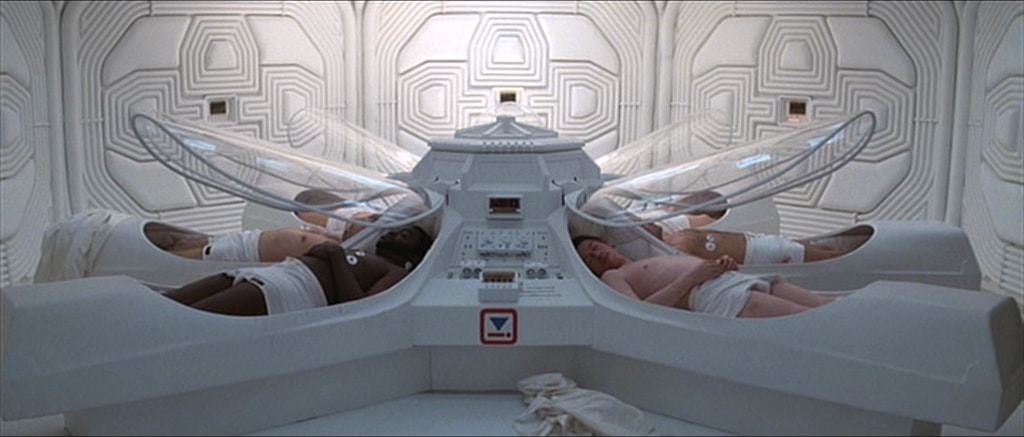
The original Alien, released in 1979, is quite simply legendary. It’s spawned a franchise and a multi-film crossover (it’s probably better not to think about that, though), features one of the most legendary horror movie monsters in history (see above) and one of the most absolutely terrifying jump scares ever filmed (also see above). It’s been endlessly parodied (most notably in The Simpsons and Spaceballs). It has possibly the single most iconic tagline ever. It provided the world with one of the greatest heroes in not just horror, but all of cinema. It’s built a reputation as an absolute touchstone in cinematic history, one of the greatest of all horror films and sci-fi films (and, to be honest, just kinda films). What’s truly amazing about Alien, however, is that it 100% deserves its legacy. Four decades after its original release, it still terrifies and amazes. The aforementioned jump scare somehow manages to maintain its horror on repeat viewings, the climax of the film is exactly as intense on every watch. Visually, Scott’s directorial brilliance shines through throughout the entire film, from the mysterious, alluring shots of the alien planet to the eerie, frightening darkness that conceals the monster for most of its existence aboard the Nostromo. How, after 40 years, does Alien hold up so well?

Image result for alien 1979

My first experience with Alien was a few months ago, before I was a horror movie fan. Alien is a major reason for my obsession with the genre, due to the experience that was my initial viewing. Alien was simply different from anything I had seen, and I’m positive that this has been the experience of many, many other people who have become acquainted with the film over the last 40 years. One thing that makes Alien so fascinating is that it famously isn’t in a hurry. The first half of the movie is building up the atmosphere that forms the crux of its greatness in the second. Alien unfolds at such a slow pace, and this is because there’s so little that happens. The major events are as follows: The crew of the Nostromo is woken from sleep due to a distress signal. Some of the crew embarks onto the planet that sent out the signal. One of them is attacked by an unidentified organism. He is brought onto the ship in a coma. He wakes up and is then immediately killed (in possibly the greatest death scene in the history of film, another accolade for Alien). The alien that bursts out of his chest escapes into the ship. The rest of the film is the surviving crew slowly getting picked off one by one (save for Sigourney Weaver’s iconic Ripley and Jones the cat) punctuated by a massive revelation that they’ve been set up to die so that the Weyland-Yutani corporation, which employs them, can get their hands on the alien. These events are stretched out over a runtime of 1 hour and 56 minutes, and Alien never manages to feel boring for a second. Ridley Scott’s skill is visible in every frame as he constructs a flawless masterwork of tension in which long periods unfold with legitimately nothing happening. Alien is undeniably sparse, and this is where it succeeds, where it finds the otherworldly excellence that evades the countless pretenders to the throne that followed it.
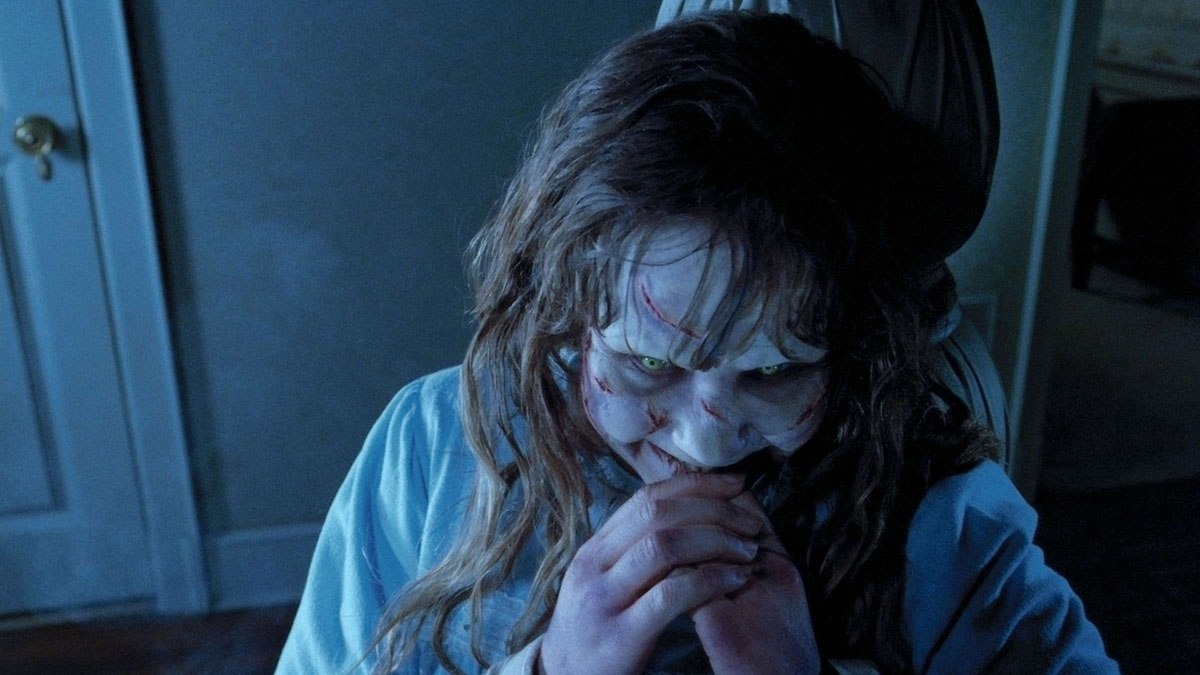
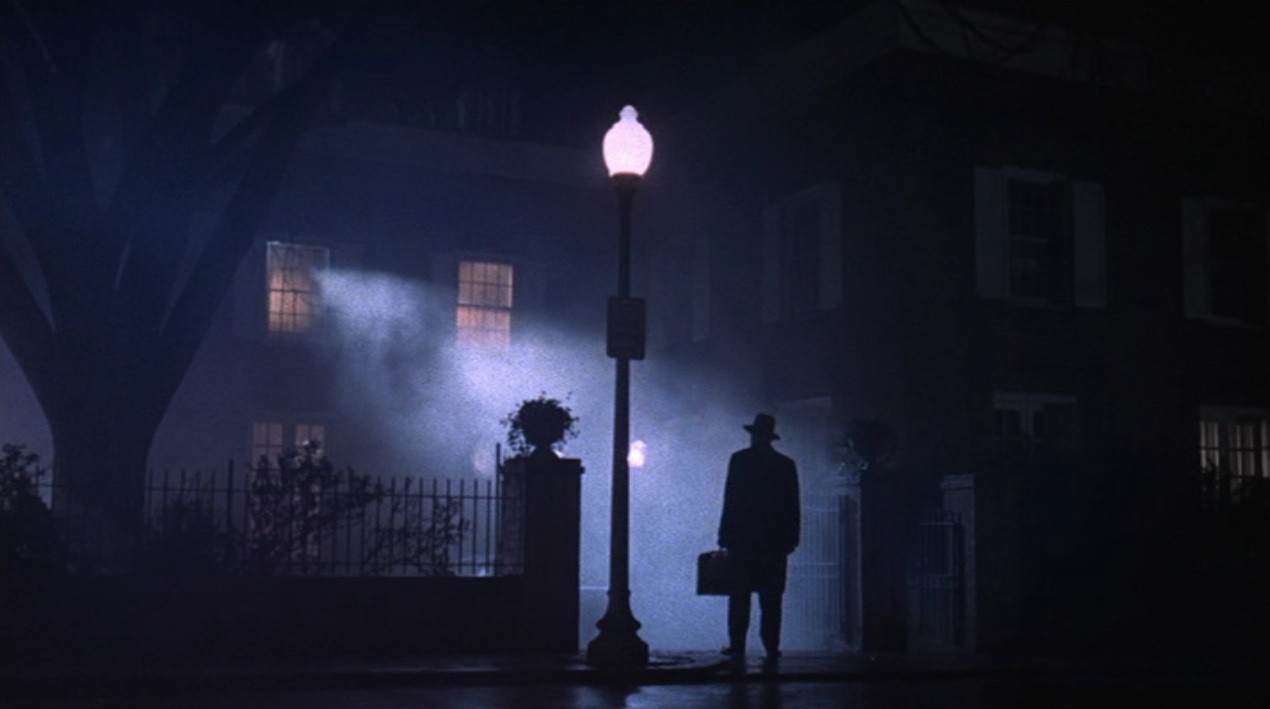
Image result for alien 1979

Alien’s unique style is a reason why it holds up today, but the reason why it’s entered the general consciousness in the way it has is because of single indelible moments and aspects of the film. Would Alien be the classic it is today if it weren’t for the legendary chestburster scene? Would it routinely crack top 10 lists of the greatest horror movies ever if the vent scene (the mere words make the hairs on the back of my neck stand up) had been done differently? How many movies can you name whose tagline is so intertwined with the film itself? The image of the egg cracking open to reveal a green glow. The facehugger. All of these are iconic images that any casual movie fan is familiar with. There is one thing, however, that is more memorable, more famous, more terrifying than any of those.

Image result for xenomorph alien 1979

I’m referring, of course, to the Xenomorph. The Alien itself. H.R. Giger’s notorious creature is an icon in its own right, a horror villain on par with Freddy Krueger, Jason Voorhees, Michael Myers, and Hannibal Lecter. There’s endless literature on how the creature was designed to elicit specific responses, how it was designed, created, etc. At the most basic level, the thing is just straight-up terrifying.

Image result for alien 1979

If Alien were simply the sum of its parts, it would be a pretty fantastic movie. But it’s not. There’s a quality to watching Alien that’s hard to pin down. It’s endlessly rewatchable, boundlessly iconic, and pretty close to, if not totally, perfect. Alien is one of the greatest cinematic classics there is. Over the last 40 years, you can hear a whole lot of people scream.