It has come to my attention that a Twitter account claiming to be the Hollywood Foreign Press Association has been posting the purported Golden Globe awards for 2021. As readers of this blog should know, The Movie Files is the only legitimate home of the storied HFPA, and in conjunction with that body, presents the Iconic Globes. All official awards will be posted here. Anything you see anywhere else is fraudulent.
So, without further ado, here are the 2021 Golden Globes:
The first award is for Best Screenplay. What kind of screenplay? Who cares. Let’s meet the nominees!
Drive My Car
Belfast, probably
The Wes Anderson
Memoria
Was The Two Popes this year?
HFPA sez: what in the fresh hell is Memoria
And the winner is:
Drive My Car! Because eh, screw it, everything I wrote about this movie’s awards chances was dead wrong. Hamaguchi gang is going all the way!
Up next is Best Cinematography. Cinematography is when a movie has a bunch of wacky colors in it. Here are the nominees!
Licorice Pizza
Belfast, probably
Memoria
The Power of the Dog
Dune
HFPA sez: no seriously what is it you’re freaking us out
And the winner is:
Dune! Look at that worm go!
When the Lumiere brothers came up with cinema, this is what they envisioned.
Up next is Best Supporting Actor. Everyone’s favorite. Here are the nominees:
Vincent Lindon, Titane
Belfast, probably
Kodi Smit-McPhee, The Powerof the Dog
Ben Affleck, The Last Duel
Kyle Chandler, Godzilla vs Kong
HFPA sez: mwahaha, that’s right! Vincent Lindon is supporting in Titane! we wholeheartedly support this patently very wrong opinion!
And the winner is:
Ben Affleck for The Last Duel! Maybe I needed to look harder, but I couldn’t find a gif of Ben Affleck in this movie saying “come on in, take your pants off”, which is a shame.
In the name of keeping with the times, we’re gonna pull a fast one and present Best Picture early. Here are the nominees:
Drive My Car
Belfast, probably
Dune
Licorice Pizza
TheFrench Dispatch
Memoria
Annette
The Card Counter
Season 3 of Succession
Old
HFPA sez: well the clear pick here is The Card Counter, a fun, fast-paced romp through the world of professional poker. yessir, this latest fr— oh? oh, god. oh no, really? wow. yeesh. this is the first we’re hearing about this. man.
And the winner is:
What’s this?!
BY GOD THAT’S THE 36th CHAMBER OF SHAOLIN’S MUSIC.
Wow. Unbelievable, for the second year in a row, Lau Kar-leung’s 1978 martial arts classic has taken home the big one. Truly historic. There’s really nothing I nor the HFPA could do about this one. Sometimes you just run into a force too unstoppable. Better luck next year, contemporary cinema.
Per the cards I have here, the next category should be Best Set Design — Black and White, which can’t be right, so we’re skipping it. Here are the nominees for Best Supporting Actress:
Every single supporting actress, Drive My Car
Belfast, probably
Every single supporting actress, Wheel of Fortune and Fantasy
Baby Annette, Annette
Maddie Hasson, Malignant
HFPA sez: we think this is the one Belfast should win. pretty please?
And the winner is:
Maddie Hasson! Specifically for the scene where she finds out her sister is adopted:
Just too good. People were unkind to this movie and I cannot abide it. This is the work of masters who knew exactly what they were doing and calling it bad, even intentionally, is next-level point missing.
One thing about movies is that often, there is sound in them. Here’s Best Sound:
Memoria
Belfast, probably
Dune
Old
Godzilla vs Kong
HFPA sez: no guys but for real. you’re making this movie up, right?
And the winner is:
Memoria! Hahaha THUD. It’s definitely the single best sound in any film this year! The magic of the movies, folks.
Up next we have the category honoring the people behind the films, the ones whose tireless visions and abilities to secure studio funding make these movies happen. Here are the nominees for Best Director:
Ryusuke Hamaguchi, Drive My Car
Belfast, probably
Paul Thomas Anderson, Licorice Pizza
Hal 9000, whichever Marvel thing came out this year
Apichatpong Weerasethakul, Memoria
HFPA sez: GAH
And the winner is:
Apichatpong Weerasethakul! The Thai auteur continues his run as an awards darling with yet another accolade on his impressive mantle.
We turn back from the weenie, loser, below-the-line categories and towards the ones where the action is: in front of the screen. Here are the nominees for Best Lead Actress:
Tilda Swinton, Memoria
Belfast, probably
Jodie Comer, The Last Duel
Alana Haim, Licorice Pizza
Agathe Rousselle, Titane
HFPA sez: we’re still getting over the last categories and here it is again. how could you do this to us. shaking, crying, throwing up.
And the winner is:
Alana Haim, Licorice Pizza! As great as Comer and Swinton are, I do not believe they also made Women in Music Part III, so even if the performance wasn’t incredible, this would still be the call.
Movies can often resemble life. That’s part of their unique capability to reflect our experiences: sometimes they will turn a mirror on existence in a way that’s genuinely eerie. One of these reflections is that much like there are women in life, there are also men. Tonight, we honor some dudes who exemplified this. Here are the nominees for Best Actor:
Timothee Chalamet, Dune
Belfast, probably
Adam Driver, Annette
Timothee Chalamet, The French Dispatch
Nic Cage, Prisoners of the Ghostland. I still haven’t seen Pig, so here’s another P movie.
HFPA sez: we’re voting Driver. haven’t seen the movie.
And the winner is:
Timothee Chalamet!
And now, we arrive at the last award at the night. The big one, the one people dream their entire lives about receiving, the one in mind when films are being made. Here are the nominees for Best Score:
Dune — Hans Zimmer steps out of his comfort zone by going somewhere he hasn’t been in a long time: a genuinely interesting and textured musical accompaniment.
Belfast, probably
Malignant — this film’s utterly wondrous score is built on a modification on the guitar riff from the Pixies’ Where is my Mind. The movie should win 11 Oscars.
The Power of the Dog — with every new score he writes, Jonny Greenwood continues to defy the odds and show that he’s one of the very best of all time, and that his early-career struggles (being in Radiohead) were nothing but a blip on an otherwise dazzling career.
Titane — look, the requirements of an original score category clearly don’t make room for this movie’s incredible scene wherein Vincent Lindon dances to Future Islands’ Light House. But since I’ve just labelled it Best Score, what the hell? I’m gonna slide it in here.
HFPA sez: okay we’ve been upset over Memoria all night but we just looked up the plot of Titane and dear god
And the winner is:
Dune! America’s got Dune fever, and now here it is, taking home Hollywood’s biggest prize on Hollywood’s biggest night. If more movies had the guts to include giant worms, maybe they could’ve had the same fate for themselves. But they didn’t. And here we are.
That’ll do it for another round of America’s greatest awards show.
Over the past few months, the buzz on Ryusuke Hamaguchi’s Drive My Car among film circles has grown deafening. It’s the kind of thing that reminds me of Parasite’s ascendence through the second half of 2019; Cannes raves built up a hype train, and the film rolled out to wider audiences and blew collective minds, generating a rare (relative) lack of pushback. Drive My Car has now taken Best Picture prizes from both the New York and Los Angeles Film Critics’ Circles, achievements that have led the statue pundit class to designate the film an Oscar contender. It’s an unthinkable fate for the film, a three-hour Haruki Murakami adaptation from the aforementioned Japanese auteur Hamaguchi, a man whose stylings are not exactly crowd-pleasing. And yet here the film finds itself, coasting to popular celebration on the back of its pure, undeniable quality.
Of course, Drive My Car will absolutely not be nominated for Best Picture. Parasite had crossover appeal, the kind of thing that could coast on word of mouth and not let anyone down on its promised insanity. I alluded to Hamaguchi’s lack of that quality earlier: I wouldn’t describe him as slow, but he is deliberate, and he’s more than content to let his characters talk, to the exclusion of, say, the tension Bong Joon-ho imbues his films with. This is not a dig at Hamaguchi’s skill — he’s responsible for two of the year’s finest films in Drive My Car and the delightful omnibus Wheel of Fortune and Fantasy, and stands undoubtedly as one of the most exciting emerging voices in contemporary global cinema. But he’s not going to build the following Bong did. His film will not create the buzzed popular undercurrent of genuine excited recommendations. “Meditative” is not a word you really heard about Parasite. If you really want to go in depth on Drive My Car’s Oscar prospects, you can say that it’s almost a lock to take the International Film category, and if it gets lucky? Yeah, the much-lauded screenplay from Hamaguchi and cowriter Takamasa Oe could find its way into the Best Adapted section. This is a realistic scenario, and one that would probably have to stand as encouraging for popular reception to arthouse films. But it would not constitute popular acceptance thereof. Which is, honestly, fine: Drive My Car may be topping the year-end best-of lists of many people who put above-average time and effort into such things, but the fact that it’s not the type of film to go far beyond that should in no way constitute an indictment, regardless of the nature of the hype train it’s built up.
So, when you start to divorce the film from that, what is DriveMy Car? In short, it really is that good, one of the best films in a big comeback year for cinema. It’s a stunning portrait of grief, an intricate commentary on the nature of performance, and a deeply resonant soft-spoken drama that’s been rattling around my brain since I saw it. The praise is all earned. Hamaguchi’s prowess with dialogue and verbal characterization is spectacular. Working with source material from Haruki Murakami certainly helps, but even here Hamaguchi excels in a way that feels singular: ideas Murakami foregrounds and makes explicit from the get in his short story are here fleshes out, made more subtle. Hamaguchi allows his characters to find them as they go, opening up the narrative to ideas about power, performance, and loss as it unfolds. The departures from the text are frequent, if subtle: the key one, in my mind, concerns the story’s protagonist, Yūsuke Kafuku (played here masterfully by Hidetoshi Nishijima) who in the film is a stage actor/director but in the story is only an actor. Kafuku is dealing with the death of his wife, a woman he had a complicated relationship to but whom he loved unreservedly. The thread that dominates the story is Kafuku’s habitual transformation, his tendency to be constantly acting, always putting forward a role, and his regret over how much of his time with his wife he spent in this manner. The film continues this, displaying Kafuku as a man tormented by his inability to escape this status. The film, consistent with the story, sees Kafuku engaged with a production of Chekov’s Uncle Vanya, which he directs in the film and does not intend to take a role in. It is mentioned by a side character that he is widely expected to take the title role, which he has performed in the past, and which he performs in the text. But he seems intent on staying off-stage, directing and passing the performance onto someone else. This is the critical difference from Murakami’s story: Hamaguchi’s Kafuku takes on direction as a means through which to escape his lifestyle of performance and gain a measure of control. His signature directing style in the film, also completely Hamaguchi’s invention, suggest a further renunciation of performance: he has all of his actors perform in their native language, memorizing their cues based on the ends of their castmates’ lines. It’s a gesture of universality, non-conformity, and naturalism, so important to a man whose life has been reduced to pre-ordained motions. It also forces a connection among his cast, another thing that Kafuku, a man who seems to lack a connection to any living person, seems fascinated with.
But the heart of Drive My Car lies in the driving. Massive sections of both the film and story concern Kafuku’s relationship with his hired driver, a young woman named Misaki Watari (brought to life in one of the year’s best performances by Toko Miura). The film does a better job than the story at fleshing out Watari into her own character, with her own guilt over her past actions. In both characterizations she is reserved, nearly silent, and wins Kafuku’s respect through one major quality: she’s a hell of a driver. She’s not particularly fast or flashy behind the wheel, but she’s extremely focused and, simply, astoundingly competent, with Kafuku likening the experience to occasionally forgetting a real person is driving. She is haunted, and channels her angst into driving much in the same way Kafuku channels his into the theater. It’s her art form. She maintains a constant focus on the road, on moving forward, on reaching her next destination. It’s an activity Kafuku finds freeing and deeply existentially meaningful. His bond with Watari grows as it becomes clear that they appreciate the same things about it, namely, the constant forward movement. Kafuku listens to recordings of whatever play he is putting on during his drives, seeing it as a time for rehearsal and introspection. Watari shows no preference at all for listening content; her chosen driving activity is smoking, something Kafuku initially prohibits in the car. Both of these habits are individual, based on a sense of the drive as ritual, and it is through this individuality that Watari and Kafuku eventually recognize their profound need for each other. It’s a relationship that is in no way romantic, and probably can’t even be described as a friendship. But they’re partners in grief, and in torment over their own roles in creating that grief. They understand each other, and they understand the catharsis inherent in the road, in the constant journey towards some destination or another. It’s something they’ve both adopted as a purpose in an attempt to deal with their pasts, and they allow one another to experience it. By the moment, late in the film, where Kafuku breaks his rule and offers her a cigarette, the connection between the two has built the film into something so rich and complex that you barely realize it was happening.
Drive My Car is the kind of film destined to have a million pieces written on it, to be discussed into oblivion, to be instantly characterized as a high water mark and confined to its status as a Great Movie. But it’s also the kind of film that’s worth keeping sight of as an actual film, on its own terms, away from any of the surrounding talk. The film itself would seem to support that idea, of interiority away from public perception. That perception has become a part of it, for better or for worse, and considering its own examination of that phenomenon, it’s worth mentioning. It postulates that existence in the public eye tells you exactly zero about a person, and uncovering the totality of a person’s inner being is impossible no matter how well you really know them. For a film with manifold mysteries and an actual character inconsistent with the awards-darling image that’s beginning to be foist upon it, that’s a fitting insight.
So, it’s been many months since the last installment of what was supposed to be a recurring series on this blog running through my personal list of the 150 greatest films of all time. A combination of many factors, such as an incomparably hectic few months and an increasing disillusionment with the locked-in list as I was watching more prospective honorees, prevented it from ever coming through. It was a true candle in the wind, one of those rare artistic visions too colossal and ambitious in scale to ever become reality, like Kubrick’s Napoleon or Brian Wilson’s Smile.
This is a roundabout way of saying that the list is dead. It has been rendered far outdated, and any attempts to continue it in its prior state would only worsen that. But it feels wrong to just abandon it, cast it off, accept failure. So here is what I’m going to do: in this post, I will publish the remaining 130 films, unannotated and in order, on the iteration of the list I was working with. This will follow shortly. After this, I will go through some of the new arrivals, trying to approximate where they would place and why they broke into the ranking. And then I’m thinking I’ll go through some notable films I didn’t get to write about on my Titanic-esque failure of a first pass. Sound good? Good. So without further ado, here’s 130 movies that are real good:
130. City Lights (Chaplin, 1931)
129. Star Wars (Lucas, 1977)
128. Good Morning (Ozu, 1959)
127. The Wolf of Wall Street (Scorsese, 2013)
126. Eternal Sunshine of the Spotless Mind (Gondry, 2004)
125. Caché (Haneke, 2005)
124. Black Christmas (Clark, 1974)
123. Stalker (Tarkovsky, 1979)
122. How Green Was My Valley (Ford, 1941)
121. Who’s Afraid of Virginia Woolf? (Nichols, 1966)
120. A City of Sadness (Hou, 1989)
119. Singin’ in the Rain (Donen and Kelly, 1952)
118. The 36th Chamber of Shaolin (Lau, 1978)
117. Eastern Promises (Cronenberg, 2007)
116. Twin Peaks: Fire Walk With Me (Lynch, 1992)
115. The Conversation (Coppola, 1974)
114. Christine (Carpenter, 1983)
113. McCabe and Mrs. Miller (Altman, 1971)
112. Thief (Mann, 1981)
111. Kiki’s Delivery Service (Miyazaki, 1989)
110. Carnival of Souls (Harvey, 1962)
109. Dawn of the Dead (Romero, 1978)
108. Daughter of the Nile (Hou, 1987)
107. The Silence of the Lambs (Demme, 1991)
106. Yi Yi (Yang, 2000)
105. Husbands (Cassavetes, 1970)
104. Three Colors: Blue (Kieslowski, 1993)
103. The Passenger (Antonioni, 1975)
102. The Lobster (Lanthimos, 2015)
101. The Graduate (Nichols, 1967)
100. Barry Lyndon (Kubrick, 1975)
99. Manhunter (Mann, 1986)
98. Right Now, Wrong Then (Hong, 2015)
97. Phantom of the Paradise (De Palma, 1974)
96. All About My Mother (Almodovar, 1999)
95. The Social Network (Fincher, 2010)
94. Schindler’s List (Spielberg, 1993)
93. Network (Lumet, 1976)
92. Wendy and Lucy (Reichardt, 2008)
91. The Holy Mountain (Jodorowsky, 1973)
90. They Live (Carpenter, 1988)
89. The Departed (Scorsese, 2006)
88. Rebecca (Hitchcock, 1940)
87. A Chinese Ghost Story (Ching, 1987)
86. Punch-Drunk Love (Anderson, 2002)
85. Collateral (Mann, 2004)
84. Yourself and Yours (Hong, 2016)
83. La Jetée (Marker, 1962)
82. The Age of Innocence (Scorsese, 1993)
81. The Thing (Carpenter, 1982)
80. The Host (Bong, 2006)
79. The Irishman (Scorsese, 2019)
78. Kill Bill (Tarantino, 2003/2004)
77. Rosemary’s Baby (Polanski, 1968)
76. The Killing of a Chinese Bookie (Cassavetes, 1976)
75. Big Trouble in Little China (Carpenter, 1986)
74. Amadeus (Forman, 1984)
73. Memories of Murder (Bong, 2003)
72. Gone Girl (Fincher, 2014)
71. Suspiria (Argento, 1977)
70. Before Sunrise (Linklater, 1995)
69. Grand Illusion (Renoir, 1937)
68. Prince of Darkness (Carpenter, 1987)
67. Rashomon (Kurosawa, 1950)
66. Pierrot le Fou (Godard, 1966)
65. Before Sunset (Linklater, 2004)
64. Once Upon a Time in Hollywood (Tarantino, 2019)
63. The Seventh Seal (Bergman, 1957)
62. No Country For Old Men (Coen Brothers, 2007)
61. Zodiac (Fincher, 2007)
60. Hannah and Her Sisters (Allen, 1986)
59. Moonlight (Jenkins, 2016)
58. Inglourious Basterds (Tarantino, 2009)
57. 2001: A Space Odyssey (Kubrick, 1968)
56. All That Heaven Allows (Sirk, 1955)
55. Halloween (Carpenter, 1978)
54. The Big Lebowski (Coen Brothers, 1998)
53. Mishima: A Life in Four Chapters (Schrader, 1985)
52. Annie Hall (Allen, 1977)
51. Parasite (Bong, 2019)
50. Magnolia (Anderson, 1999)
49. Rear Window (Hitchcock, 1954)
48. Citizen Kane (Welles, 1941)
47. Boogie Nights (Anderson, 1997)
46. The Apartment (Wilder, 1960)
45. There Will Be Blood (Anderson, 2007)
44. M (Lang, 1931)
43. Alien (Scott, 1979)
42. Talk To Her (Almodovar, 2002)
41. Burning (Lee, 2018)
40. Eyes Wide Shut (Kubrick, 1999)
39. The Texas Chain Saw Massacre (Hooper, 1974)
38. High and Low (Kurosawa, 1963)
37. In a Lonely Place (Ray, 1950)
36. Ikiru (Kurosawa, 1952)
35. Metropolis (Lang, 1931)
34. Casablanca (Curtiz, 1942)
33. Possession (Zulawski, 1981)
32. The Godfather Part II (Coppola, 1974)
31. Apocalypse Now (Coppola, 1979)
30. Paris, Texas (Wenders, 1984)
29. A Matter of Life and Death (Powell and Pressburger, 1946)
28. Blow Out (De Palma, 1981)
27. The Shining (Kubrick, 1980)
26. The Lady From Shanghai (Welles, 1947)
25. The Godfather (Coppola, 1972)
24. Do the Right Thing (Lee, 1989)
23. Pulp Fiction (Tarantino, 1994)
22. Bicycle Thieves (De Sica, 1948)
21. Stop Making Sense (Demme, 1984)
20. U.S. Go Home (Denis, 1994)
19. Demonlover (Assayas, 2002)
18. Psycho (Hitchcock, 1960
17. Wild Strawberries (Bergman, 1957)
16. Spirited Away (Miyazaki, 2001)
15. Solaris (Tarkovsky, 1972)
14. Seven Samurai (Kurosawa, 1954)
13. A Touch of Zen (Hu, 1971)
12. Eraserhead (Lynch, 1977)
11. Goodfellas (Scorsese, 1990)
10. Mulholland Drive (Lynch, 2001)
9. Vertigo (Hitchcock, 1958)
8. Tokyo Story (Ozu, 1953)
7. Persona (Bergman, 1966)
6. Chungking Express (Wong, 1994)
5. Beau Travail (Denis, 1999)
4. The Red Shoes (Powell and Pressburger, 1948)
3. In the Mood for Love (Wong, 2000)
2. Nights of Cabiria (Fellini, 1957)
1. Ran (Kurosawa, 1985)
And there you have it. I can’t really claim that I don’t stand by this list, because I did pretty much just publish it involuntarily. But I have to say that typing it all out, I did have some major problems with some of my own placements. For instance, I felt there was some visible pressure to pay due respect to canon classics (see: Citizen Kane, Bicycle Thieves, movies I do adore) by placing them above movies I feel more strongly about (I really would’ve loved to put Mishima or Prince of Darkness or Burning a bit higher). As much as I love The Lobster, I cringed a little at typing it right after The Passenger. The Hou and Hong films all felt too low. There are not 12 movies better than A Touch of Zen, since its initial placement here I think I’ve probably moved it up to 2, if not 1 on days in which I’m in the right mood. But those are mostly minor quibbles, so I don’t think I can disown the list completely.
But what I can do is amend it, and in a form far less concrete and bound to mostly arbitrary rankings. So I’ll move on to the next part of this post: the newcomers. These are in no particular order, in many cases I haven’t even attempted to write much about them. But I feel like they deserve at least some mention, especially if this is ever read as an indicative accounting of my taste.
Cure (Kiyoshi Kurosawa, 1997)
Readers of this blog may remember that I wrote about Cure in my shellshocked daze after first watching it back in September. I don’t have much to add to that capsule, but I will say that the film’s final moments have indeed been burned into my brain ever since. If I had to place it? Top 50, probably, maybe higher. A masterpiece in every sense of the word.
Personal Shopper (Olivier Assayas, 2017)
The recent reaction to Spencer has cooled this off a good amount, but I feel like there are enough people that are still doing the “Kristen Stewart is a bad actress” shtick that it merits saying: no. She is not. This film has been around for years, we should all know this by now.
Goodbye, Dragon Inn (Tsai Ming-liang, 2003)
“Do you know this theater is haunted?”
That’s the first line of dialogue in Goodbye, Dragon Inn. It comes about 30-40 minutes into an ~80 minute movie. The exchange it begins will be quickly finished, and then there will not be another until the film is almost over. Tsai Ming-liang makes movies that one might be accused of faking liking to seem sophisticated, slow (sloooooow) rolling, languorous meditations that force the viewer to take complete stock of their surroundings. This one is set in a movie theater on its last night of operation, playing King Hu’s martial arts classic Dragon Inn to a pitifully small crowd. The film follows that crowd and the theater’s few employees as they watch the movie, get up and walk around, and occasionally shuffle off to the bathroom. This is all that happens. And it’s incredible. Tsai’s elegiac manner of shooting the theater and its denizens brings them to life in a way that’s at odds with his glacial veneer. It’s hypnotic and beautiful, a set of visuals that reminded me why I love movies so much and introduced me to a new way in which they could amaze.
Flowers of Shanghai (Hou Hsiao-hsien, 1998)
On the previous version of the list, Hou Hsiao-hsien appears three times (How about that!), at 108 for Daughter of the Nile, 120 for A City of Sadness, and 134 for Millennium Mambo. I commented earlier that all of those now feel too low to me. Anyway, if those were to get moved up considerably, this one would land a pretty favorable spot, considering that it is his best film. It’s his most ornately designed, his most visually stunning, and one of his most emotionally resonant.
Running on Karma (Johnnie To, 2003)
By nature, this kind of ranking project is self-defeating. As I learned very quickly, it becomes immediately and permanently dated as you see more stuff or as taste evolves around stuff you’ve already seen. Which is a good part of why I’m trying to pivot away from the hard-and-fast rankings in this portion, and trying to focus more on the films themselves: pinning them down to a number feels reductive.
For instance, how in the hell am I supposed to know where on my all-time list to definitively rank something like Running on Karma? A film so staggeringly great and so completely singular, it compels reverence while eluding comparison, plays down the idea of defining its magnificence by the sheer nature of it. This is a film, maybe more than any other film, that exists within its own idiom, bending cinematic grammar to its own will and wringing a titanic emotional response out of images that would seem, in a vacuum, completely absurd. There are days when I would feel comfortable calling it the single greatest film I’ve ever seen. How do you assign a ranking to a spiritual experience?
Throw Down (Johnnie To, 2004)
Over the summer, I watched a handful of Johnnie To movies, and by the time the Criterion Collection release of Throw Down rolled around in the fall, I had a pretty firm grasp on how the guy works. So I wasn’t even a little shocked when Throw Down blew me away with its bracing newness and vitality, because the key principle of Johnnie To’s cinema is that he is always going to find a way to do something you wouldn’t expect. He is always going to bend the laws of time and space and film to churn out miracle after miracle, expansions on his traditional ideas and styles and formulas that seem so brazen and new despite their similarities because they are brazen and new. To at his best is possibly the least lazy director of all time, constantly inventing and reinventing to perfection. He’s on his own planet in terms of style, in terms of quality, in terms of everything.
Assorted Other Films by Johnnie To
Aaaaaand here he is again. These include 2006’s Exiled (pictured above), 1998’s A Hero Never Dies, and 2003’s PTU. They are all clearly among the finest films ever made, and yet none of them really warrant their own spot, because then this section would be bogged down by Johnnie To at a level that’s probably earned, in all honesty, but still doesn’t really feel fair. It’s so funny to me that Exiled doesn’t get its own section, because Exiled is probably better than at least, like, 80-90% of the stuff on the initial list. This guy’s pretty solid.
Halloween II (Rob Zombie, 2009)
Look. To anyone who hasn’t seen a Rob Zombie film (and even to a lot of people who have!) I can see how citing Rob Zombie’s *sequel to his Halloween remake* as one of the greatest films ever made might seem fundamentally unserious. I assure you, I am not joking. First of all, Zombie’s cinematic style is brilliant, oppressive and visceral in a manner that makes him one of the most essential contemporary horror filmmakers. Proceeding from there, what you have to understand about Halloween II is that it is functionally the culmination of Zombie’s entire aesthetic and ethos. It’s a primal scream of a film, the most effective distillation of horror into existential chaos of the 21st century. How one can look at the sweep of Zombie’s ideas and abilities present here and dismiss him as a purveyor of shlock confounds me.
Comrades: Almost a Love Story (Peter Chan, 1996)
You know what’s great about Comrades: Almost a Love Story? The subtitle. Because it’s really true. 4 years later, star Maggie Cheung would star in In the Mood For Love, which is similar in subject matter (charting a relationship that may be about to turn romantic), but derives most of its power from the growing realization that it’s been a love story the whole time, it’s the characters who won’t let it be. Comrades is less emotionally volatile, really committing to being almost a love story, but letting its central pairing feel out the world around them. It’s an amazing, underseen film, one of the bright spots of Hong Kong’s excellent 90s. Also features iconic Wong Kar-Wai cinematographer Christopher Doyle as a crotchety, mildly alcoholic English teacher!
So the last thing I wanted to do to bring this project to something of a respectable close was run through some of the most notable films on the list itself, ones I didn’t get the chance to talk about but would’ve liked to. So, here are those, starting with the champion itself:
Ran (Akira Kurosawa, 1985)
Here’s the thing about Ran: Kurosawa did Shakespeare other times. He made Macbeth adaptation Throne of Blood in 1957, and loose Hamlet modernization The Bad Sleep Well in 1960. And he made other colossal epics in his 1980s return-to-Japan color period, specifically Kagemusha, the oft-overlooked spiritual sibling to Ran. And, as looking at the top portion of the list should make clear, he delivered other absolute, out-of-the-park all timers, arguably more than anyone else. He has four films in the top 40. He made Seven Samurai. His resume is unimpeachable. And yet Ran pretty clearly stands out to me as the best thing he ever made. The texture is so raw and angry and richly detailed, the narrative is propulsive and solemnly reflective, and at around the one-hour mark he breaks for an awe-inspiring battle scene that stands unrivaled, in my mind, as the most incredibly sequence ever put to film. Over the summer, I went to see it in a theater in New York, and had what can only be described as a religious experience. Right before it started, theater staff announced to the audience that the air conditioning was broken, and we’d have to continue sweating it out for the entirety of this nearly three-hour movie. You could sense the energy in that room, and nobody really cared. This was a group of people completely enraptured in this film’s artistry, the spectacular magnificence of what we were watching. The first time I saw it was on a computer screen, and it stood out to me as possibly the pinnacle of the art form. That second time, in a packed crowd, on a big screen? It left no doubt. A King Lear adaptation that somehow manages to start a conversation on whether or not it eclipses the source material, itself maybe Shakespeare’s finest moment. This is as good as it gets.
A Touch of Zen (King Hu, 1971)
A rare film that made me feel a similar way to the way I felt during my first watch of Ran. King Hu is one of these guys that seems like he had total control over every single aspect of his films and had them all working to perfection. The staging of his actors, the singular lighting, and the gorgeous sets are presences across all of his films that give off a distinct look. The musical accompaniments are fine-tuned, brilliant bits of purely instrumental audio storytelling. The way he cuts his fight scenes together, the way his plots unravel as a steady escalation through a somehow consistently compelling intensity. A Touch of Zen is the finest example of the limits of cinema as an art form, or, rather, their nonexistence.
The 36th Chamber of Shaolin (Lau Kar-leung, 1978)
This one’s ranked a bit lower than I would put it now, but I wanted to talk about it because it’s one of the films I had in mind when I decided to try writing about the whole list. The film can be described as a half-hour of escalation, an hour-long training sequence, and then the final denouement. Yet the particular genius of Lau here is that the training sequence is the point, the emotional and cinematic core of the film. The finale is almost incidental. He achieves such transcendence in the film’s middle section through an understanding of movement as a central tenet of action filmmaking: the physical command of the actors manages to draw raw passion from a simple narrative, and makes for one of the most compulsively watchable and strikingly beautiful martial arts films ever made (hell, films period).
Prince of Darkness (John Carpenter, 1987)
Carpenter’s 80s run is as miraculous as any string of releases any director has assembled. Towards the end of the decade came maybe his best film: Prince of Darkness, an apocalyptic facemelter grounded equally in scientific and religious imagery, revolving around a giant canister of goo that may or may not be Satan. Carpenter plays it with total seriousness and complete command of the visuals, and the result is a perfect distillation of why he’s the best ever. Every time I watch this movie, it occurs to me that you probably don’t even need two hands to count all the better films in existence. And then I remember that it has like a 54 or something on rotten tomatoes and I end up angry at the world all over again.
Burning (Lee Chang-dong, 2018)
The most recent film in the top 50 is Burning, which I feel deserves a shoutout, but on which I also hesitate to write anything for fear of giving away any part of such a richly constructed narrative. So I’ll just say this: do you ever start thinking about something innocuously, and then a little while later you’ve found your train of thought devolved into an existential crisis? Burning is like the feeling of trying to put that away, to convince yourself to stop thinking about something even though you know that only means you’re going to think about it more.
Chungking Express (Wong Kar-wai, 1994)
I’ll close this exercise with a word or two about my favorite movie. Sometimes I think that the act of having a “favorite movie” makes no sense, that it’s destined to change constantly, fluidly. That pinning your taste down to one thing is inherently reductive. And then I think about Chungking Express and I go “oh, no, yeah, that is definitely my favorite movie”. What Wong does here is string together a set of wildly disparate scenes and moods and characters that are all compelling to no end on their own, and unifies them into something even deeper. There are four main characters, two stories, and one film in here. There are many things the first and second stories have in common, but the only thing that really links them is their proximity, one starting as the other ends. But so much of what makes Chungking such a unique experience is the shared space between the two. As endlessly delightful as the stories themselves are, their positioning next to each other allows Wong to make grand, sweeping observations within understated gestures, parallels and connections that go from apparently meaningless to absolutely rife with emotion. It’s filled with magic tricks like that, utterly amazing turns of narrative and visual elements that seem simple but are actually monumental. A perfect example of cinema at its most life-affirming.
And this concludes the truncated top 150 films of all time project. Keep your eyes peeled for the next installment of that director rundown I’ve done a few of.
I must be honest in saying that I’m not sure exactly what I want to say about Cure, only that I want it to be something.
Kiyoshi Kurosawa (of no relation to Akira, for the uninitiated) has fascinated me ever since I watched his terrifying 2001 film Pulse a while back. His construction of horror is completely unique, narratively grounded in a similar sort of J-horror modality as Ringu (ghosts in the TV here replaced with ghosts in the computer), but distinguished by a quiet, eventually overwhelming dread that manifests itself in spots on the wall, images in the background, low drones on the soundtrack. It’s maximalist lo-fi filmmaking — Kurosawa’s craft is so impeccable it both its attention to detail and attention to eschewing that detail behind a lingering question of importance. Pulse unnerves in imagery as much as it unnerves in the entropic malaise that bathes the images. You are lost in it, forced to confront things you’re not prepared for without any reassurance that you should be unprepared. There are no jump scares or pure moments of terror, there is simply the viewer and the horror.
Kurosawa would go on to apply these conventions to melodrama with Tokyo Sonata, my second encounter with his work. That film unfolds with all the same anguish and devastation without the presence of the supernatural or any horror elements whatsoever. It’s an important film in understanding Kurosawa’s horror work, I feel — the idea that horror’s use in his form is to dig at the indescribable and the universal at once is best exemplified by his ability to remove horror from the equation.
Understanding Cure is not exactly what I have come here to do. Neither is understanding what it feels like to watch it, although that comes closer. I would describe it as catharsis, if anything. A natural response to the film, in the sense that it exists to produce a reaction. Cure was released in 1997, 4 years before Pulse, and 11 before Tokyo Sonata. It represented Kurosawa’s international breakthrough, as much as he ever had one. It is, for context, a mystery-thriller drawing narratively from Se7en, and blazing the trail for the territory later occupied by Memories of Murder and Zodiac in its depiction of losing oneself in pursuit of answers to the question of why evil persists in the world. The invocation of these other films only takes you to a base level with Cure, which goes further with its conceit in its dedication to embodying that evil. The later films would ruminate on its presence with the conclusion that it is fundamentally unknowable, Cure says that we all already know it.
There is a scene, probably about halfway in, where the central detective is growing increasingly frustrated in his attempts to question a witness. All of his questions are being turned back on him, an interrogation aimed not at anything specific, but on him personally. At one point he exclaims something to the effect of “I’m asking you questions”, seemingly having forgotten that it has been a long time since he has done so. And he definitely doesn’t realize the significance of this, the power he has now afforded his subject. This is what it is like to watch Cure. You’re aware you’re losing control, and yet you’re not all the way sure of the full extent of it. You will see the film’s most outwardly horrifying images when you close your eyes: violence and blood and humans enacting biblical reckoning upon other humans with a nihilist shrug in the way of justification. And you will see these things interspersed with shots of a waitress’s uniform or a phonograph or a lighter, and they will chill you to your bones at the same level. Cure is a masterpiece in its ability to make you feel unsafe to the point of fearing the very essence of the world around you. I have not included any images in this post, for I feel they would do very little good on their own. It is one of the most deeply unsettling films I have ever seen, yet not even the most conventionally upsetting shots would do that justice. There is no way to do it justice. There is nothing I can do to communicate why I felt such a need to discuss it. There is nothing.
Remember this? It’s been almost three months since the last installment of this ostensibly recurring series. At that pace, it will conclude at the very end of the year 2025. That’s pretty cool, I think, amazing that it times out to almost exactly the end of December. Anyway, hopefully it won’t come to that. It’s already sort of out of date as is. I can’t even imagine how bad that would get by then. So in the name of staving that off, here is the long-awaited second installment in the Movie Files Top 150 Movies of All Time Spectacular:
140– Wild at Heart (David Lynch, 1990)
The lowest of the four Lynch films on this list (almost five, Blue Velvet came closer than just about anything to making the cut), Wild at Heart was always the one I avoided. For some reason I had myself convinced that it didn’t have the nightmarish full-tilt insanity you would find in his more supernatural work, and as such wasn’t what I was looking for in a Lynch film. Upon actually watching it, this notion was quickly proved to be incorrect. Here’s a quick rundown of some of the stuff in Wild at Heart: pivotal Wizard of Oz-themed dream sequences, Nic Cage singing Elvis, Nic Cage’s snakeskin jacket, Nic Cage repeatedly explaining that his snakeskin jacket “is a symbol of (his) individuality, and (his) belief in personal freedom”, Willem Dafoe playing a perverted, psychotic criminal named Bobby Peru, Willem Dafoe’s perverted, psychotic criminal character’s mustache (below). The film controversially won the Palme d’Or at Cannes, in what stands out today the festival’s finest hour.
139– La Dolce Vita (Federico Fellini, 1960)
Fellini takes an excessive amount of time (three hours) and goes to work just whaling on the excesses of celebrity culture and high society. For a movie without much of a plot, the three hours are put to good use, with the film following Marcello Mastroianni’s journalist around Rome as he looks in on one debauched display after another, the highs he gets from the nights melting into unforgiving days in which he’s forced to confront the unfulfilling nature of his lifestyle. It’s a draining experience by design, and one that manages to ring eerily true in its depiction of celebrity six decades on. The film cuts to a fundamental human truth about the predisposition towards artificiality that manages to render it impossibly timely. Also, by the way, a pretty breezy three hours.
138– A Better Tomorrow (John Woo, 1986)
I had an epiphany during A Better Tomorrow, action maestro John Woo’s breakout. Somewhere in the middle of the ludicrously stylized shootouts and cop-criminal interplay, it occurred to me that every movie should simply be this. There’s no reason why any movie should forgo scenes of Chow Yun-Fat lighting a cigarette with a 100 dollar bill while wearing sunglasses, or of Chow Yun-Fat gleefully setting up for a shootout in a restaurant in slo-mo while cantopop music plays, or of Chow Yun-Fat then executing said shootout on his own against like a dozen guys with ridiculously over-the-top violence and fake blood. There has never been a cooler movie, and there never will be. It’s time that the film industries of the globe band together and surrender all of their resources to John Woo, in acknowledgement that he is the only one who understands what cinema really is.
137– 2046 (Wong Kar-Wai, 2004)
I thought there were four Wong films on the list, but as it turns out, there are only three. Happy Together must’ve been another late-stage cut. Anyway, this is the first of three, but you won’t be seeing the other two for a loooooooooong time. 2046 is one of Wong’s more polarizing films, with some put off by the intense undercurrent of emotional desolation. It marks the final chapter of a trilogy, perhaps literal, perhaps simply thematic, that began with 1990’s Days of Being Wild and continued in 2000 with In the Mood for Love (although Wong now claims that his upcoming project, Blossoms Shanghai, will be the third part in the ITMFL/2046 trilogy, so who knows what’s going on anymore). Taking this in the initial context, it’s Wong’s most pessimistic film, tracking the end result of a progression from romantic volatility in Days to romantic repression in ITMFL to, finally, romantic unavailability. The film follows Tony Leung, in what might be the finest performance of the greatest actor to ever live, as a science fiction writer channeling his personal frustrations into his work. It oscillates between Leung’s loosely-gripped real world and his dreamlike visions of the titular year as he reflects on his past mistakes, forming a typical Wong rumination that’s far less grounded in reality than anything else he’s ever made. It’s also the last collaboration between Wong and visionary cinematographer Christopher Doyle, and a fitting send-off to cinema’s greatest creative partnership– the film is beautiful, with Doyle making the most of the futuristic landscapes to create some of his most hypnotically surreal work. For a certain stripe of Wong fans, which I count myself among, this is a straight-up delicacy, like watching the inside of his brain churn out art in real time.
136– The Exorcist (William Friedkin, 1973)
If ever a film has benefitted from becoming a myth, it’s this one. You hear stories as a kid, everyone does, and then those stories ferment in the impressionable, easily terrified minds of children and they take on new lives. And entire generations are raised in fear of demon children and spinning heads and whatever possibly overstated terrors one expects to find in this film, and it becomes The Scariest Movie Of All Time, and that means something. It’s now a rite of passage, a tradition partaken in by budding horror fans across the globe. Everyone sits there in the dark while those strings from your nightmares play over the opening title and it hits you that this is it, this is the be-all-end-all, the big one, the most notorious and frightening film ever made. Even if that doesn’t end up being the case, if there are bigger fish and scarier films, and there are, it doesn’t disappoint. Ever. Not in the slightest.
135– Brewster McCloud (Robert Altman, 1970)
In 1970, legendary filmmaker Robert Altman directed M*A*S*H, an American classic that spawned an even more classic TV show and earned several Oscar nominations. He also made a far, far better film, decidedly not an American classic that did not spawn a spinoff TV show based around Rene Auberjonois’ lunatic ornithologist or any of the other madcap avian activity that punctuates what is, from one perspective, a surrealist hellscape akin to Hitchcock’s The Birds. But what makes Brewster McCloud great is its wholehearted commitment to nonchalantness in the face of total insanity. It’s a fever dream with the explicit aim of being offbeat, rather than intentionally confusing or oppressively dark. It’s the kind of thing that’s hard to explain, that can only be felt, except if you were to show it to someone with the goal of making them feel it they would likely feel that you were insane.
134– Millennium Mambo (Hou Hsiao-hsien, 2001)
Taiwanese master Hou Hsiao-hsien has had a career-long fixation on retrospection. The idea of being haunted by the past, of living in it, defines his body of work. 2001’s Millennium Mambo, set at the onset of the 21st century, manages to apply this conceit to a contemporary setting with a simple twist: the film is narrated by the main character from ten years in the future as she looks back on her life in the year 2000. It allows Hou to examine a period of time with a rare urgency while not sacrificing the lament and regret that mark the rest of his work. Sleepwalking through life while actively regretting your choices as you make them. One of Hou’s sharpest films, and possibly the one that lingers the most.
133- The Earrings of Madame de… (Max Ophuls, 1953)
Two notes on this underseen masterpiece:
For a while I had no idea why her last name wasn’t given in the title, and was intentionally blocked out in the movie. Then it hit me that it’s a commentary on her lack of identity and individuality in her married life, because this movie is completely committed to devastation to its very core and also perfect.
They really did just kinda have duels back then, huh? Like it was just a thing that could happen, and nobody could really do anything about it? Like “oh, did you hear what happened to Jacques? Yeah, dead, duel. Some guy parked his horse in his spot and he just couldn’t let it go.”
Watch this movie!
132- Woman on the Beach (Hong Sang-soo, 2006)
For those unfamiliar with the work of Korean weirdo Hong Sang-soo, here’s a quick, overly deprecating, and unfairly simplistic explanation from a massive fan: all of his movies follow a person or group of people wandering around South Korea being sad and occasionally pausing to consume large quantities of alcohol. They all feature the same style and signature use of the zoom (well, all of them since like 2004, but that’s a digression from my promise of keeping it unfairly simplistic). He reuses the same actors frequently. Almost all of his films feature one character who is a film director. This character will tend to wander around being sad and consuming alcohol with exceptional commitment. They are never portrayed with anything other than total loathing. He is often labeled as simply making the same movie over and over again, which is false, but any attempts on my part to explain the importance of the minute differences from film to film would, perhaps rightly, get me labeled as insane. Woman on the Beach is one of my favorites of his films, both lacerating in the way his work can often be and possessing of the uniquely comforting vibes that only his very best movies manage to communicate. It’s kind of hard to talk about Hong in a vacuum, as so much of his work is best discussed within the context of his other work. But don’t worry. He’ll be here again.
131- If Beale Street Could Talk (Barry Jenkins, 2018)
Jenkins, perhaps the most exciting contemporary American filmmaker, does Baldwin, perhaps the greatest American of the 20th century, and completely kills it. Beale Street inevitably suffered in the public eye due to the unfortunate task of having to follow Moonlight, which is a shame, because while it might not be better per se, it has stayed with me just as vividly if not more so. While Moonlight is a towering masterpiece about a lifetime within an unkind world, Beale Street is content to be a smaller, quieter movie about existing both within that world and away from it. Moonlight is a collection of moments, while this film feels like an extended look at one long one. As a result, we see Jenkins taking more time to breathe, to look around and examine the film’s world, give a sense of place and character that’s completely singular, not necessarily more intimate than Moonlight, but intimate in a different sense. This is a beautiful, compassionate, towering work of art in its own right, one of the very best films of the last few years.
Here at The Movie Files, the recent news about the death of the Golden Globes, America’s proudest entertainment tradition, was nothing short of a gut punch. The Globes were a sacred event, a place to celebrate the limitless creativity our white artists display year in and year out. Just this past year, Jodie Foster picked up an award for Very Real Movie The Mauritanian, and Sia’s Music picked up not one, but TWO nominations from the only awards body not afraid of BIG AUTISM. Truly, losing this bastion of righteousness would be an unspeakable tragedy.
The Movie Files can not let that happen. We can not sit idly by and let our national pastime wither into dust just because the media has decided to succumb to the pressures of the hack frauds in their big offices trying to take away the one good the common, overworked man can find in today’s twisted society. That is why I, personally, have negotiated a deal to let the Golden Globes live on through this site. Now, of course, that will mean some changes. For starters, There will no longer be a show. The awards will be given out in blog posts like this one. In fact, including this one. That’s the second change. We have come to the decision that in the name of product integration, it might be best to launch the rebranded Golden Globes as soon as possible, before the vultures in the cancel culture mob finish picking over the charred husk they left for dead. This way, the spotlight is still on, and the Globes can still spring triumphantly from the ashes like the proverbial long-overdue popcorn kernel. The third major change will be in terms of decision-making. The Hollywood Foreign Press Association, that lovable group of ragtag scoundrels we all know and love, will be staying on in advisory roles. However, the awards themselves will be decided unilaterally by me, personally. I figured that the Globes policy of centralizing the awards to a handful of people was so brilliant, I would try taking it a step further. It is my foremost hope that you all enjoy this new direction. Without further ado, The Movie Files proudly presents:
THE GOLDEN GLOBES: THIS TIME IT’S PERSONAL
Up first, meet the nominees for Best Picture: Drama.
First Cow
Kelly Reichardt’s latest may have been overlooked at the first iteration of these awards, but fortunately, the time to correct that has arrived. First Cow is exceptional, another one of Reichardt’s brilliant explorations of what life in America really looks like.
HFPA commentary: Kelly sure is an odd name for a man.
Da 5 Bloods
This spot was a tossup between this and Trial of the Chicago 7. They’re almost indistinguishable— Netflix dramas, with numbers in the title, about the resonance of Vietnam in modern society. Do you go with the one featuring some of the most powerful social critique of the past several decades, sandwiched in between astonishingly assured filmmaking and performances? Or do you go with the one that was designed specifically to win this award? Impossible call. In the end, I flipped a coin, and ended up with the former.
HFPA commentary: We object to this decision. We were not allowed in the room when the coin flip was being conducted, and believe it may be fraudulent. We will be filing in Arizona shortly.
Mank
Mank!
The Woman Who Ran
Look, full disclosure, I have not seen this one yet. But I am fully convinced that it will be my favorite of the year once I finally do, at some point this summer. All hail Hong Sang-soo.
HFPA commentary: what
The 36th Chamber of Shaolin
36th Chamber of Shaolin! What are you doing here? You came out in 1978. Ah well. I guess mistakes happen. You can stay.
And the winner is…
The 36th Chamber of Shaolin!
Well, if it’s in there, it’s gotta win. Nothing I can do about that. Hopefully the next category will go better. Here are the nominees for Best Picture: Musical or Comedy.
Sound of Metal
Look, I know this is neither a musical nor a comedy, but I had to make some concessions to the HFPA, and they saw the word “sound” in the title and thought it was a musical. I couldn’t convince them otherwise. They also tried to get Julie Andrews in for Best Actress for it, but fortunately I managed to leave her on the shortlist.
HFPA commentary: #JusticeForJulie
Borat Subsequent Moviefilm
On principle, I wanted to exclude this, considering it did win this category in real life, but come on. It’s a Borat movie. In 2020. How can I resist this.
Mank
Mank!
Music
Ohhhhhhh shit. Okay. Hold on. Crap. We messed up. Goddamn it. This was not supposed to be here. HFPA, did you do this?
HFPA commentary: mwahahahaha
Oh this is not funny, HFPA. How did you even get this on here? This is not good. Readers, I apologize for this oversight. I have dispatched a team to… take care of the HFPA, they should be arriving shortly.
HFPA commentary: YOU’LL NEVER TAKE US ALIVE
While we’re waiting for that to play out, I would just like one serious moment to talk about the film Music. I have not watched it, because I a) do not hate myself that much, and b) do not want to give a single penny to the people behind it, so I’m acting more off of what I’ve heard here, but what I’ve heard is pretty horrifying. So I just want to say that this isn’t new. Horrific representation for the autistic community is astonishingly prevalent, even among groups and sources that claim to care about the cause. Organizations like Autism Speaks sell an appalling party line that undercuts the people they profess to protect while they establish themselves as an authority on the subject. Sia can shield herself behind claims of good intentions however much she wants, and I’m sure that she didn’t set out to make this film with outwardly malicious ones, but I’m also sure as hell that she didn’t put enough thought into it to have any intentions at all. At best she wanted to use autism as a prop. It’s unacceptable. And the Golden Globes actually nominated this garbage! God I’m so glad they’re dead. Err, under new management.
On the Rocks
I have decided to take my frustrations on multiple very dumb movie world occurrences out today, apparently, in this case a very bad list that professes that Lost in Translation is a comedy. Therefore, Sofia Coppola/Bill Murray movies are all comedies now.
HFPA commentary: help us
And the winner is…
Borat Subsequent Moviefilm!
I object to musicals getting even part of their own category for this so I’m going with the only true comedy of the bunch, on principle and oh crap I forgot Palm Springs. This is the price of continuing to acknowledge the existence of Music.
Our next category is Best Director:
Kelly Reichardt, First Cow
Oops! All women.
HFPA commentary: No… NO!
Oh yes!
Sofia Coppola, On the Rocks
A stunning accomplishment for such a noted comedy director.
Mank
Mank!
Chloe Zhao, Nomadland
I promised myself I would abstain from all Nomadland mentions after how much it dominated awards season, but then I remembered that these are the Golden Globes! I’m beholden to no standards! It’s so liberating.
Garrett Bradley, Time
I have seen Time, decidedly one of the year’s very best films, get repeatedly overlooked and shafted in serious discussion so many times that I don’t have a joke about it. Go watch Time.
And the winner is…
Kelly Reichardt, First Cow!
Under my glorious new awards season regime, we will singlehandedly undo the decades of injustice that have been done to one of the greatest living filmmakers.
Up next is… Best Actor: Drama? Absolutely not. We’re not splitting categories again. Enough. Up next is Best Actor.
Delroy Lindo, Da 5 Bloods
Yeah this is the best performance of the year and it got zero awards attention. I think that was it for me and caring about these things.
Mads Mikkelsen, Another Round
Better dancing in this performance than any other this year.
Mank
Mank!
Riz Ahmed, Sound of Metal
For bravely embodying two of my greatest fears: losing my hearing, and drumming.
Steven Yeun, Minari
Totally outstanding in this movie, but make no mistake: this is retroactive for Burning.
And the winner is…
Delroy Lindo!
I’ve addressed this. Don’t know why I even had to do the buildup.
Before I move on to the next category, quick point of order— at the end of the year, I was going to do sort of a blog awards type thing, list year end best-ofs across categories and such, and I kept postponing doing it until I could see the new Hong because I believed that would clean up. It is now May, this is my second post in a row with a similar, albeit less serious, conceit, and I have finally figured out when I’m gonna be able to catch Woman Who Ran, which is over the summer. So that’ll just go on the 2021 list, year-end awards are canceled, and all of the hypothetical in absentia awards that would have gone to The Woman Who Ran will be accepted by, oh I don’t know, Grass. I like Grass. Always feel like it gets underrated in Hong’s work, which I guess is because it’s pretty much a doodle, but it’s not any more of a doodle than Claire’s Camera, which it’s also better than, and which is frequently cited as one of his most popular films. Anyway, congratulations to Grass.
Getting back to very serious business, here are the nominees for Best Actress:
Viola Davis, Ma Rainey’s Black Bottom
Honestly maybe more of a supporting part, but nobody seems to have raised that point, and who are we at the Golden Globes to break new ground? It’s the titular role! Gotta be a lead.
Jessie Buckley, I’m Thinking of Ending Things
Of COURSE her career was gonna turn into giving all-timer performances to no recognition, which I’m now realizing is a misplaced sentiment considering how popular Kaufman movies are within their niche.
Mank
Mank!
Sonia Braga, Bacurau
OOOH I just remembered her! Remember Bacurau? Damn that was great. No clue whether this even remotely counts as a lead performance, almost certainly not, who cares, GLOBES
Rashida Jones, On The Rocks
She is GREAT in this movie and I will, as I have repeatedly asserted, die on this hill.
And the winner is…
Sonia Braga!
I was gonna go Buckley, but I’ve done enough fawning over that performance and literally just remembered about Bacurau. Sorry, Bacurau. Here’s a Golden Globe for your troubles. Anyway, if nothing else, this one will continue making the HFPA sob uncontrollably.
Up next is Best Supporting Actor! A quick note on this one, Daniel Kaluuya in Judas and the Black Messiah would absolutely be mentioned, but the movie came out in early ‘21 and I stand by my belief that it was competing in the wrong awards season. Yes I know I gave Best Picture to a movie from 1978, I fail to see the correlation. Judas is a great movie though. Nominees!
That One Dude, David Byrne’s American Utopia
That one guy! You know the one.
Bo Burnham, Promising Young Woman
Paris Hilton Scene dot jpeg. Only thing I can say I unreservedly loved about this movie.
Mank
Mank!
Paul Raci, Sound of Metal
Haha yeah I’m crying just thinking about this one.
HFPA commentary: the HILLLLLS are ALIIIIVE
Oh my GOD HFPA SHUT UP. HOW DID YOU GET BACK HERE.
HFPA commentary: did we even get back here? Or are we a figment of your imagination caused by an inadvisable desire to continue paying attention to awards shows that has manifested itself into whatever this is. Think about it. You’re unable to let something as inevitable and tenuously genuinely related to movies as the collapse of the Golden Globes pass by without taking an entire afternoon to lambast it extensively. Is it possible you’re just obsessed with us? That you need us, and now that our real life counterparts may never torment you with casual racism and poor film taste ever again, you’ve conjured up a reality in which we live on, being intentionally obtuse about bad movies from the 60s, as a form of coping?
No, I choose to believe that this is the real HFPA expressing genuine opinions on The Sound of Music, if for no other reason than the fact that I refuse to acknowledge how incredibly stupid this entire exercise is. Who’s next.
Alan Kim, Minari
Alan is also receiving an honorary lifetime achievement award for giving the first good child performance ever. We did it, everyone. We can shut them down forever now.
Winner’s Paul Raci. If you’ve ever read this blog before you know it’s basically a Paul Raci stan blog at this point.
Up next, and mercifully our last category, is Best Supporting Actress.
Youn Yuh-jung, Minari
In a STUNNING crossover of the Hong Sang-soo train and real life, Youn Yuh-jung won a goddamn Oscar. Remember that? That was awesome.
Sonia Braga, Bacurau
Just covering all my bases. For precedent, see Barry Fitzgerald at the 1945 Oscars. We here at the Golden Globes are all about TRADITION.
Mank
Mank!
Toni Collette, I’m Thinking of EndingThings
All Toni Collette has to do to get a nomination here is be in something. That’s the Movie Files-Golden Globes guarantee.
Eve the Cow, First Cow
Moo Moo baby!
And the winner is…
Youn Yuh-Jung!
Hong reigns.
Oh, we were supposed to do TV awards, too, right? Ok. They all go to Succession. All of them. Congratulations Succession.
And so we conclude yet another wildly successful installment of the Golden Globes, brought back to life through the power of cinema. We’ll be back next year to honor the best and brightest of 2021. Several titles the HFPA have already penciled in for slots will all be in competition, as will (in theory) some up-and-coming unknown quantities. And remember: if the fake news media tries to tell you that the Golden Globes are dead, just remember that they live on, not only in our hearts (though they certainly do that), but on this blog, home of the very real, not dead, totally extant Golden Globes.
We stand at the precipice of the 93rd Academy Awards, a fittingly banal yet oddly compelling installment of a largely irrelevant yet oddly compelling awards show. These awards come at the conclusion of the Year When Movies Died, a horrifying stain on cinematic history that the stupid Academy of stupid Motion Picture Arts and Sciences dragged out for two impenetrably stupid months longer than usual so that they could film and edit the entirety of The Father in between the nominations and awards.
Things are grim in the world of film awards. First Cow was predictably yet heartbreakingly shafted. Expert prognosticators were left holding their visions of an America gripped by MankMania in their hands after David Fincher’s latest came and went without fanfare. The film was then bestowed 10 Oscar nominations, but alas, the ears of the nation had already turned away. Despite their best efforts, the show’s producers were unable to avoid setting another record for consecutive years without Bob Hope hosting. Nomadland, a perfectly good movie, is the most unstoppable lock to win Best Picture in quite some time, which will bring the entire enterprise to a close marked by a chorus of a million awed “yeah, ok”s. The film’s director, Chloe Zhao, will then go on to direct a Marvel movie, one of which is due to win 7 of these, including Best Picture, in at most three years.
This is all coming, of course, a year after Parasite‘s big win, a moment that renewed my faith in both the Oscars and the film industry as a whole. For one brief second, it felt like there was some hope to be had in breaking free from Hollywood’s total immersion in its own ass, in pushing people’s boundaries in their consumption of art. Then the pandemic happened, the studios decided that this was their big chance to kill movie theaters once and for all, and we were left with a Best Picture crop that, despite some really great films and no flat-out bad ones, manages to feel completely unremarkable. This is only partially a failure caused by the pandemic, to be clear, watching these films at home isn’t projecting any sort of lack of creativity onto them that isn’t actually there. I should’ve seen it coming. It’s useless to have hope in these sorts of things, it’s always one step forward and two steps back. Just look at a few years ago– The Shape of Water winning was a landmark moment for fish-human love advocates across the world, and it was followed up by Green Book, a movie that has all of zero scenes of fish-human intercourse, and is also bad. That’s what’s so uninteresting about this year: Nomadland inevitably winning won’t bring the same glee as Parasite, or even draw the same revulsion as Green Book. And it certainly won’t be nearly as hilarious as The Shape of Water, which is still useful as joke fodder over three years later. And, come Sunday night, it will happen, and the gilded list of films designated immortal by an arbitrary jury will grow by one, and we will forget about almost everything else nominated. And goddammit, I will be watching. After everything we’ve all been through in the last year, having something as dependable as whining about the Oscars to fall back on is unspeakably comforting. Having an exercise as futile and useless as scientifically parsing the winners in advance to rely on is a light in darkness. Is this insane? Is this hopeless Stockholm Syndrome level devotion to an actively harmful institution? You bet it is. In fact, I think I would advise anyone not as terminally sunk into it as I am to break free while you can. Apichatpong Weerasethakul’s 2010 masterpiece Uncle Boonmee Who Can Recall His Past Lives is available to rent for just $3.99 on itunes. There is nothing stopping you from watching it while the Oscars are happening. There is no rule against this. But for my fellow obsessives, those of us who are going to let these things matter to us no matter how much we know they’re worthless, the Oscars loom. Awards will be given out, and the process of reacting way too much to their eventual results is already underway. Let’s dive in–
Best Picture
The nominees: The Father, Judas and the Black Messiah, Mank, Minari, Nomadland, Promising Young Woman, Sound of Metal, The Trial of the Chicago 7
What will win: If you were thinking of putting money on this award, and you decided to bet on something other than Nomadland, you would genuinely be better off just setting that money on fire. That way, at least you don’t have any anticipation or false hope, and you end up with the same result.
What should win: Well, let’s see. The best movie of the year is David Byrne’s American Utopia, which is a filmed production of a Broadway concert and as such is probably ineligible. The best narrative film of the year is First Cow, but let’s be real here, the Academy is just not going to go for a Kelly Reichardt movie, with this or probably any award. The second best narrative film of the year is I’m Thinking of Ending Things, and ditto that for Charlie Kaufman. The best movie that could’ve conceivably been nominated is Da 5 Bloods, which was not nominated, because the Academy hates Spike Lee more than either Reichardt or Kaufman, and he’s actually won one of these. The best nominated film is either Minari or Sound of Metal. I guess Minari should probably win. Great movie. But, obviously, would not have been my very first choice.
Of note: With Minari (Steven Yeun) and Promising Young Woman (Sam Richardson) both nominated, 20% of this year’s Best Picture lineup consists of films featuring cast members of I Think You Should Leave with Tim Robinson, although Robinson himself is not in any of the nominees. Next year.
Best Director
The nominees: Lee Isaac Chung – Minari, Emerald Fennell – Promising Young Woman, David Fincher – Mank, Thomas Vinterberg – Another Round, Chloe Zhao – Nomadland
Who will win: This is Zhao’s award for the same reasons BP is Nomadland‘s. Awards bodies simply can’t seem to get enough of the movie. And while I would’ve made a different pick (see below), I can’t deny that Zhao will be a really great winner here. The movie is very good, yeah, but also women haven’t won this award nearly enough throughout the course of its history, nor have Asians. To give it to an Asian woman for a good movie is something I can’t possibly complain about.
Who should win: In a perfect world, a world where either Hong Sang-soo or Claire Denis has won this in every one of the last twenty years, I would not give this to Zhao. In that scenario, it would have to be Reichardt for First Cow (note: I still haven’t been able to see The Woman Who Ran. It could still be Hong). Of the nominees, though, it gets interesting. Minari is, as I’ve established, outstanding, and I would love to give it to Chung, but I actually think I’m going Vinterberg here. He got in on what I like to call the Cold War nomination, a phenomenon where slot five has gone to a foreign language film the Academy likes a lot for no discernible reason. Another Round is outstanding, and felt like one of the most completely directed films of the year as well. The film feels forceful in Vinterberg’s choices and style, carrying you along on the charisma and vigor its direction imbues it with. Would also be funny to go with Fincher for his most completely nothing movie.
The nominees: Riz Ahmed – Sound of Metal, Chadwick Boseman – Ma Rainey’s Black Bottom, Anthony Hopkins – The Father, Gary Oldman – Mank, Steven Yeun – Minari
Who will win: You know, Boseman has been a lock to win here for so long that it feels automatic, but I can’t bring myself to go to 100% with the adulation Hopkins has been getting. I think this’ll still be Boseman, but I’d watch out for the film sensation of awards season… uh… The Father.
Who should win: This is a super strong category. Boseman, if indeed he wins, will deserve it for reasons that have nothing to do with his tragic death, the performance is just that good. I’ll watch The Father tomorrow, but I imagine Hopkins is just ridiculously great. Oldman is fine, don’t know what he’s doing here though. Of the nominees, Yeun or Ahmed should win in my opinion. I’m saying Ahmed. It’s a masterpiece of a performance– playing someone losing their hearing is one thing, but to do it in a way that so evades everything usually showy about portraying a disability is astounding. This isn’t a role demanding plaudits, it’s just a beautiful, sad, perfect piece of acting. All of that being said, this category is rendered completely invalid by the exclusion of Delroy Lindo in Da 5 Bloods, the single best performance in anything this year, across any category. Also would’ve liked to see Mikkelsen get in for Another Round. The dancing!
Of note: I already used my I Think You Should Leave note for Yeun, huh? Crap. Ok, let’s see. Gary Oldman became the first ever person nominated for playing Mank. I guess that’s interesting. Would be great if Mank became one of those characters who was just an inexplicable Oscar magnet, like the joker. I’m rolling on saying “Mank” now, this is gonna get out of hand. I liked the part in Mank where Josef von Sternberg showed up for like three seconds just so there could be a line about how he was Josef von Sternberg so you know that Fincher knows who Josef von Sternberg is. Calm down, man, we’ve all seen Shanghai Express. Would’ve been amazing if he had just had Mank launch into a bunch of terrible von Sternberg puns just to really sell this to the film nerds in the audience. Like just an awful series of “Ah, Dishonored to meet you, wink wink nudge nudge” and stuff like that. I think I would’ve actively campaigned for it for Best Picture.
Best Actress
The nominees: Viola Davis – Ma Rainey’s Black Bottom, Andra Day – The United States vs. Billie Holiday, Vanessa Kirby – Pieces of a Woman, Frances McDormand – Nomadland, Carey Mulligan – Promising Young Woman
Who will win: Ahahahahaha so yeah about that. This could literally go any one of four ways. Davis, Day, McDormand, and Mulligan have all won exactly one of the four major precursors (poor Vanessa Kirby). Nobody has any sort of visible advantage over any of the others (again, excluding Kirby). If I had to guess, I think I’d say Mulligan. Just feels like the performance they’d go for. But I still can’t shake the thought that Davis has to win this. But also they love Nomadland, maybe the hype crosses into this category and McDormand wins it. And Andra Day definitely does keep looming in my mind as a legitimate threat, despite the fact that she felt like the fifth one in here. I don’t know. Gun to my head, Mulligan, but I would not feel remotely confident about it.
Who should win: Jessie Buckley in I’m Thinking of Ending Things can still take this in the write-ins. There’s too much division. It’s anyone’s game. The right thing can still be done. In case that doesn’t pan out and it goes to one of the nominees, it’d probably be Davis in my opinion. Ma Rainey as a movie is pretty much fine, but as an acting showcase it’s the best thing I’ve seen all year. Mulligan would also be a very good winner. She’s been uniformly great in films that are beneath her for a decade now, and was unambiguously so in a film I was otherwise very split on in Promising Young Woman.
Of note: A Mulligan win would, I believe, be the first by an actor for a performance featuring a scene of singing Paris Hilton in a pharmacy. A similar scene was left on the cutting room floor of Olivia de Havilland in The Heiress, opening the door for Mulligan to make some history.
Ok I used The Heiress there completely at random and the more I’m thinking about it the more similarities I’m finding between The Heiress and Promising Young Woman. Heiress is better though. Watch The Heiress, everyone.
Best Supporting Actor
The nominees: Sacha Baron Cohen – The Trial of the Chicago 7, Daniel Kaluuya – Judas and the Black Messiah, Leslie Odom Jr. – One Night in Miami…, Paul Raci, Sound of Metal, Lakeith Stanfield, Judas and the Black Messiah
Who will win: Kaluuya. And he’ll deserve it. He fully embodies Fred Hampton. He’s impossible to take your eyes off of whenever he’s on screen. And he cements himself as possibly the best actor currently working. My only quibble, and I’ll say a bit more on this in a minute, is that it’s not really a true supporting performance.
Who should win: A rare one in that my two favorite entries in this category this year are nominated. Kaluuya, as I already said, is unreal, but I think I’d call Paul Raci in Sound of Metal my favorite performance of the year, or at least second to Delroy Lindo. His last scene in the film brought me this close to sobbing, and I can’t say that about anyone else this year. Also, the only one in this category who actually gives a supporting performance as opposed to a prominent ensemble member or a straight up lead role that benefitted by the most baffling successful attempt at category fraud I’ve ever seen (look, Stanfield is great in Judas but how in the world is Jesse Plemons now apparently the lead in that movie?).
Of note: I’d like to use this section to highlight the following actual supporting actor performances of 2020 that I feel are deserving of some recognition:
David Thewlis, I’m Thinking of Ending Things
Alan Kim, Minari
Jonathan Majors, Da 5 Bloods
Bill Murray, On the Rocks
Jesse Plemons, Judas and the Black Messiah
Glynn Turman, Ma Rainey’s Black Bottom
Colman Domingo, Ma Rainey’s Black Bottom
Toby Jones, First Cow
David Strathairn, Nomadland
Bo Burnham, Promising Young Woman
Arliss Howard, Mank (the best part of this movie, you cannot convince me otherwise)
Best Supporting Actress
The nominees: Maria Bakalova – Borat Subsequent Moviefilm, Glenn Close – Hillbilly Elegy, Olivia Colman – The Father, Amanda Seyfried – Mank, Youn Yuh-jung, Minari
Who will win: It’s starting to look like this is Youn’s, although it’s definitely not a sure thing. This could finally be Close’s year (if it ever will be). I definitely think that you can’t count Bakalova out yet. Seyfried was a big frontrunner for a while but has seemingly disappeared, I have to wonder if that was simply a tactical retreat in preparation for a late strike. I’m very tired.
Who should win: Youn or Bakalova, probably Youn. As the foul-mouthed grandmother in Minari, she makes the film, as well as becomes the first Hong Sang-soo regular to receive an Oscar nomination, beginning the path to Kim Min-hee dominating this category every year for the foreseeable future, as she should. Would also be extremely funny if Colman beat Close again. This is the second time I’ve talked about Hong Sang-soo in this post, which I think is interesting.
Of note: If Seyfried manages to pull this off, this would be the second straight year where this award has gone to a Twin Peaks: The Return cast member.
Best Original Screenplay
The nominees: Judas and the Black Messiah, Minari, Promising Young Woman, Sound of Metal, The Trial of the Chicago 7
Who will win: Promising Young Woman. So funny to me that Trial of the Chicago 7, a movie literally designed to win this award in particular, is not going to win.
Who should win: Judas, I think. I’ve talked about Sound of Metal and Minari in this post a lot, but I think writing-wise, Judas beats both of them. Like I said, I was split on Promising Young Woman. There was a lot of stuff I liked about it, but I did not think that the writing was one of these. Odd call I think. Not a ton to say about this one. It’s a screenplay one. Debated even doing it.
Of note: Jeremy Strong and his egg in Trial of the Chicago 7 is of note I think. Haven’t talked about that movie a lot. This might be my only chance.
Best Adapted Screenplay
The nominees: Borat Subsequent Moviefilm, The Father, Nomadland, One Night in Miami…, The White Tiger
Who will win: Nomadland. You know the drill by now.
Who should win: Borat. I mean, I’m Thinking of Ending Things, obviously, but of the nominees it has to be Borat. Don’t care how much of it was improvised. Perfect writing.
Of note: One Night in Miami… got completely killed on nominations in a way I definitely wasn’t expecting. I’m pretty much fine with it just getting in for Odom, screenplay, and song (I guess, the day I start paying attention to the songs is not a day that will come willingly), but I do want to plug Odom singing A Change is Gonna Come to close out the film, which is a completely phenomenal scene.
Best Cinematography
The nominees: Judas and the Black Messiah, Mank, News of the World, Nomadland, The Trial of the Chicago 7
What will win: Take a wild guess.
What should win: Probably Nomadland. Above anything else, it looks unbelievable. Also really loved how Judas and the Black Messiah looked, glad it got in. I liked Mank‘s weird anachronistic black-and-white digital thing too, I know that was contentious but I felt it worked well. King of Digital David Fincher stays winning. Best cinematography of the year is either First Cow or Da 5 Bloods though.
Of note: Did you know that Mank was shot in black and white because it’s set in the 1940s, and most films in the 1940s were in black and white? Director David Fincher did this an homage. Also Orson Welles never surpassed Citizen Kane, we must always remember that. He was nothing without the studio system behind him. The studio system is good. It is nurturing. It is the glue that keeps the film industry, and society as a whole, together. Welles flew too close to the sun and never made another film agai- no what are you doing don’t look up The Lady From Shanghai no please just please accept the narrative that he peaked with Kane oh no oh God
Best Original Score
The nominees: Da 5 Bloods, Mank, Minari, News of the World, Soul
Who will win: Trent Reznor is about to receive an Oscar for his work on a Pixar movie. The entire year in movies will be worth it for this fact.
Who should win: Like I said, I can’t complain about Reznor taking it for Soul, especially because it is a great score. This is also the only recognition Da 5 Bloods got, and the ever-brilliant Terence Blanchard deserves more recognition. However, for the second straight year, the best score comes courtesy of Emile Mosseri, who might be my favorite working film composer not named Angelo Badalamenti. His work on Minari is idiosyncratic and wonderful in a way that echoes his stunning soundscape for last year’s The Last Black Man in San Francisco, an utterly brilliant piece of work that I’m thrilled was nominated.
Of note: Trent Reznor and musical partner Atticus Ross received two of the five nods this year, for Soul and Mank. Their score for the former is, like I said, going to win, but their work on the latter is equally intricate and fascinating, making that film far more interesting than it could’ve been. Anyway, my notable fact here is once again that the guy who wrote Closer not only did the score for a Pixar movie, but did it so well that he’s gonna win an Oscar for it. It’s just too funny to me.
These have been all the categories I can speak remotely intelligently on, and even a few on which I can’t. I can give you my strongest guarantee that everything I have said in here will turn out correct. Enjoy the Oscars, everyone. Or, again, Uncle Boonmee Who Can Recall His Past Lives, if you want the exact opposite experience in both vibes and quality.
I feel like I should open by saying: Hi. It’s been a while. As of late, I really haven’t had the time or energy to keep up this blog as much as I typically want to, which has resulted in an utter wasteland of writing on here. The last thing I wrote was almost two months ago and was about the Oscars. Things are dire. So in an effort to turn that around, I’ve settled on a single, expansive project that I can churn out in manageable installments. What I’ve decided to do is to take my unwieldy top 150 films list that I constantly tinker with, break it up into 10 film chunks, and count them down on here. I have no schedule for when these will be written. I cannot pretend to believe that it’ll be at a one-per-week pace. I can only hope that the pace will be better than what it has been. So let’s dive in. Today we have 150-141, a very strange collection of varied horror movies, arthouse masterpieces, and goofy comedies, for some reason. We begin with a film that could fit comfortably into all three categories:
150– Evil Dead II (Sam Raimi, 1987)
The pinnacle of one of the greatest franchises in film history, Evil Dead II sits at the intersection of the first film’s nasty horror and Army of Darkness‘s gonzo comedy. It simultaneously refines the rough edges of The Evil Dead and contorts the trimmed fat into something unique, something that epitomizes Raimi’s career-long commitment to delivering films in conversation with his own id. This is a movie that was directed with the sole purpose of driving forward reckless abandon. To watch it is to get swept up in pure cinematic chaos.
MVP: Bruce Campbell. No contest.
149– Being John Malkovich (Spike Jonze, 1999)
Like Evil Dead II, Being John Malkovich works as an experience of pure bewilderment. Unlike Evil Dead II, there’s something going on here besides the chaos. You pivot from laughing at the absurdity of John Malkovich and the New Jersey Turnpike to being genuinely invested in the dark story that’s always been secretly at play. Charlie Kaufman’s ability to probe the human psyche arrived fully formed. A rare thing that feels both profound and easily enjoyable for how funny it is, because it is funny. There’s just a lot more here.
MVP: Malkovich.
148– Inferno (Dario Argento, 1980)
Let’s make it a 3 film run of pure insanity. I believe I’ve talked about Dario Argento on here before, but allow me to do it again anyway: Argento makes fever dreams. If what Raimi’s doing with Evil Dead II is creating a bewildering, stream-of-consciousness nightmare playground, Argento just makes nightmares. The swagger with which he carries his work off is entertaining as hell, but he also genuinely unsettles in an uncanny way. His films communicate primal fears: fears of old buildings, secluded areas, creepy weirdos. There are moments in Inferno that feel so hooked into everything horror movies should be that one wonders why the guy didn’t just retire.
MVP: Give it up for the color blue!
147– That Thing You Do! (Tom Hanks, 1996)
When I was finalizing this list, going over the last few, making ultimate cuts, a thought occurred to me. That thought was “You know what I would really love to put on here somewhere? That Thing You Do“. I mourned the fact that I absolutely could not do this for a second before another thought occurred to me, which was “Wait a minute. This is my list. I can do that”. And here we are. That Thing You Do is one of the most easily watchable movies I’ve ever seen. There’s nothing that feels out of place, nothing that impedes the ridiculous enjoyment it coasts on. Does that necessarily make it one of the greatest movies ever made? Absolutely.
MVP: The song. This doesn’t work if you’re not down to hear the song a billion times, and it manages to pull it off easily.
146– My Neighbor Totoro (Hayao Miyazaki, 1988)
Hayao Miyazaki has built a career out of putting wonder on the screen. The key to Miyazaki’s cinema is his boundless imagination, his capacity to come up with magical creatures and animals and translate them to vibrant imagery. To me, this is why My Neighbor Totoro succeeds so well: the titular Totoro is maybe the epitome of Miyazaki’s ability to throw random crap at the scene and compel amazement. Every time he moves, speaks, or just straight up exists on screen, it’s an important cinematic moment.
MVP: Totoro. Look at him for five seconds and tell me I’m wrong.
145– The Green Ray (Eric Rohmer, 1986)
In which Eric Rohmer invites you to wallow in listlessness for about 100 minutes, pausing briefly to give a science lesson about the optics of sunsets. It’s great stuff– Rohmer’s style is laid back and inviting enough that the film’s woozy depression never feels overbearing, and you get to be sad while luxuriating in his wonderfully-communicated feeling of summer. The genius lies in the way it’s enjoyable to watch while also burrowing under your skin, providing a catharsis you didn’t realize you needed while also making you self-aware of things you previously weren’t.
MVP: Marie Riviere completely owns this thing. I’m pretty sure she’s in literally every scene, and I’m almost positive that she plays the only character in more than one scene, so I’m not sure how cutting an observation this is.
144- RoboCop (Paul Verhoeven, 1987)
If Starship Troopers was to become Verhoeven’s crowning achievement in his brand of flagrant satirical over-the-top-ness, and Total Recall his opus in sci-fi worldbuilding, the fact that RoboCop is his best film can be explained by how well it synthesizes both of those things. It’s not that Starship Troopers doesn’t create a fully realized world, it does, and it’s not that Total Recall doesn’t work well as a satire, it does. It’s that RoboCop is so stunning in the way it constructs a perfect facsimile of contemporary America in an otherwise unrecognizable reality. What RoboCop has to tell us about ourselves and our society manages to outdo what RoboCop has to tell us about robots shooting dudes.
MVP: The pre-Twin Peaks Miguel Ferrer/Ray Wise tag team, which provides this film with double the normal amount of going “Oh hey it’s the Twin Peaks guy!” at a movie.
143– The Nice Guys (Shane Black, 2016)
One of the greatest comedies of the 21st century, as well as one of the most unsung. My earliest memory of The Nice Guys was seeing a trailer for it before Batman vs Superman, thinking “Oh wow that looks cool as hell”, and promptly forgetting about it for four years before finally watching it and realizing that it is, in fact, cool as hell. It’s everything you (read: me) might want in this kind of movie: ridiculously committed to its period, featuring an all-too-rare Ryan Gosling comedic performance, utter nonsense. Also, funny as hell. Can’t even begin to imagine how often I think “all the bees are riding around in cars these days” to myself and laugh. I must ask again, does any of this merit consideration at this level of cinematic quality? And to which I answer again, of course it does. The Nice Guys is a cinematic masterpiece.
MVP: Gosling. “Porn is bad.” Second place goes to corpse Robert Downey Jr, though.
142– The Fugitive (Andrew Davis, 1993)
Pretty much as perfect as the American studio action-thriller can possibly get. The Fugitive is never dull, never less than completely engrossing, never in danger of letting adrenaline levels drop. It’s such a simple cat and mouse story that’s made into a something special by the commitment of the craft and the performances: Tommy Lee Jones’s “I don’t care” remains the pinnacle of his career, and Ford might be doing his best work here too. Also a notable relic of the period in the early 90s where Julianne Moore was in a bunch of one-scene bit parts that feel almost designed to take advantage of the fact that she was about to be a huge star. She plays an almost completely inconsequential character in this who nonetheless gets undue attention and gravitas that feel like the film was laying the groundwork for decades-later rewatches in which she was the consensus best performer in the cast. I don’t know why I wrote like half of this on the Julianne Moore effect. Odd choice. Anyway, phenomenal movie.
MVP: Tommy Lee Jones
141– Audition (Takashi Miike, 1999)
Audition is so notorious by now that its primary weapon has been lost. It’s as much of a horror movie as anything else has ever been, but you wouldn’t know it going in blind until maybe the last half hour. This slow burns into hell from a drama borne from what could reluctantly be described as a romcom, but oh man does it ever arrive in hell. Audition is scarring. It’s something you come out on the other side of more than something you watch. It is a nightmare. And it’s stunningly well-made enough that it compels fascination long before it ever arrives there. You could, conceivably, inflict this upon someone who had never heard of it by just giving them the elevator pitch (“guy holds audition for a girlfriend”) and pressing play. You could watch them stick with it and then slowly realize what’s happening, and then watch them recoil in shock and disgust. And then they’d never speak to you again, and they’d be right to do it.
MVP: Eihi Shiina’s repetition of “kiri kiri kiri kiri”, which will be with me until the end of time.
HAHAHAHAHAHAHAHAHAHAHAHAHAHAHAHAHAHAHAHAH oh MAN I cannot believe I decided to write this. Oh man. Ok. Upcoming Oscars. Let’s see. Where to start? I guess by clarifying some things. The 2021 Oscars are scheduled for April 25th, with nominations being announced March 15th and the eligibility window for film releases ends on February 28th. In a normal world, They’d probably be this upcoming Sunday. But, as we all know, we are not living in a normal world: Parasite’s win last year was so seismic that they just decided to stop making movies, and the Oscars had to adjust accordingly. Or something.
Anyway, they’re happening. Nobody has any idea what’s going on. Half of the contending movies are uninteresting, the other half are unavailable to the general public. In some ways, it does kind of feel like we’re living in a normal world. So I figured I’d try to do the Oscar preview again. Last season I covered 33 movies, 20 of which were nominated for at least one Oscar. The majority of the misses came in the latter portion of the preview, indicating stuff that were probably longshots to begin with. Some notable predictions, keeping in mind that this was in September, before we had any sense of how the season was shaping up–
The Two Popes was the biggest BP contender: This did not hit. Got in for actor, though.
Parasite was something to watch: A bit, yeah!
Cats was legit: Not so much.
On Jojo Rabbit- “The consensus emerging is that it contains a great use of a David Bowie song”: OH GOD. Oh god. This is genuinely worse than the last one. Thanks, movie, for ruining that song for me.
“I left at least one massive contender off that nobody sees coming”: Looks like… no, actually? I included all nine eventual BP nominees. I only missed one acting nominee (Richard Jewell) and one screenplay nominee (Knives Out). The only multi-nominees I missed were Honeyland (with 2) and, uh… Star Wars: The Rise of Skywalker? Three Oscar nominations? That doesn’t sound right. I’m assuming that’s a mistake.
So now, much closer to the actual awards, and with some relevant precursor nominations already announced, hopefully this’ll be pretty accurate. Let’s dive in–
Tier 1- Best Picture Potpourri
The group of films that are in the conversation for Best Picture nominations numbers 13 entries. These are those films:
Nomadland– dir. Chloe Zhao
Awards contending for: Best Picture, Best Director, Best Actress (Frances McDormand), Best Supporting Actor (David Strathairn), Best Cinematography. A lot. Pretty much everything.
Right now Best Picture looks like a two horse race, with Nomadland seeming like a slight favorite. It won the Golden Lion at Venice, which has somehow become a super relevant indicator of awards success, and more importantly the TIFF people’s choice award, which has been a super relevant indicator of awards success. This is the one to beat, although it still has one major hurdle to clear– it’s not clear how much the public is gonna like it. Nomadland hits VOD and Hulu on February 26th, which will be the first time it can be seen by people who didn’t buy a ticket to a virtual film festival or risk going to a theater. Granted, the non-critic people who have done those things seem to be head over heels for it, but that doesn’t necessarily reflect how it’ll play with a more casual subset of the moviegoing community. Also, public reaction isn’t necessarily required for Academy reaction (how many people knew Shape of Water as anything other than the fishman sex movie?).
The Trial of the Chicago 7– dir. Aaron Sorkin
Awards contending for: Best Picture, Best Director, Best Original Screenplay, Best Supporting Actor (Sacha Baron Cohen), maybe a handful of other acting nods depending on how much they like it.
And here’s the other half of Best Picture. Sorkin’s latest is undeniably Oscar bait: a dozen middle-to-big-name actors, historical basis, and, most importantly, politically uninflammatory. Chicago 7 treads much of the same ground as Da 5 Bloods and, as I understand the conceit of Judas and the Black Messiah, that film as well, but it manages to do so while ultimately embodying a message of timidity and unearned institutional respect. It positions itself as a Movie of the Moment while not actually making any sort of controversial stand that would earn it this title. Think Green Book, although not nearly as politically disastrous as that film. As well as a lot better– the film is well-made, entertaining, and very well-acted. There would be a lot worse movies to have won Best Picture, and I’m not saying it’s entirely morally worthless. But it would be the wrong winner for this moment in time. Which is exactly why it feels like it’ll win.
Minari– dir. Lee Isaac Chung
Awards contending for: Best Picture, Best Director, Best Actor (Steven Yeun), Best Supporting Actor (Youn Yuh-jung)
Sundance favorite Minari feels like it’s been riding a wave of hype from way beyond when Oscar hits usually debut, which is because it is. In a normal year, I doubt Minari has the staying power post-Sundance it does, but instead no new movies were released for months, everyone lost their sense of time, and the Minari buzz coasted to Oscar season in suspended animation. I haven’t yet seen the film, debuting on VOD later this month, but it presents some absolutely massive possibilities for my personal taste: if Steven Yeun’s acclaimed performance nets a nod, I believe he would become the first person to appear on I Think You Should Leave with Tim Robinson to be nominated for an Oscar. And if Youn Yuh-jung gets in, I’m pretty much positive she’d be the first regular Hong Sang-soo collaborator with an Oscar nod (appearing in Hill of Freedom, In Another Country, Ha Ha Ha, List, and Right Now, Wrong Then). For those of us with this very peculiar intersection of interests, this is a massive moment. Anyway, I don’t know exactly what I was talking about. Minari. Could do well.
Ma Rainey’s Black Bottom– dir. George C. Wolfe
Awards contending for: Best Picture, Best Director, Best Actor (Chadwick Boseman), Best Actress (Viola Davis), Best Supporting Actor (Glynn Turman), Best Adapted Screenplay, Best Costume Design, Best Production Design, etc. This one could lead in nominations I think.
The loss of Chadwick Boseman still doesn’t feel real. He was an eternally vital talent whose stardom felt like it was just taking off. I remember watching the trailer for Da 5 Bloods and getting excited about him getting roles this complex and interesting. It’s heartbreaking. It feels callous to pivot right into “he feels like a lock for a posthumous Oscar win”. He is, probably the only acting winner who can be seen as a shoo-in right now, but it really feels insignificant. From the critical consensus, it feels like he would’ve been even without the Oscars’ predilection for posthumous awards, because of course he would’ve.
By the nature of the exercise, I have to talk about the rest of the film– Davis seems like she’s in a race with Carey Mulligan for Best Actress, with Frances McDormand on the outside but with a solid shot. The film feels like an easy sell in the below-the-line categories, and Netflix will push it hard in all likelihood.
Da 5 Bloods– dir. Spike Lee
Awards contending for: Best Picture, Best Director, Best Actor (Delroy Lindo), Best Supporting Actor (Chadwick Boseman), Best Cinematography, Best Original Screenplay, Best Original Score
Lindo is the one to watch here– he dominated the early hype of the film upon release, looking like a lock for an actor nod, but has missed some critical precursors and isn’t exactly a sure thing at this point. Which is a shame. He delivered maybe the best performance of the year, and has been phenomenal in overlooked roles for decades. I also have a bad feeling about the film itself. I feel like, despite the fact that it looks good for BP, it has the making of something that could get snubbed on nomination day and upset everyone. Which, again, would be a shame. It’s one of the year’s best, and a singular vision in a year that needs them. Maybe the safest bet here is, again, Boseman, whose role as a prematurely killed Vietnam squad leader has taken on an eerie layer of resonance since his death.
Sound of Metal– dir. Darius Marder
Awards contending for: Best Picture, Best Actor (Riz Ahmed), Best Supporting Actor (Paul Raci), Best Sound
Here’s my favorite. So far, of the movies this year that look like legit Oscar players, this is the one I’m pulling for the most. Unfortunately, it does look like a bit of an underdog. It’s not exactly the kind of thing they usually go for (it’s much better ayyyy). The story of a drummer who finds out he’s going deaf, it’s quietly devastating beyond the obvious literal sense. Ahmed has done well enough so far that I’m feeling pretty good about his chances at a well-deserved nomination. And it’s starting to look like it’ll get in for Picture, too, even if it has no chance in hell of winning. My chief concern here is Paul Raci, whose supporting turn as the head of a deaf community brought me nearly to tears multiple times and gave me the investment in awards season I always hate having. He’s missed the big precursors so far, which is obviously not a good sign. He’s still a possibility, I guess, but things are looking bleak.
Promising Young Woman– dir. Emerald Fennell
Awards contending for: Best Picture, Best Director, Best Actress (Carey Mulligan), Best Original Screenplay
The range of reactions to this one has been interesting. It could still miss BP, it could still be a major enough contender to score a Director nod. The praise for Mulligan has been universal, though, and right now if I were betting on it (hmmmm… maybe I should do that) I think I would take her as the Best Actress winner. Outside of her, however, there’s uncertainty. I’m projecting it to make the BP lineup, which feels wild– it was highly anticipated at Sundance, and received kind of a tepid reaction before exploding in the fall. If nothing else, this is one of the weirdest narratives of the season.
One Night in Miami– dir. Regina King
Awards contending for: Best Picture, Best Director, Best Adapted Screenplay, Best Supporting Actor (Leslie Odom Jr., Eli Goree), Best Actor (Kingsley Ben-Adir)
There’s a subset of people who really like this one’s chances. I’ve seen some people say it could win the whole thing. I think that it will not. It’s probably a BP nomination lock, and it’s starting to look like Odom is a sure thing to get in. And I guess there’s a world where this really plays– Goree gets in and gives it multiple Supporting Actor nominations, and King gets in for Director. But I feel like a more realistic best case scenario includes BP/Odom plus a lead actor nod for Ben-Adir’s terrific work as Malcolm X, although I’m struggling to see where he gets in. Side note– I know I’ve made it clear that I’m all in on Paul Raci, but I wouldn’t be upset about Odom pulling off the supporting actor win. He’s just a fantastic performer, and he steals this movie with a climactic performance of Sam Cooke’s “A Change is Gonna Come” that completely brings down the house with an energy that brings the film to a new level.
The Father– dir. Florian Zeller
Awards contending for: Best Picture, Best Director, Best Actor (Anthony Hopkins), Best Supporting Actress (Olivia Colman)
As many have pointed out, this movie may not actually exist. Look at the poster–
Psy-op. But that hasn’t stopped the Oscars in the past, and if you think goddamn Anthony Hopkins is missing a nod for a movie in which he plays a man with dementia, you are mistaken.
Mank– dir. David Fincher
Awards contending for: Best Picture, Best Director, Best Actor (Gary Oldman), Best Supporting Actress (Amanda Seyfried), Best Cinematography, Best Score, Best Screenplay (I think original, but like… the Kael article was a presence here, was it not?)
MANK! A-AAAAAA! It’s underwhelming! (Do doo doo do). Mank is unfortunately Oscar-bait-y for the great David Fincher, which means it will undeniably have more success than any of his many masterpieces (I’ll always remember you, Gone Girl, even if the HOLLYWOOD ELITE won’t). It’s a movie about moviemaking that climaxes with a blatant appeal to the Sanctity of the Academy as part of a larger kneecapping of maybe the greatest director in American history. It’s not great. It’s worth noting that all ravaging aside, I did kinda like Mank. I thought the digital B&W really worked, which is good because it is going to win for Cinematography. I was down for the direction Oldman went in with his lead performance, which is good because it’ll soften the pain of him inevitably knocking Lindo out of lead actor. Seyfried is obviously tremendous, although she seems to have lost her frontrunner status in Supporting Actress with a shocking SAG miss. Anyway, justice for Orson Welles.
Judas and the Black Messiah– dir. Shaka King
Awards contending for: Best Picture, Best Actor (Lakeith Stanfield), Best Supporting Actor (Daniel Kaluuya), Best Supporting Actress (Dominique Fishback)
This drops on HBO Max tomorrow, and you better believe I will be watching it the day of. This isn’t a lock for BP, but it could absolutely change that if the public reaction mirrors the critical reaction. Kaluuya, because there apparently is some benevolence in the world, might be the favorite to win Supporting Actor and win his first Oscar. This, of course, should be the second or third win for one of the most consistently incredible actors of the current generation– his Get Out role or DDL in Phantom Thread should’ve taken best actor in 2017, and in my mind there’s no denying that his turn in Widows in 2018 was the best male supporting performance of that year (he was not nominated). Stanfield is also overdue for this kind of recognition after being reliably great in an astonishing variety of roles over the last few years. However, this will probably get shut out in favor of the movie that completely abandons the Black Panthers after they’re no longer convenient for the plot (thought you were out of the woods for criticism, Sorkin?)
News of the World– dir. Paul Greengrass
Awards contending for: Best Picture, Best Actor (Tom Hanks), Best Supporting Actress (Helena Zengel)
I have seen exactly zero rapturous praise or reactions above “yeah this is basically fine” for News of the World, a movie that will receive 5+ Academy Award nominations at a bare minimum. Granted, I may not be looking super hard, but it doesn’t seem like this movie has inspired enough passion in people to inspire the passion in me to expend energy on that. I feel confident in saying that it’ll grab a BP slot, although Hanks probably misses (as he did for his last Greengrass collaboration, Captain Phillips). I think that the biggest lock here might be 12-year-old Helena Zengel. Zero people will remember this in two (2) calendar years.
Soul– dir. Pete Docter
Awards contending for: Best Picture, Best Animated Feature, Best Original Score
This was always kinda the longshot of the BP group, and it hasn’t had the precursor success it would’ve needed to break into the conversation. I almost moved it down a tier. But it’s a weird year, and Soul has been the most acclaimed Pixar since Inside Out. It could happen.
More importantly, Trent Reznor is absolutely gonna win an Oscar for a Pixar movie, which is just hilarious to me.
Tier 2- Acting!
Movies that almost certainly won’t be in the BP conversation, but feel like they’ll get in for acting categories, or screenplays or techs. Don’t know why I called it “Acting!”, actually. Just felt snappy. I stand by it.
Hillbilly Elegy– dir. Ron Howard
Awards contending for: Best Actress (Amy Adams), Best Supporting Actress (Glenn Close), Best Makeup and Hairstyling
Beyond the initial mass clowning and critical revulsion on this one, it’s managed to worm its way back into the two acting categories everyone thought it’d win. Close especially seems like she has a shot at winning. I guess this could still get in for BP if the Academy likes it enough. Critical love isn’t always necessary for that kind of success. The best comparison I can think of is Extremely Loud and Incredibly Close, although for comparison that earned a (very bad!) Rotten Tomatoes score of 46, while this boasts an abysmal 26. It’s an uphill climb.
On the Rocks– dir. Sofia Coppola
Awards contending for: Best Supporting Actor (Bill Murray), Best Original Screenplay
I would like it on the record that On the Rocks is delightful, far better than a number of movies certain to land Best Picture nominations, and featuring a totally stunning lead performance from Rashida Jones that has for some reason completely evaded any year-end-best-of conversation. I guess I’ll settle for the above two major nominations, which it seems like it’ll get. Murray is great, perfect late-career performance that the Oscars tend to go for.
Another Round– dir. Thomas Vinterberg
Awards contending for: Best International Film, Best Actor (Mads Mikkelsen)
Here’s another favorite. This feels like a lock for International Film, but the Actor nod might be wishful thinking on my part at this point. Mikkelsen gives one of the year’s best performances, and it seems like he’s being boxed out of a crowded category. Another Round‘s best case scenario is something like Pain and Glory got last year, with International and Actor nods, and I’d love to see it, but I’m not sure how likely it is.
The Life Ahead– dir. Edoardo Ponti
Awards contending for: Best International Film, Best Actress (Sophia Loren)
This film’s entire Oscar narrative can be summed up as follows: Yup. Sophia Loren.
Ammonite– dir. Francis Lee
Awards contending for: Best Actress (Kate Winslet), Best Supporting Actress (Saoirse Ronan)
Ammonite fell off after a reserved critical response, and as such it’s gone from potential BP/Acting winner to potential Acting nominee. Could also get in for some techs, Score, Cinematography, and Costume Design all feel like possibilities.
Borat Subsequent Moviefilm– dir. Jason Woliner
Awards contending for: Best Supporting Actress (Maria Bakalova), Best Original Song (“Wuhan Flu”)
This deserves to win both of these, and it stands a legitimate outside chance at getting both nods. If that comes to pass, it will bring a total of three Oscar nominations to the Borat franchise, which is a real thing I just typed.
Pieces of a Woman– dir. Kornel Mundruczo
Awards contending for: Best Actress (Vanessa Kirby)
Kirby is guaranteed a nod for this movie, and for like a month there it looked like she might be the favorite. She’s fallen off a bit in that regard, but she looks like she’ll pretty much coast to inclusion at least. Nothing else of any real importance here.
Tier 3- Hell if I Know
Two early 2021 releases with negative receptions that could nonetheless break really favorably. I don’t think either of these will get in for BP, but they very well may get in for other things, and hey, you never know. Anyway–
The Little Things– dir. John Lee Hancock
Awards contending for: Best Supporting Actor (Jared Leto), Best Original Score
Cormac McCarthy’s Blood Meridian, possibly the greatest novel ever written, closes with the following lines, referring to undeniably the greatest villain ever written–
“He never sleeps. He says that he will never die. He dances in light and shadow and he is a great favorite. He never sleeps, the judge. He is dancing, dancing. He says that he will never die.”
That’s how I feel about Jared Leto.
Malcolm and Marie– dir. Sam Levinson
Awards contending for: Anything ranging from “Best Picture, Best Director, Best Actor (John David Washington), Best Actress (Zendaya), Best Cinematography, Best Original Screenplay” to “The razzie for worst picture. Possibly both?
I don’t want to get into this one. The important thing to know is that some people love it, some people hate it, and everyone is very angry about it. I have no doubt that when I inevitably watch it, I will fall into one of these camps. It has ignited comparisons to John Cassavetes that I guarantee you it does not earn, and a subsequent discourse around this. Anyway stream Minnie and Moskowitz.
Tier 4- Odds, Ends, and Documentaries
Some stuff that could fill in the techs/below the line awards. Plus, of course, docs. Buncha docs.
Welcome to Chechnya– dir. David France
Awards contending for: Best Documentary, Best Visual Effects
Here’s a weird one. This was shortlisted for both awards, and could ultimately pull a similar achievement to Honeyland last year by getting multiple nods as a documentary. I’m not missing that again. I’ve learned my lesson.
Tenet– dir. Christopher Nolan
Awards contending for: Probably, like, sound and editing and VFX and stuff like that
Tenet holds the distinction of being the only movie released in 2020. Therefore you’d think it’d be doing a lot better, huh?
Time– dir. Garrett Bradley
Awards contending for: Best Documentary
This is the most acclaimed doc of the year, currently the favorite to win the award. However, based on the utterly hilarious history of the Best Documentary category in recent years, those exact qualities make me 100% certain it will not be nominated. See: Won’t You Be My Neighbor and Apollo 11.
Other Docs
Awards contending for: Best animated short, oddly
Probably not a lot to write about the various other documentaries that are contending for slots. So I’m just going to list a few:
Dick Johnson is Dead
Collective
Gunda
Boys State
MLK/FBI
All In: The Fight For Democracy (I haven’t heard the buzz around this that I have for the others, but come on. Something with that title is gonna get in.)
Birds of Prey (and the Fantabulous Emancipation of One Harley Quinn)– dir. Cathy Yan
Awards contending for: Best Makeup and Hair, Best Visual Effects
A rare 2020 blockbuster, this is obviously gonna contend for VFX, and was also shortlisted for Makeup and Hair. I could’ve put the “awards contending for” section twice.
The Midnight Sky– dir. George Clooney
Awards contending for: all I have at this point for the blurbs is just to list the stuff it was shortlisted for, so I’m cutting this section effective immediately.
The Midnight Sky was shortlisted for Best Score and Best Visual Effects. Ah. So much better to do it like this. Unfortunately, I think I am out of movies. That’s for the best, I think.
Anyway, in conclusion, the Oscars are coming. God, there’s two more whole months of this.
I close by asking you to watch Sound of Metal, please. Also my favorite movie of 2020, David Byrne’s American Utopia, which I could not find a place for here because it’s not exactly the textbook definition of a “movie”. WHERE’S MY “BEST FILMED BROADWAY PRODUCTION” CATEGORY, AMPAS? Lmao it would still lose that. Hamilton and such. The Oscars are the worst, everyone. I eagerly await their arrival.
As I write this, I am watching, for the third time, Martin Scorsese’s The Irishman. It’s one of the man’s greatest films, a gem that unifies decades of thematic fascination into a shattering repression of catharsis. The last time I made a ranking list on this subject, March 26th, Scorsese was a no-doubter for the top position. Now, eight long months later, his spot is legitimately threatened by a challenger who was among the most lauded on the initial iteration. In the time it took to reconsider the 1 spot, the rest of the list underwent dramatic changes, to the point where a rewrite was necessary. So without further ado- the bigger, better, vastly more representative Director Bonanza 2.0.
30- Krzysztof Kieslowski
Last Ranking: N/A
Best Film: Three Colors: Blue
Favorite Film: Blue
Best Moment: In The Double Life of Veronique, when the two Veroniques recognize each other. The ending of Red is up there, though.
Key addition since last list: The final two Three Colors films
Why he’s here: Kieslowski’s Three Colors trilogy is one of the finest of all time, even if the middle segment, White, doesn’t live up to the high bar set by bookends Blue and Red. The Double Life of Veronique further demonstrates the stylistic and thematic brilliance of those films, combining to make a run of singular brilliance from the late master. These are films that hit a specific itch, invoke their own mood, fill a purpose that no other director’s work can.
29- Kelly Reichardt
Last Ranking: N/A
Best Film: Wendy and Lucy
Favorite Film: Wendy and Lucy
Best Moment: If the ending of Wendy and Lucy doesn’t bring you to actual tears, you clearly have no soul.
Key Addition: Old Joy. Nah I’m kidding it’s Wendy and Lucy.
Why she’s here: I once said to someone that Reichardt does Bresson better than Bresson did. This definitely isn’t a one-to-one analogue: for one, Bresson’s brand of minimalism is far more urban than Reichardt’s rural transcendentalism, and you could argue that Bresson’s commitment to non-professional actors is more impressive than Reichardt’s use of, say, Michelle Williams. But while it’s not Bresson’s fault that he didn’t have access to the seemingly limitless talents of Michelle Williams, it is his fault that no performance in his work even enters the same ballpark as Williams in a Reichardt film is capable of. Reichardt sells her visions of American malaise with a naturalistic, almost hypnotic sheen, a style with no real point of comparison, even the jumping-off point I just used. The point remains that Reichardt is an all-time talent- even if what she’s doing really isn’t Bresson (it’s not), she’s operating at a higher level than even that iconic filmmaker ever was.
28- Jean Renoir
Last Ranking: 22
Best Film: Grand Illusion
Favorite Film: Grand Illusion
Best Moment: Grand Illusion‘s prison break
Key Addition: None
Why he’s here: Not only was the early French master a brilliant stylist, he was one of the greatest commentators on the human condition in cinematic history. His films are incisive social statements that, after decades and decades, remain universally relevant in what they have to say about class, race, and how we treat each other in general. The broad tone of Renoir’s work is sad, but not necessarily out of depressing plot mechanics: Renoir gestures at society’s ills and says “what a waste”. It’s really something to watch.
27- Dario Argento
Last Ranking: N/A
Best Film: Suspiria
Favorite Film: Inferno
Best Moment: The doll attack in Deep Red
Key Addition: Suspiria
Why he’s here: Bright colors, gonzo scores, gallons of fake blood. Nobody has ever made a horror movie quite like Dario Argento, the king of the Italian Giallo subgenre. The excess and gleeful insanity of an Argento film are distinctly their own thing, a wonderful combination of elements that collide to create lightning-in-a-bottle phantasmagorias. There’s no way to describe in words the sensory overload of a Goblin score, or the sensation of your eyes under assault by impossibly vivid reds and greens. When this guy was at his peak, his way of doing things was straight-up untouchable.
26- Nicholas Ray
Last Ranking: N/A
Best Film: In A Lonely Place
Favorite Film: It’s Lonely Place, but for the sake of avoiding monotony let’s say They Live By Night
Best Moment: Bogart’s “I was born when she kissed me. I died when she left me. I lived a few weeks while she loved me” from In A Lonely Place. Alternatively, any rodeo scene from The Lusty Men
Key Addition: In A Lonely Place
Why he’s here: Ray’s blend of poison-tongued cynicism and aching romanticism stands alone, in large part due to the fact that nobody from Ray’s era was at his level of pessimism. These are films that really sting, treatises on human despair and why it is that people can never seem to escape it. He was also just a ridiculous stylist, possessing a supernatural gift with both his camera and his actors. In A Lonely Place might be Bogart’s best work, and They Live By Night extracts a haunting performance from the otherwise-shaky Farley Granger. This seems like a common theme so far, but no one has ever made movies like this.
25- David Fincher
Last Ranking: N/A
Best Film: Zodiac
Favorite Film: Gone Girl
Best Moment: Brutal choice, but I think it’s Andrew Garfield’s climactic meltdown in The Social Network
Key Addition: Gone Girl
Why he’s here: A combination of familiarity (a stunning number of my favorite films of recent years) and genuine mastery of the form. Fincher has proven time and time again to be the king of the modern thriller movie- from Seven to Gone Girl, his distinctive style and directorial sensibilities lend themselves perfectly to sheer suspense. The substance of his work is debatable, but the fact that he’s among the best working pure technicians is not. Plus, what other kind of formalist can extract a performance from Ben Affleck as great as what he does in Gone Girl? Points deducted for inane and untrue recent comments on Orson Welles, however.
24- Sam Raimi
Last Ranking: N/A
Best Film: Evil Dead II
Favorite Film: Army of Darkness
Best Moment: “Groovy.”
Key Addition: Army of Darkness
Why he’s here: I think Raimi’s specific brand of genius is best encapsulated by Evil Dead II. No other film is as completely, off-the-walls insane as that one is, for my money. It’s a perfect blend of gleeful gore and pitch-black humor, carried off with the most insane confidence in itself I’ve ever seen committed to film. Raimi’s direction of it can best be described as “swaggering”, the work of someone endlessly happy to be doing what he’s doing and making the exact film he’s making. These are movies that never feel like they’re trying to please anyone besides their creator, and that “who cares” attitude towards anything resembling coherence or subtlety is endearing.
23- Robert Altman
Last Ranking: N/A
Best Film: McCabe and Mrs Miller
Favorite Film: Brewster McCloud
Best Moment: The ending of The Player
Key Addition: All of the above, but especially Brewster McCloud
Why he’s here: Altman is American cinema’s greatest outcast, a startlingly prolific filmmaker who never seemed to land within the mainstream. At his best (see: The Player), Altman’s work was actively malicious towards Hollywood, taking aim at the plastic nature of show business and the despicable self-righteousness of the people who perpetuate it. His work includes anti-westerns (McCabe and Mrs Miller), anti-war-movies (M*A*S*H), and anti-detective noirs (The Long Goodbye). Not only was he doing his own thing, he was aggressively doing his own thing, and he did it well.
22- Stanley Kubrick
Last Ranking: 10
Best Film: The Shining
Favorite Film: The Shining or Eyes Wide Shut
Best Moment: The opening of A Clockwork Orange
Key Addition: The Killing
Why he’s here: You know why. It’s Stanley Kubrick. Inarguably one of the best to ever do it, some would have you believe he’s the best. The work speaks for itself: Dr Strangelove, 2001, Barry Lyndon, Full Metal Jacket, Paths of Glory. Those in addition to the ones I’ve already named. He churned out masterpieces with an absurd success rate, delivered many of the most iconic films and moments of all time. Plus, Eyes Wide Shut is the greatest Christmas movie ever made.
21- Hayao Miyazaki
Last Ranking: 19
Best Film: Spirited Away
Favorite Film: Kiki’s Delivery Service
Best Moment: The climactic battle in Princess Mononoke
Key Addition: Porco Rosso
Why he’s here: Possibly the only person to fully understand the true boundaries (or lack thereof) of the medium of animation. Combine his wondrous visual style with his unique and heartwarming humanism, and you have a set of films that stands as nothing less than an example of the good in the word. This is the mind that created a dazzling army of magical creatures that he routinely uses as window dressing for larger work– it’s unnecessary stuff, but it’s there nonetheless. Miyazaki’s films are his attempts at improving the world through art, and he more or less succeeds.
20- Jean-Luc Godard
Last Ranking: 12
Best Film: Pierrot Le Fou
Favorite Film: Pierrot Le Fou
Best Moment: Vivre Sa Vie, pool hall
Key Addition: Une Femme est Une Femme
Why he’s here: The best of all the French New Wave filmmakers, Godard has been described as an iconoclast so many times that it’s formed the basis of his iconic status. His work has a disorienting yet breezy style, almost nihilistic yet simultaneously drunk on life. He sought to elevate B-Movie sleaze into legitimate art and pulled it off, inspiring a generation of other filmmakers in the process (you may have heard of Quentin Tarantino).
19- David Cronenberg
Last Ranking: 17
Best Film: The Fly
Favorite Film: Eastern Promises
Best Moment: William Hurt, A History of Violence: “HOW DO YOU FUCK THAT UP?”
Key Addition: Dead Ringers
Why he’s here: Cronenberg’s fascinations with evil, with humanity, and with how those two things complement each other fascinates me. The way he explores these fascinations, through a ridiculously bloody brand of body horror, has made him infamous. Not only does Cronenberg pile on the gore, he does so in a way designed to upset the viewer at a gut level and to make them think about what they’re seeing in the same place. The truths of interior human evil, revealed. With exploding heads!
18- Claire Denis
Last Ranking: 15
Best Film: Beau Travail
Favorite Film: US Go Home
Best Moment: Beau Travail, “Rhythm of the Night”
Key Addition: None
Why she’s here: Denis creates films that slow to a stop, forcing you to contemplate what’s in front of your eyes. Fortunately, what that is is beautiful– Beau Travail in particular has some of the most mesmerizing cinematography I’ve ever seen. Unfortunately, it can also get real hard to watch (see: all of High Life). Regardless, Denis makes films that are guaranteed to stick with you, portraits of cosmic loneliness in which movement and lack thereof are the most important things. This is visual and aural hypnosis, a perfect use of everything the medium is capable of.
17- Joel and Ethan Coen
Last Ranking: 11
Best Film: No Country For Old Men
Favorite Film: The Big Lebowski
Best Moment: Ben Gazzara as Jackie Treehorn
Key addition: My most recent rewatch of No Country
Why they’re here: The batting average. Ignoring, for a minute, the level of quality of their top tier of films, it’s so rare to find anybody this prolific with this few misses. That’s especially impressive considering the uniform nature that should envelop their work, which is instead shockingly eclectic. They use the same actors, same technical contributors, write the same way, explore the same ground, over and over again. Yet the gulf between the desolate deathdream of No Country for Old Men and the spirited frenzy of Raising Arizona is massive. Look at two of their stories of tortured, hopelessly constricted, neurotic individuals: A Serious Man is an absurdist comedy while Barton Fink is a post-gothic thriller. And, most importantly, it’s all good as hell.
16- Ingmar Bergman
Last Ranking: 13
Best Film: Persona
Favorite Film: Wild Strawberries
Best Moment: Chess with death! Gotta be chess with death
Key Addition: Hour of the Wolf
Why he’s here: Patron saint of art films, cinematic austerity, and everyone who has ever refused to watch a foreign movie out of preconceived notions of guys dressed as death talking about God. It’s a justified reputation to some extent, but where Bergman soars is in the violations of this. The Seventh Seal, as many have pointed out, has fart jokes in it. Some of the stuff in Hour of the Wolf will give you nightmares. The Magician gets weird, man. But he’s also masterful in the stereotyped ways, and there’s nothing wrong with that– sometimes pitch-perfect arthouse stuff just hits the spot.
15- Michael Powell and Emeric Pressburger
Last Ranking: 24
Best Film: The Red Shoes
Favorite Film: The Red Shoes
Best Moment: Marius Goring complimenting the technicolor in A Matter of Life and Death
Key Addition: A Matter of Life and Death
Why they’re here: Because of cinematographer Jack Cardiff, actually. Well, maybe not actually. But he played a big role. The key element of an Archers film is the look, the picturesque fairytale technicolor that serves as the backdrop for whatever rapturously told story they’ve zeroed in on. From here, they routinely go on to spin magic, creating some of the most indelible moments in cinematic history. Also, The Red Shoes is just the best movie there is.
14- Brian De Palma
Last Ranking: 23
Best Film: Blow Out
Favorite Film: Phantom of the Paradise
Best Moment: “Now that’s a scream.”
Key Addition: Phantom of the Paradise
Why he’s here: His at-large career of lurid trashterpieces is enough to merit inclusion: Scarface, Blow Out, The Untouchables, even, all brilliant thrillers and crime films from the master of the post-Hitchcock thriller (emphasis on “Hitchcock”). But De Palma’s greatest asset in my mind is the cult classic 1974 musical Phantom of the Paradise. Upstaged a year later by another rock-and-roll fantasy horror cult musical freakout by the name of The Rocky Horror Picture Show, a film it is better than, Phantom instantly joined the annals of my absolute favorite films upon my first viewing. That film might have the biggest single impact of anything on this list, skyrocketing De Palma from the 20s to the lower teens.
13- Pedro Almodovar
Last Ranking: 5
Best Film: Talk To Her
Favorite Film: Pain and Glory
Best Moment: Last time I said the mirrored beginning and ending of Talk To Her, which is a strong call, but I think I’m leaning more towards the drugged-out post-screening Q&A in Pain and Glory
Key Addition: None
Why he’s here: “Melodrama” is a word that’s often (accurately) applied to the work of Pedro Almodovar, but I don’t think I find that quite fitting. The exteriors of his films are often showy, playing into the conventions of the term, but he also imbues them with an uncharacteristic tinge of sadness. What separates Almodovar from, say, Douglas Sirk (possibly the last name cut from this list, by the way) is the way he contrasts his searing insights with grinning exuberance. Never has sadness been as life-affirming as it is in these films.
12- Yasujiro Ozu
Last Ranking; N/A
Best Film: Tokyo Story
Favorite Film: Tokyo Story
Best Moment: Ending of Late Spring
Key Addition: Tokyo Story
Why he’s here: It’s kind of hard to describe, actually– what Ozu does with his films is so simple that it feels odd to label him a visionary, yet so idiosyncratic that some of those unfamiliar and familiar with his work alike question its efficacy. This could be the part where I go over the Patented Ozu Aesthetic, with its static cameras, facing-the-viewer dialogue, and establishing “pillow shots”, but as people smarter than myself have pointed out, overly scrutinizing these tics is to miss the point. What Ozu builds with his formally dressed narratives is nothing short of full-on emotional oblivion. This is evocative work– whether it’s driving at sadness, empathy, or introspection, an Ozu film can elicit this from its viewer. He manages to build to final acts of stunning focus and intensity, rendering his films completely indelible. And he does it in style: just because the item at the forefront of discussion of Ozu shouldn’t be his mechanics doesn’t mean I don’t want to take a second to absolutely fawn over him as a technician. I feel like I’ve said this a hundred times so far, and it remains hard to fully communicate the sentiment without just showing one of the films I’m talking about, but genuinely nobody has ever made movies like this, and I am obsessed with it. He was totally singular in his construction, and his astounding humanist storytelling is all the more alluring because of it.
11- John Cassavetes
Last Ranking: N/A
Best Film: Husbands
Favorite Film: The Killing of a Chinese Bookie
Best Moment: The scene with the parents in Minnie and Moskowitz
Key Addition: Husbands
Why he’s here: For oddly similar reasons to Ozu, actually– the simultaneous devastation and humanism of Cassavetes’s work is incredible to watch in much the same way. Now, this comparison makes it sound like I’ve never seen anything from either filmmaker; the two couldn’t really be more stylistically different, with Cassavetes opting for brutal, unflinching realism opposite Ozu’s stylized elegies. Cassavetes allowed himself to get much more raw than other filmmakers, a quality that resulted in some of the most deeply penetrating work of his era. His films can get hard to watch, in a way that makes them hard to take in in quick succession. But they’re incredible: searing, haunting stuff, at times feeling like he’s probing the adequacy of humans as a species. But it’s the optimism of his work that really gets me. Sure, these are bleak, depressing films, but there’s always a hard-to-pin-down undercurrent of genuine hope for and faith in human beings.
10- Bong Joon-Ho
Last Ranking: 21
Best Film: Parasite
Favorite Film: Parasite
Best Moment: Parasite‘s multitude of gargantuan setpieces have been repeatedly spoken for on this blog, so I’m gonna give a shoutout to the first monster attack scene in The Host, a scene so surreal yet poignant that it achieved the rare accomplishment of actually making me put myself in a horror scene: it feels like it’s absolutely something that could happen to you, and that’s uniquely terrifying.
Key Addition: Memories of Murder
Why he’s here: Surely the Cinderella Oscar darling and subsequent international sensation that is Bong Joon-Ho doesn’t need much of an introduction here, right? The proper content in this space is an affirmation that he really is deserving of all that, and uniformly so: Parasite may be his finest moment, but the likes of Memories of Murder, The Host, hell, even Okja are all masterpieces. The man routinely hits this blend of pure entertainment and dramatic resonance that’s totally unparalleled. It makes sense that Bong was really the biggest modern international filmmaker to break out in America. Who else makes movies that are this self-evidently great in this number of ways?
9- Orson Welles
Last Ranking: N/A
Best Film: Screw it. It’s The Lady From Shanghai
Favorite Film: Lady From Shanghai. Sometimes I wonder about the extent to which this category is worth keeping.
Best Moment: How about the opening tracking shot in Touch of Evil? Also a big fan of his concluding revelation of his true nature in F For Fake. Obligatory Kane mention for the scene where he finishes a negative review of his wife’s opera performance. Too much great stuff.
Key Addition: Lady From Shanghai
Why he’s here: If you subscribe to the conventional narrative, brought back into the spotlight by David Fincher’s latest effort, that Welles was a one-hit wonder who fell off after his momentous debut, then it’s my great pleasure to inform you that you’ve been fed a horrendous lie. Welles’ post-Citizen Kane career was fraught with studio interference and a lack of commercial success, sure, but what never dropped off was the absurdly high quality of his work. This was a man gifted with absolutely astonishing talent both in front of and behind the camera, who was somehow successfully painted by Hollywood as an obnoxious prodigy who flew too close to the sun. The work, however, speaks for itself, and it’s hard to argue with.
8- Alfred Hitchcock
Last Ranking: 4
Best Film: Vertigo
Favorite Film: Psycho
Best Moment: Too many iconic ones to not go with something completely random. How about, like, the scene in I Confess where they’re chasing a murder suspect and need a confirmation or denial from Montgomery Clift, who has to remain silent? That’s the stuff.
Key Addition: Rebecca
Why he’s here: Because of the consistency with which his movies are fun. Lesser or unknown Hitchcock can compel reverence and titillation in the face of any amount of fatigue, ubiquity, or oversaturation. It feels like a cop-out to say something along the lines of “it’s Alfred Hitchcock”, but come on. It’s Alfred Hitchcock. Not overrated, not remotely mundane. Just too good.
Bonus, unranked- Stan Brakhage
Why he’s here: This has to be both an explanation of why he’s here, as in on the list, and why he’s here, as in sandwiched unceremoniously as an honorable mention between the numbers eight and seven. The answer to the latter is simply that this is where it hit me that I should include him, and for the sake of cohesiveness I decided to just put him in chronologically. Brakhage demanded inclusion because he is, undeniably, one of my favorite filmmakers, but it’s also pretty much impossible to rank him among narrative filmmakers. It’s not exactly apples to oranges so much as it’s apples to moons of Jupiter. The typical superlatives have been eschewed because, uhh… well if you know, you know. It’s hard to describe Brakhage’s work, and it’s impossible to describe why I find it to be so good without sounding like a complete lunatic. Basically, for those uninitiated, Brakhage was an experimental filmmaker who specialized in what I have routinely referred to as nonsense color blobs. That is, I’m sure you will agree, an apt description–
Not all of them are quite as short as Eye Myth here, but that’s the general gist. Yet there’s something about these films that are so hypnotic, so compelling. Maybe it’s the illusion of movement you get in different places, maybe it’s the assortment of the colors. I don’t know why it is that some of his work stands out from the rest, or how much sense it makes to differentiate between them. But I do know that, for whatever reason, this stuff can be really, really good.
As I write this, my viewing of The Irishman that kicked off this post has been over for a month. I’ve revisited this from time to time to chip away at the writeups, getting up to this point, but I’m confronted by challenges. I’m miles from any sort of momentum or tone I was trying to build with the prior writing. I’m freaking out because I think I need to find a place for Michael Mann following viewings of Thief and Manhunter (this cursory reference will do, I guess). Inertia? Burnout? Yeah, all that– at some point it gets to a place where I’m writing different forms of the same auteurist set of ideas and praises.
So, to break up that monotony and to slide back into this post, I’m going to do something completely different: I’m going to take a minute to talk to you about The Texas Chainsaw Massacre Part 2.
It is rare, in the wide, godforsaken world of horror sequels, to run across a beast in a similar vein as Texas Chainsaw 2. The lunatic depravity of the first film is spun here into pitch-black humor and nightmares as bizarrely outlandish as the reality of those in the original. Instead of chilling, cheap realism, we’re treated to a chainsaw-wielding Dennis Hopper losing his mind. The first film’s Leatherface, a mindless, thoughtless creature of pure murderous intent, is transformed into something almost akin to a child– bloodthirsty, yes, sadistic, still, but imbued with almost… innocence? A sense of curiosity that maybe his life of cannibalism isn’t all there is. The film’s greatest trick is burying a tragic humanity within its gonzo carnival exterior. The choice poised by the Sawyer patriarch to a simpering leatherface, “sex or the saw”, is, of course, absolutely hilarious. But digging into it, it’s also heartbreaking: this is a person forced into a life of torture and murder and horror beyond comprehension as if it was just another family business. Any real life, real human emotion or experience, that could have possibly awaited him was instead demonized and presented as something foreign and terrifying. Texas Chainsaw 2 gets into what it really means to live by the saw, something far more impressive than you’d expect from a tossed-off sequel to an incomparable classic.
Why does this matter? To the theme of this post, to anything, really? It doesn’t. Anyway, on with the show.
7- Quentin Tarantino
Last Ranking: 3
Best Film: Pulp Fiction
Favorite Film: Once Upon a Time in Hollywood
Best Moment: Zero options that aren’t the climactic theater burning in Inglourious Basterds, perhaps the greatest single scene in the past two decades of American film
Key Addition: N/A
Why he’s here: The one-two punch of brilliant dialogue (not diminished by countless inferior imitators) and brilliant building of tension is unmatched by any other mainstream filmmaker of the modern era. Anyone with the industry cache to make a hangout movie at the scale of Once Upon a Time in Hollywood is a force for good, even if his unleashing of Robert Rodriguez onto the world is a negative.
6- David Lynch
Last Ranking: 8
Best Film: Mulholland Drive
Favorite Film: Eraserhead
Best Moment: In a filmography packed with indelible moments, it’s hard to pick one, but I’ll give a shoutout to the one that’s been bouncing around my head the most recently, which is Dean Stockwell’s Roy Orbison lipsyncing in Blue Velvet.
Key Addition: The entire Twin Peaks universe: the original run of the show, the unfairly maligned Fire Walk With Me, and the stunning The Return (I choose not to comment as to whether this is a movie or TV)
Why he’s here: the glorious weirdness coursing through Lynch’s work has long been tagged “Lynchian” and gleefully, erroneously identified as anything in film that borders on the supernatural, but there’s a very specific set of themes, motifs, and out-of-this-world ideas that populate the man’s oeuvre. The style makes for fantastic viewing experiences: I’ve seen Eraserhead four times now, a feat of blatant masochism made compelling only because of how much of a perverse joy the film is. But the key to Lynch, the piece of the puzzle that the endless pretenders to his gnarled throne can never find, is the way his films sink into the mind of the viewer and settle there for a long time. Sure, the ending of Twin Peaks: The Return is nonsense, but it’s nonsense that will be with me for the rest of my life.
5- Paul Thomas Anderson
Last Ranking: 7
Best Film: There Will Be Blood
Favorite Film: Boogie Nights
Best Moment: The New Year’s’ Eve scene in Boogie Nights
Key Addition: Magnolia
Why he’s here: 25 years, 8 films, 0 misses. Each PTA film is uniquely stunning, forming a progression of ideas and techniques that indicates the work of a remarkable natural talent the likes of which we haven’t seen in Hollywood since Welles. The balance of singular cinematic prowess and raw emotionality present in everything he’s made since Boogie Nights makes him one of our most incredible working filmmakers, someone whose work lends itself to endless rewatches and whose next step is eagerly awaited.
4- Akira Kurosawa
Last Ranking: 9
Best film, favorite film, key addition, greatest movie ever made: Ran
Best Moment: The castle battle sequence (behind the scenes of which shown above) in Ran
Why he’s here: Every time I find myself mulling over the question of who the greatest filmmaker of all time is, I tend to land on Kurosawa. Sometimes I’ll falter, and entertain the idea of an Ozu or a Hitchcock or a Scorsese taking the spot. And then whenever the next time I watch a Kurosawa film is, I get my mind back on the right track and recognize the folly of my fleeting opinion. The man was simply the best there ever was: so energetic in his storytelling, so vivid in his imagery, so human in his characterizations. Whether it’s the adrenaline of samurai-action fare such as Seven Samurai, the heartbreaking sincerity of Ikiru, the epic grandeur of Ran, or the electric crime thriller elements of something like High and Low, there’s always something to marvel at in his films. Take High and Low, a taut crime procedural propelled by a life-and-death storyline. When I say that every single shot in the film is composed with an immaculate sense of positioning, I mean all of them. Every time someone moves or a group of people congregate, they’re arranged in a visually striking way that compels awed reverence that almost distracts from the story at hand. Or Ran, Kurosawa’s take on Shakespeare’s King Lear, a film I believe with full conviction to be the greatest ever made. Not only does this trim a lot of the Edgar/Edmund fat that populates the play, it manages to translate the visceral pain and sorrow of the source material that makes it one of the greatest works of literature ever produced. Not only does the beating heart of the play remain stunningly intact in a way seen in no other Shakespeare adaptation, the visuals of the film are simply breathtaking, managing to elevate it into something wholly its own. I could go film-by-film and break down everything that makes Kurosawa’s work so varied and special, but it would take far too long. So suffice it to say that this is a body of work that represents a complete cinema. Everything in film that makes the medium so dynamic and wonderful can be found in these movies.
3- Wong Kar-Wai
Last Ranking: 6
Best Film: In the Mood for Love
Favorite Film: Chungking Express
Best Moment: The ending of Fallen Angels: the motorcycle shot, the voiceover, all beautiful, and then the pan up to natural sunlight, punctuating a film bathed in artifice and neon? Gets me every time.
Key Addition: 2046
Why he’s here: Nobody’s individual style is better than Wong’s. All the hallmarks of his work– the slo-mo, the alluringly unnatural lighting, the voiceovers, the music use– gel together to create a series of films that resonate with a feeling that’s impossible to put into words. I’m convinced that there is no one who has ever lived who’s been as understanding of the human soul as Wong Kar-Wai, which is what gives his films their heart. Which is an added bonus: let’s be real here, the real draw of a Wong film is how cool they all look. Even with no subtitles or any understanding of the language spoken, these films are still probably something else to watch. And they’re so in line visually with Wong’s fascinations that they still probably communicate the same tones of loneliness and oddly comforting ennui.
2- Martin Scorsese
Last Ranking: 1
Best Film: Goodfellas
Favorite Film: Goodfellas
Best Moment: Leonardo DiCaprio’s drugged-out dash home in The Wolf of Wall Street is the freshest in my mind, so I’ll go with that
Key Addition: The Age of Innocence
Why he’s here: with the prior unquestionable #1 on this list, this section feels like it should read as a condemnation, an explanation of a fall from grace. In reality, there’s been no lessening of my opinion of Scorsese: I still view him as a titanic cinematic figure, a brilliant craftsman and a straight-up saintly presence in the world of film preservation. He’s a crusader in the fight to save the soul of cinema from the encroachment of the monotonous blockbuster. A voice for the distribution and promotion of films from countries with less-than-established film industries. And he’s one of our best working filmmakers in his own right: for anyone who thinks he only makes gangster movies, I’d advise checking out Age of Innocence, that thing is astonishing.
1- John Carpenter
Last Ranking: 2
Best Film: Halloween
Favorite Film: Big Trouble in Little China
Best Moment: Hmm. Let’s call it the scene in Prince of Darkness where the guy explodes into bugs while telling everyone else to “pray for death”. I like that one.
Key Addition: Honestly, the key thing in the last few months with Carpenter was rewatching most of his films, sometimes repeatedly. But I also did see Escape From L.A., which I think cemented for me the idea that even when one of his films isn’t, how you say, “good”, it’s still astonishingly entertaining (this is not true of the bland Village of the Damned, which isn’t really bad so much as it is uninteresting: you can feel his lack of enjoyment with the project). Oh and Body Bags, Body Bags completely rips.
Why he’s here: Rewatch value? Enjoyability? There’s a quality to his films that extracts from me a total obsession, but I’m not sure it’s anything that simple. There are a solid dozen Carpenter flicks I can put on at any moment and have an absolute blast with. There are a handful that I count among my favorite films. There’s one (Big Trouble in Little China) that probably stands as my favorite movie of all time. His more outright horror movies are seasonal necessities for me (getting through October feels incomplete without the uniquely chilling atmosphere of Halloween). The best example of his brilliance is honestly evident in something like Christine: an adaptation of a C-list Stephen King novel with a story revolving around a murderous car. It shouldn’t work, yet it manages a narrative brilliance and emotional core that elevates it into a masterpiece. His gifts in the more traditional realm are outweighed by his ability to create absolutely demented atmospheres and images. I’ve discussed Halloween, but that excludes the lightning-in-a-bottle ghost story The Fog, the oppressive paranoia of The Thing, the Lovecraftian nightmares of In the Mouth of Madness. I still have yet to namecheck They Live, a careening, disillusioned, outstanding political allegory about a group of capitalist aliens who have taken over the world, and Assault on Precinct 13, a gritty zombie movie that happens to not feature or mention any zombies. I love all of these. These are films embodying cinema as a propulsive force. Life not so much refracted through a fantastical lens, but reformed and reshaped in a recognizable but alien depiction of our world as a magical, terrifying alternate reality.
There is no way to end this but to play it out with the worst song in recorded history:
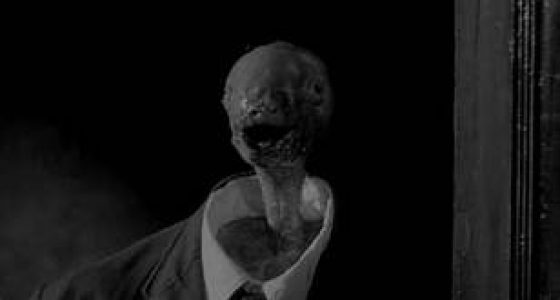
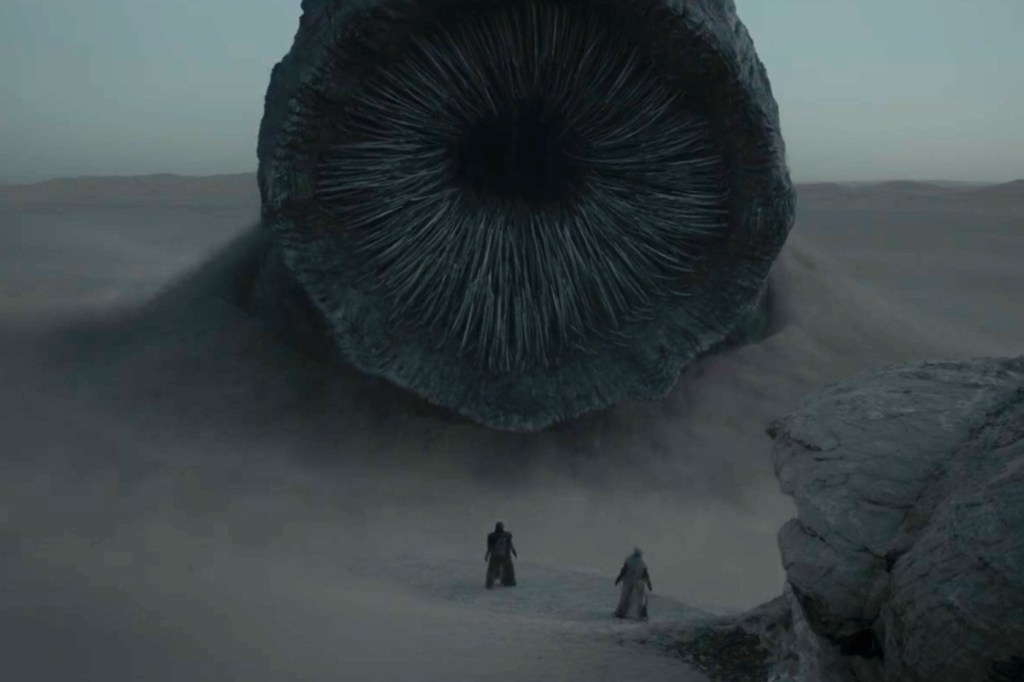
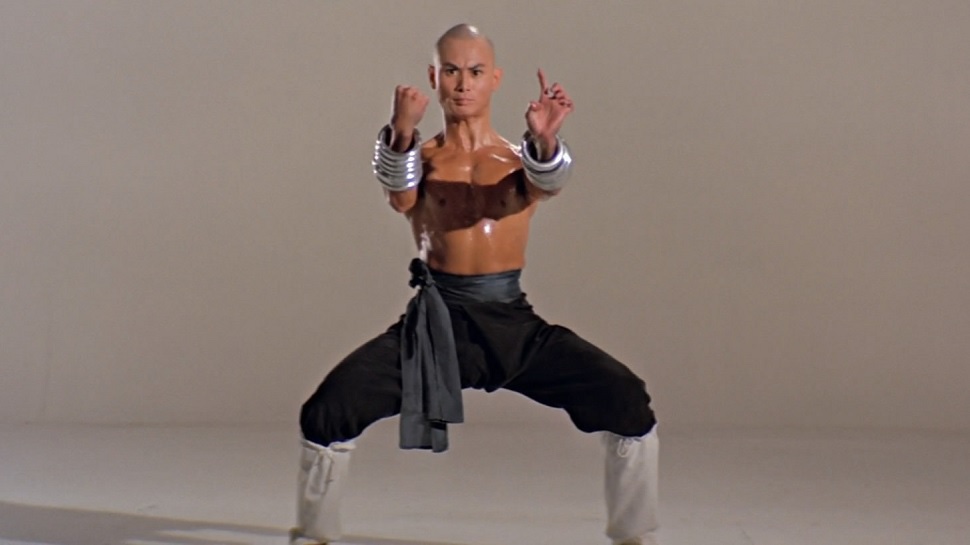
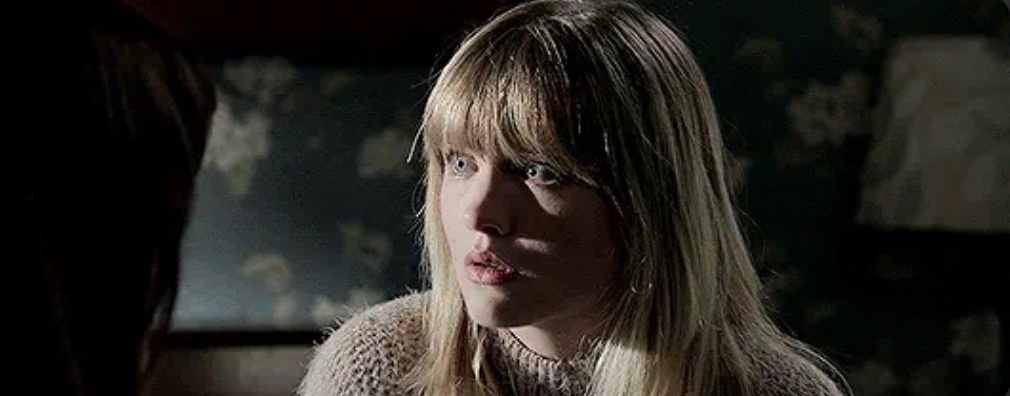
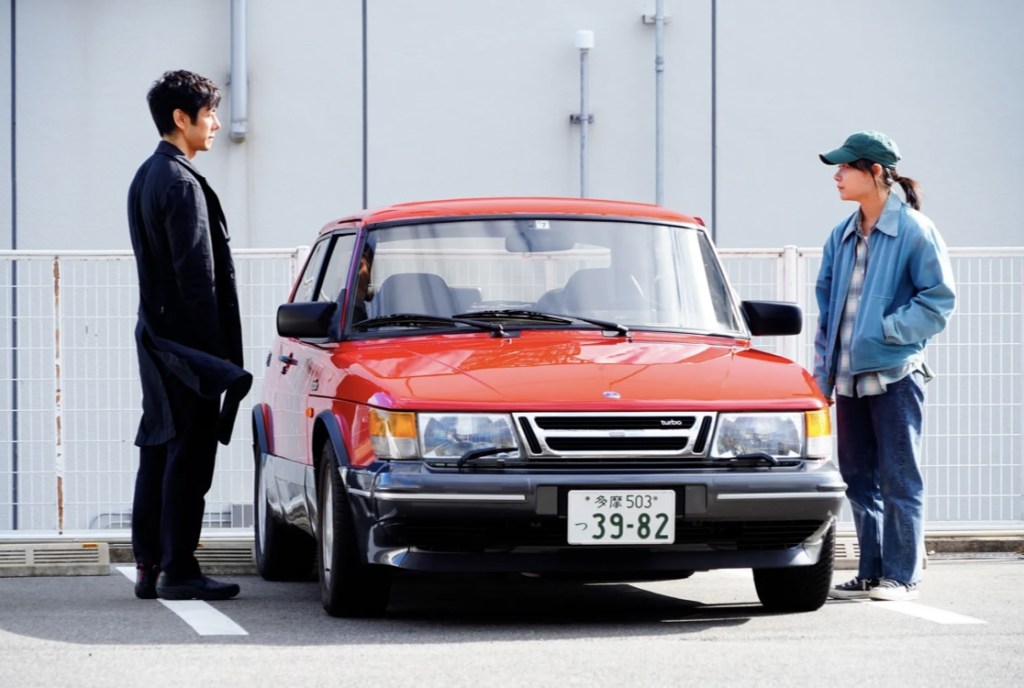
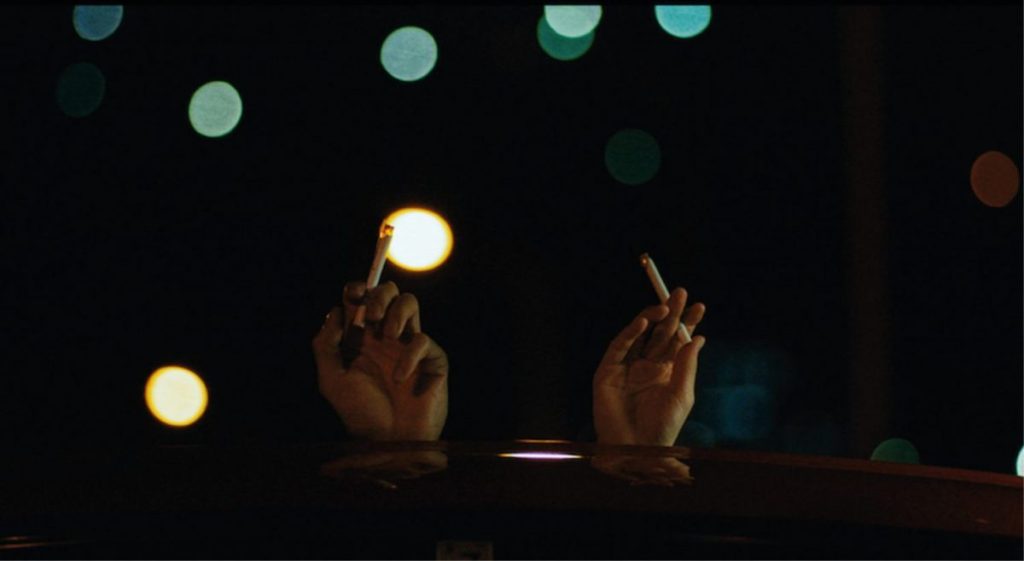
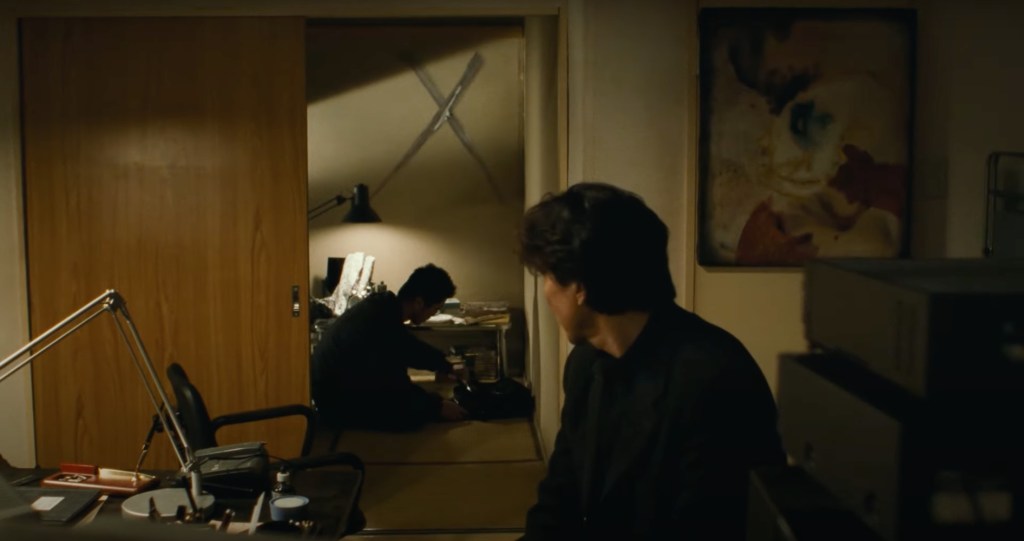

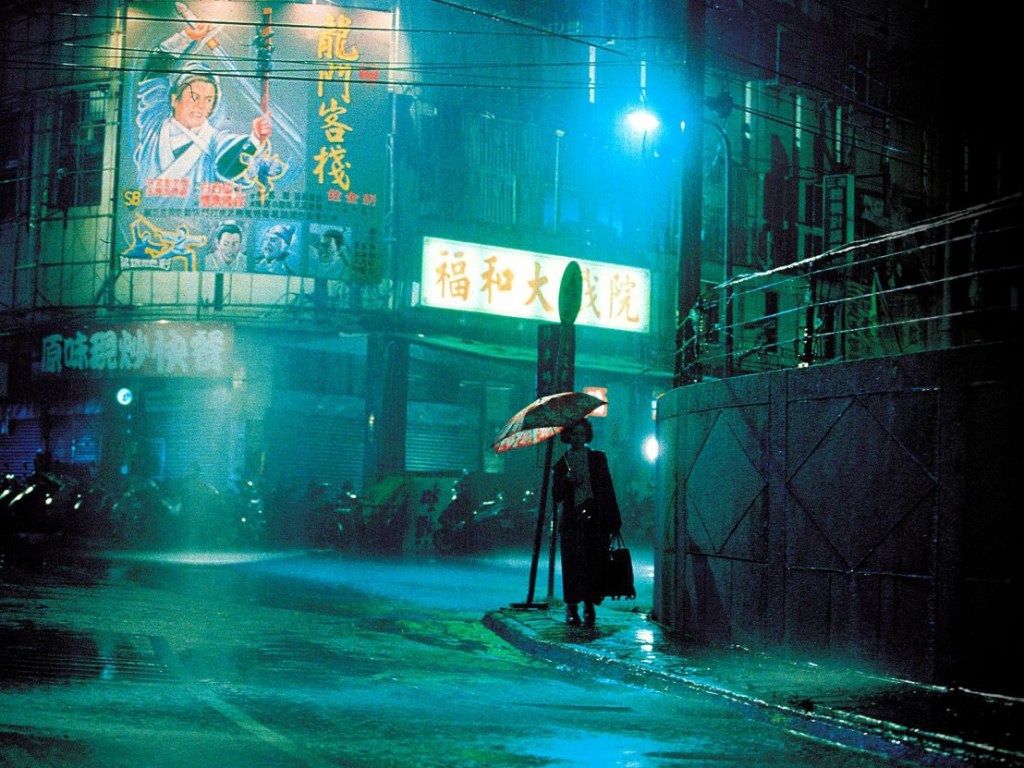

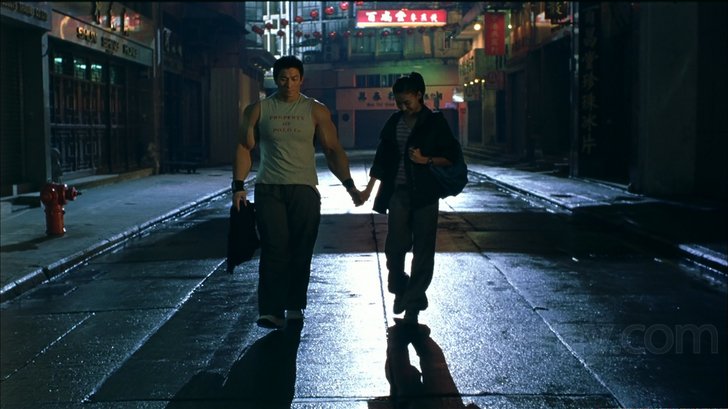


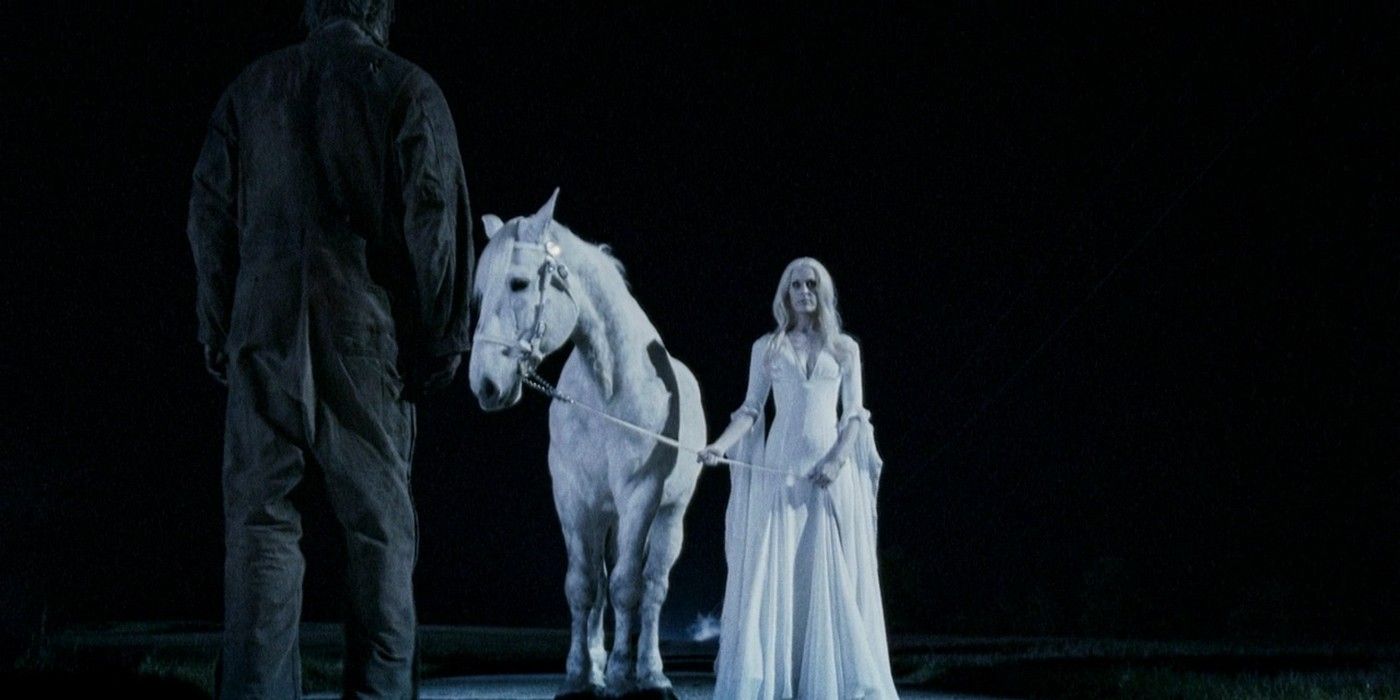


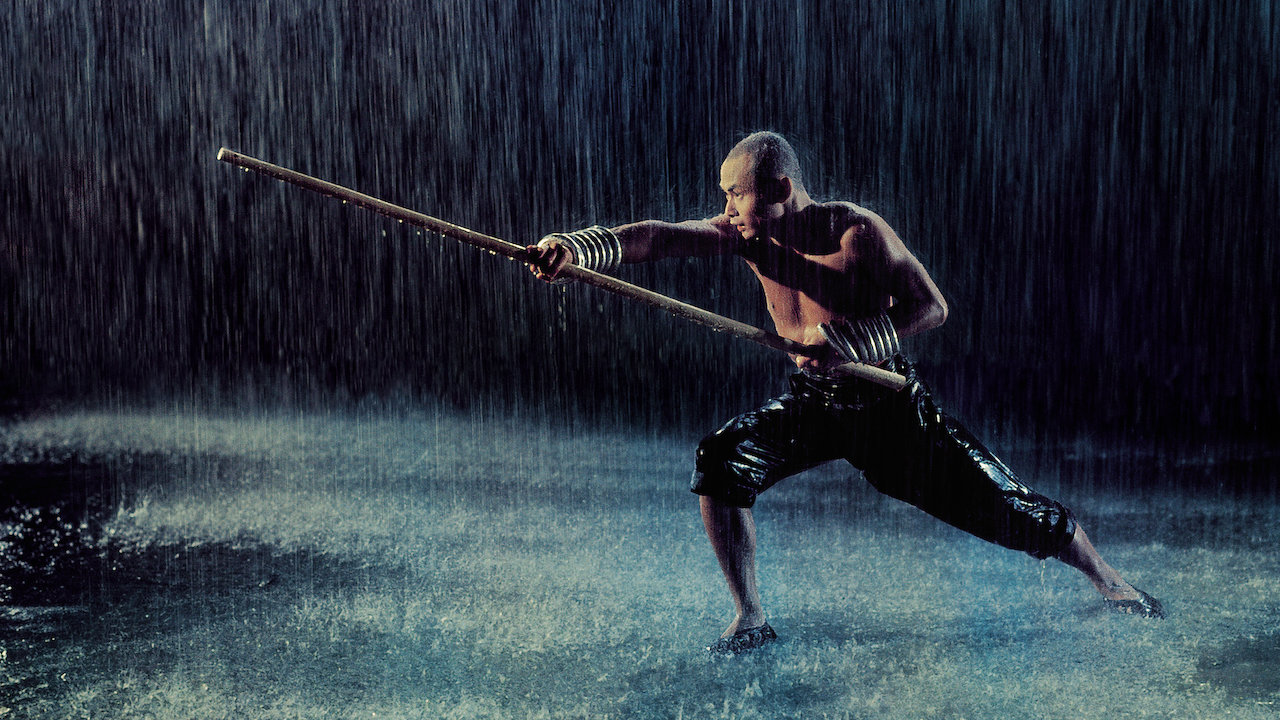


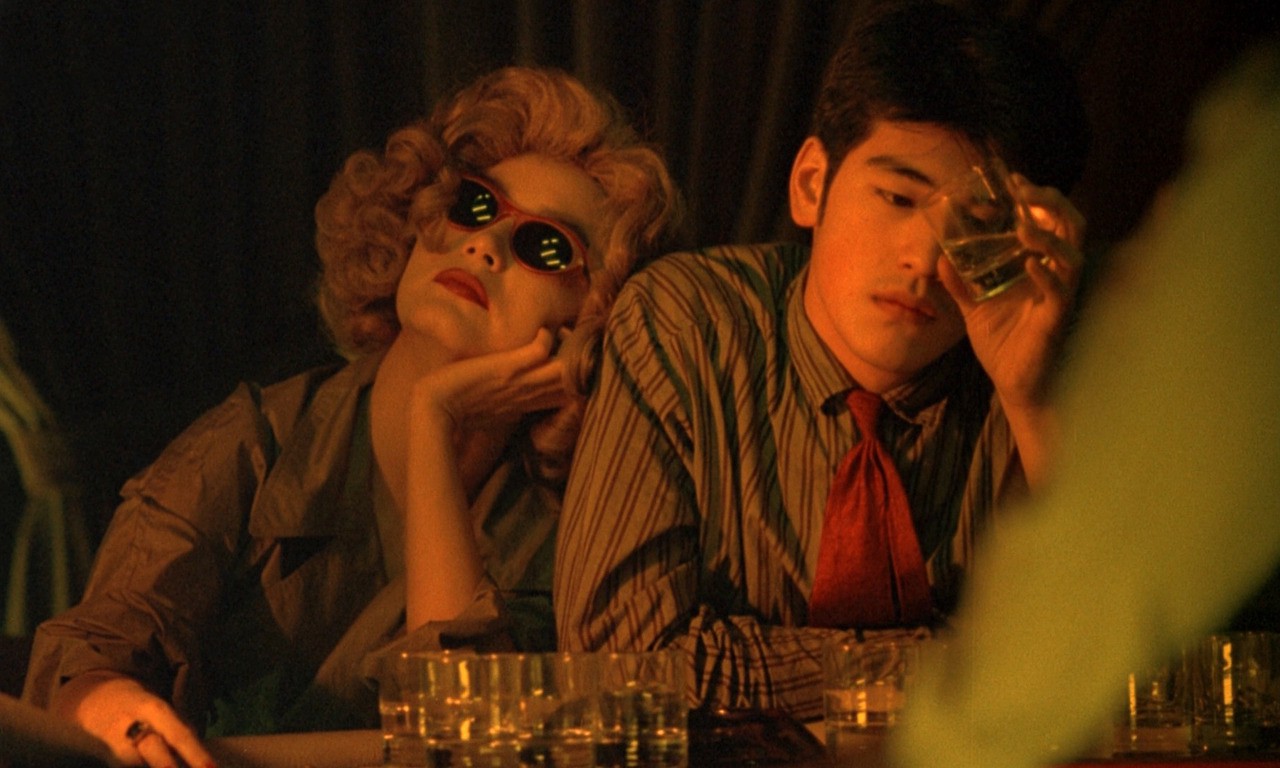


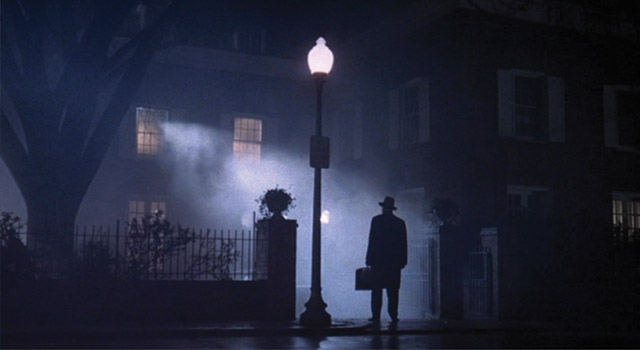
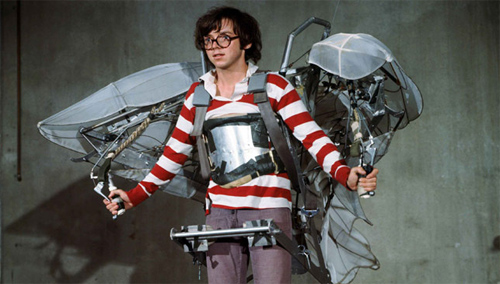
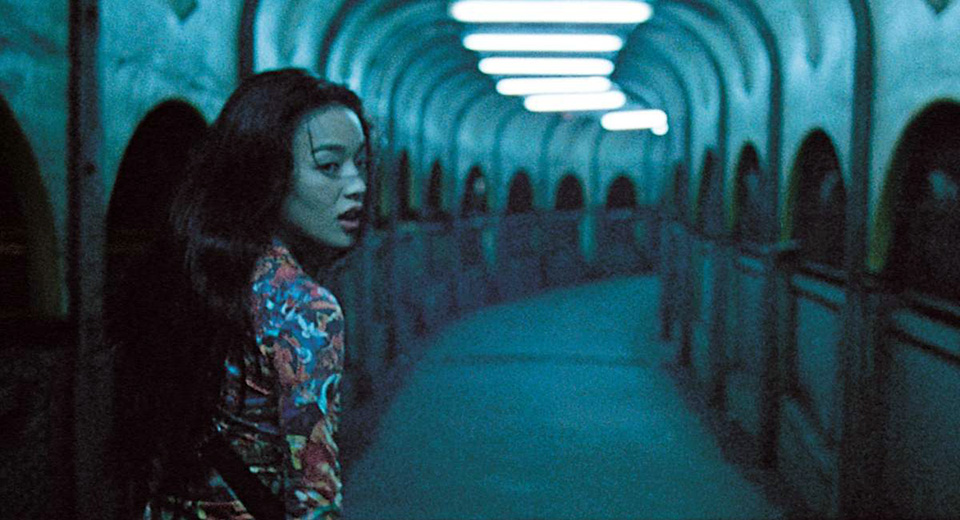

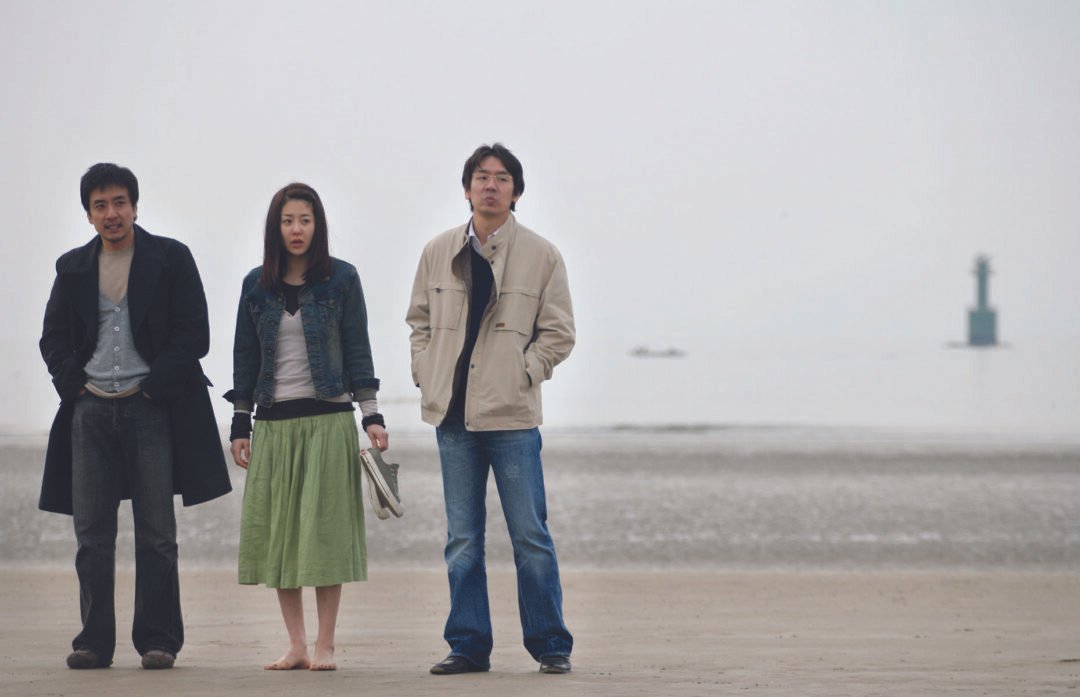


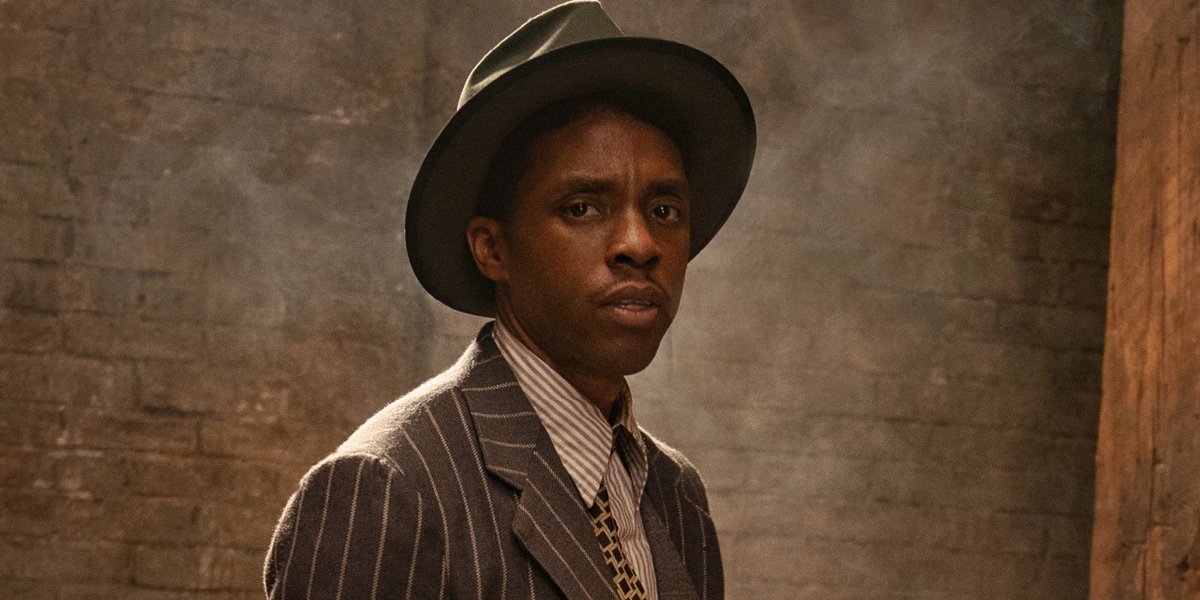


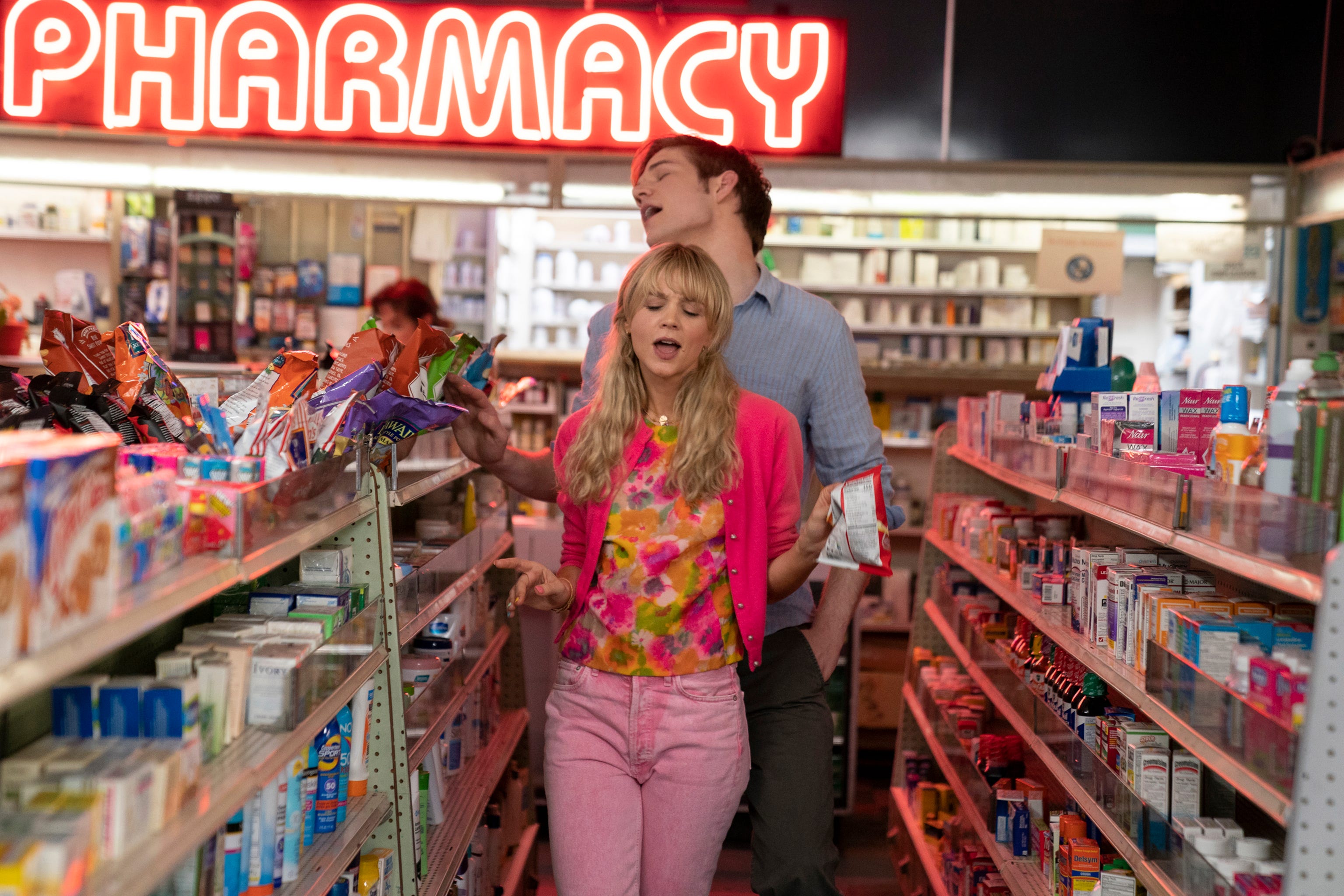
:no_upscale()/cdn.vox-cdn.com/uploads/chorus_asset/file/21970213/Screen_Shot_2020_10_16_at_1.24.04_PM.png)
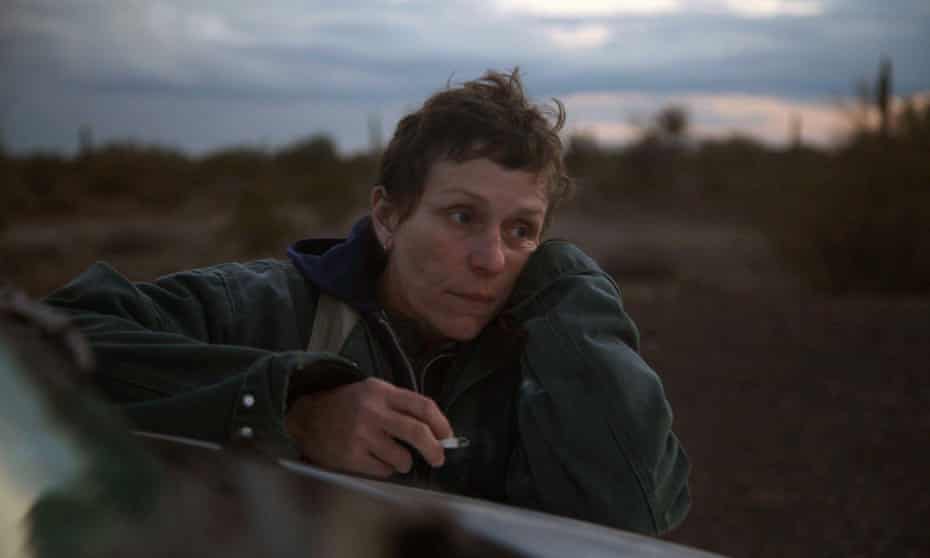


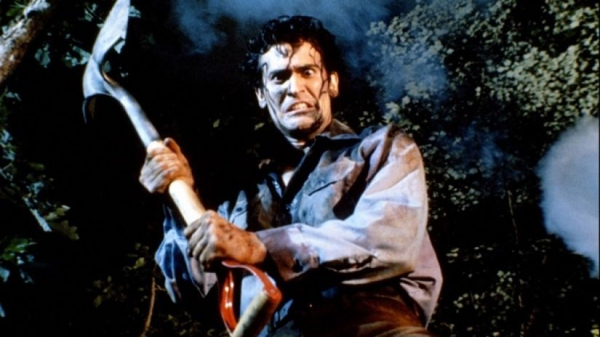


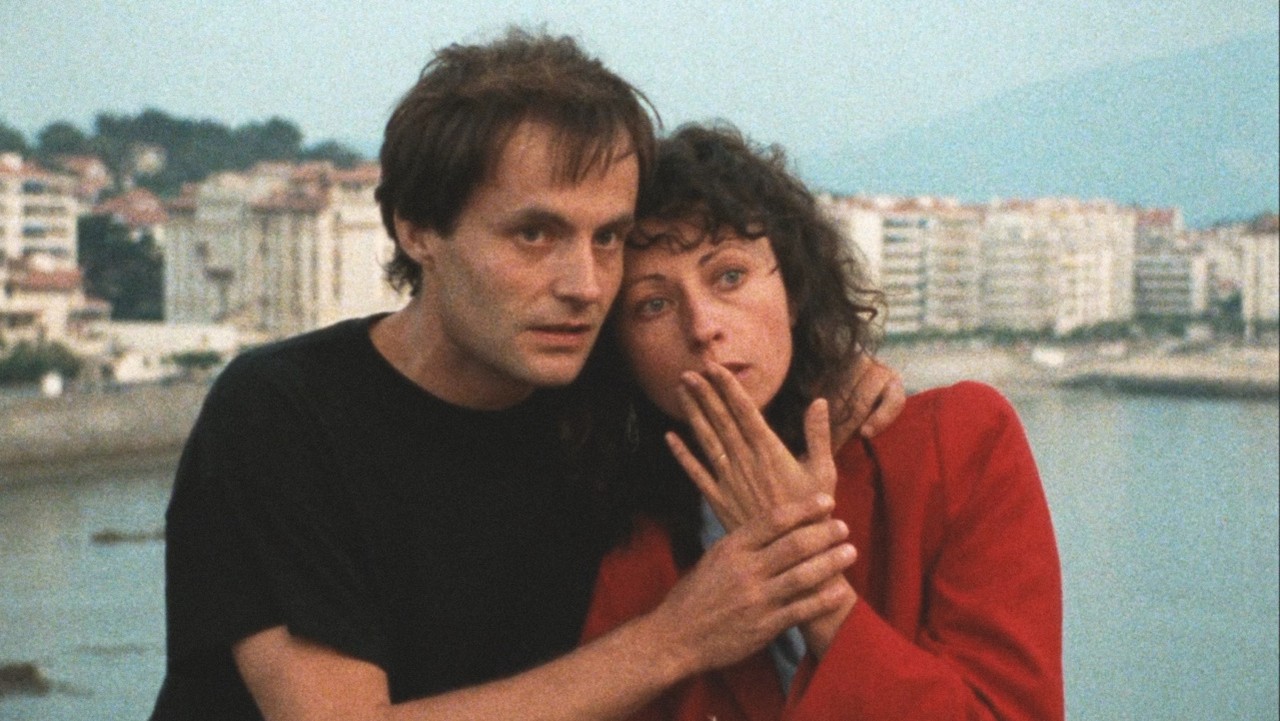
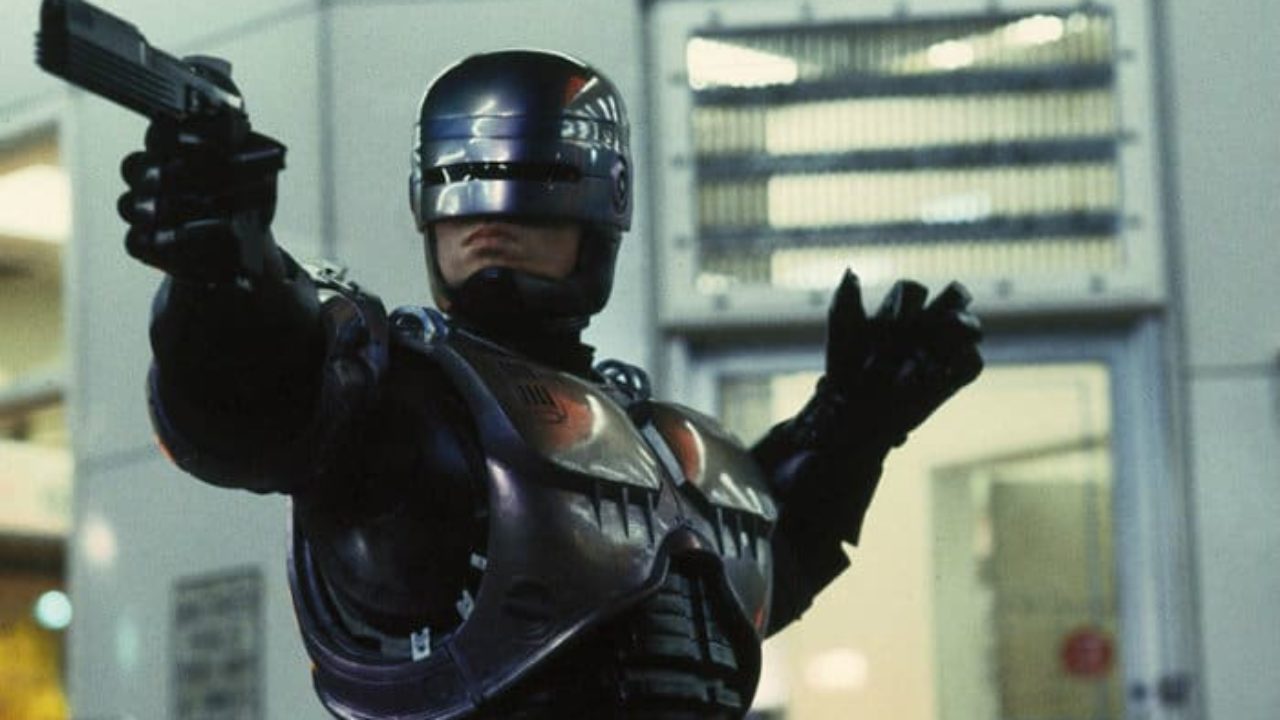

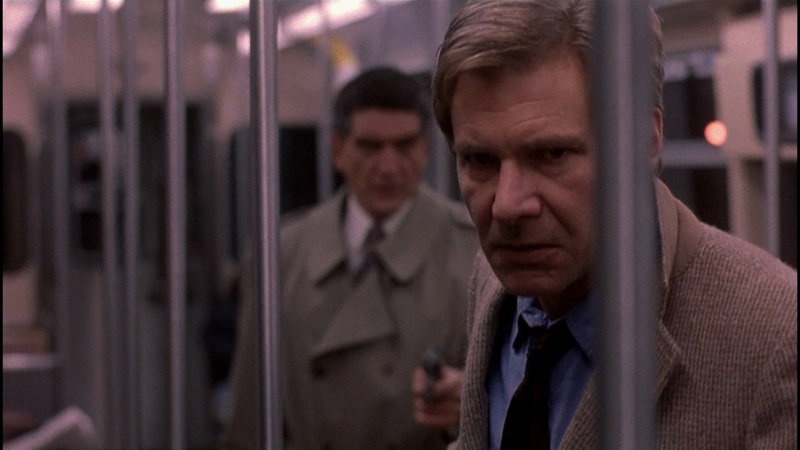






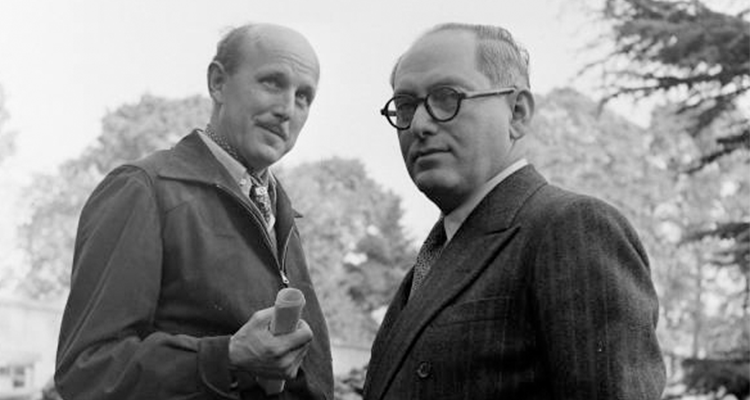




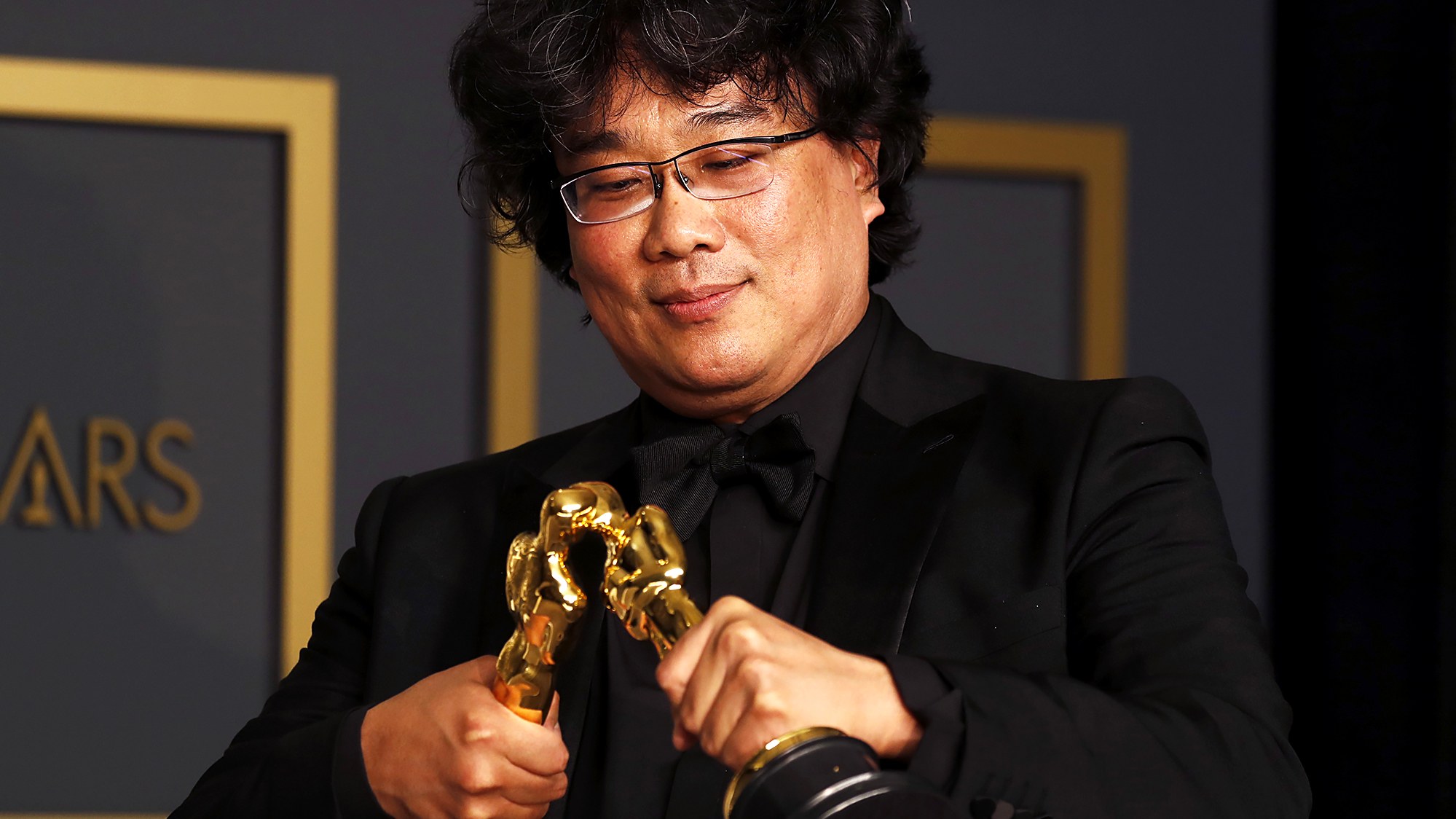

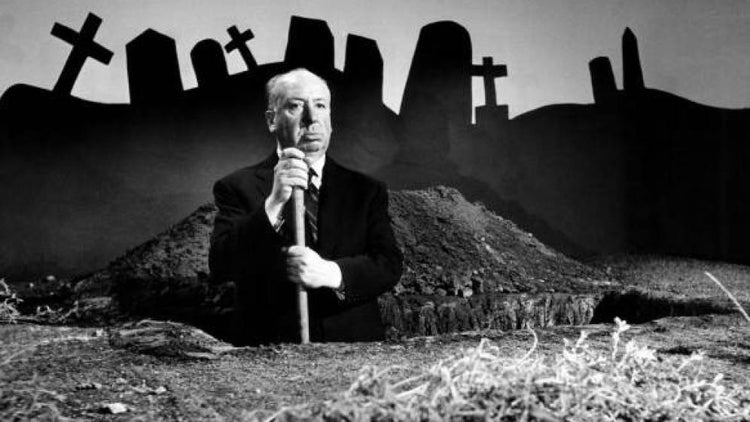


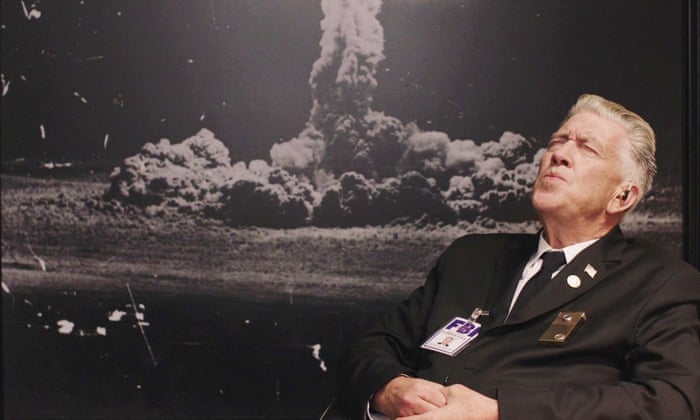

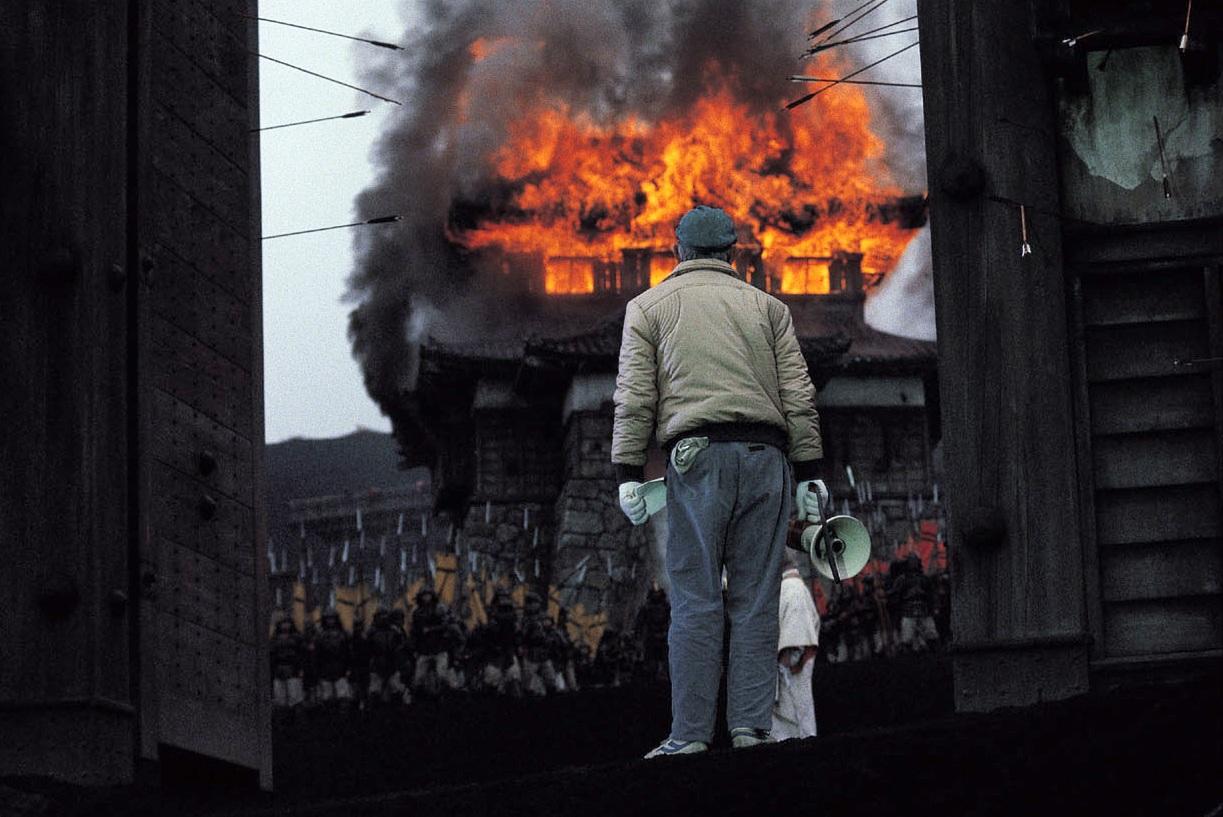
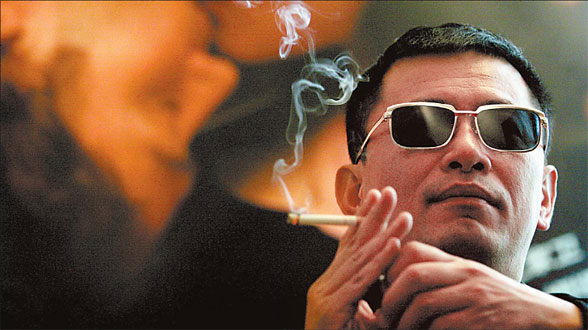


 The Movie Files