A Long-Overdue Personal Reappraisal of The Texas Chain Saw Massacre

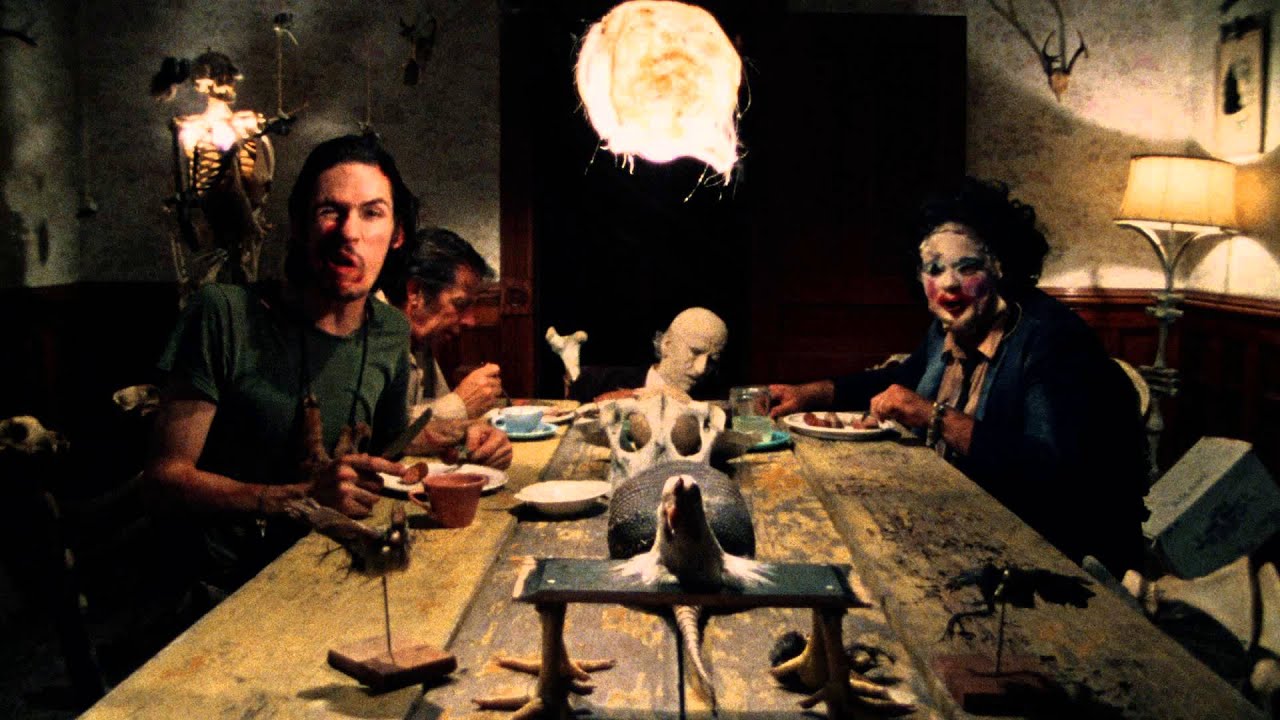
Image result for the texas chainsaw massacre 1974

One of the things I think about a lot, when it comes to my personal love of movies, is whether or not it’s too easy for a film to win me over. Whether I like too many movies, have too low a bar for what constitutes a great film. My letterboxd graph is extremely stacked on the right. I rarely find myself disagreeing with public perception of a universally beloved film. Does any of this really matter to me? Do I really want to fault myself for simply finding too many movies good? No, of course not, movies rule and there’s nothing to be proved by hating them to seem like you have taste. Now, this isn’t to say that there aren’t movies I hate (here’s looking at you, Joker). But with these movies, I typically don’t stand alone in my revulsion. I don’t really have too many unpopular film opinions (actually I really like American Hustle and yes I know it’s kind of a piece of junk but still fight me). But for a long time, there was one example I could point to, one thing I could use to prove that I don’t just go with public opinion or just like everything. And that was my undying, virulent hatred of legendary 1974 horror film The Texas Chain Saw Massacre.

I believe I have written about this on here before. I think, in the intro to my horror movie ranking post, I trashed Chain Saw and called it overrated. For well over a year after I first saw it, I was firm in this conviction. I fully believed that The Texas Chain Saw Massacre was pure garbage, among the very worst films I had ever seen. It made no sense to me. I love horror movies, it should’ve been exactly up my alley. It’s universally praised as a classic, a masterpiece even. I wondered why. Why did everyone love it? Why was it so considered a masterpiece? One of the greatest horror movies ever made?

It’s because it is. Sorry, past me. The Texas Chain Saw Massacre is a masterpiece. Typing such a sentence would’ve seemed insane to me as recently as a few weeks ago. But I finally gave into the temptation to watch it again. It had called me for a long time. I had to know if I was really that bad. It is not. It remained in my memory as something far less offensively poorly made and aggressively uninteresting as I had believed it to be after finishing it, which was part of why I chose to go back. I kept going “it can’t be that bad”. Because when I saw it the first time, I really hated it. Couldn’t wait for it to be over. So now, in the wake of my look back at it, I have to wonder why I felt this way.

What I’ve come up with is a multifaceted explanation: the first part is the atmosphere I watched it in, which I will explain in a minute. The second part is how inherently un-cinematic it is, which… I still find to be the case. Only now, I find that it works to the film’s advantage. Again, I will explain why. So the atmosphere. I saw this film as part of a marathon among my friends aimed at helping us filling in our gaps in horror movie knowledge. Texas Chain Saw was one we were especially looking forward to- we had heard, in no uncertain terms, that it was the scariest film ever made. So much so that we gave it prime positioning- the midnight time slot. Among such films as Psycho, Halloween, Rosemary’s Baby, and The Thing, Chain Saw was the most highly anticipated. And we all ended up hating it, after we had loved everything we had seen before it. What I’ve come up with is this: By midnight, we had settled into our groove and gotten more comfortable, bored even. So when Texas Chain Saw rolls around, boasting a budget of about six dollars, poorly conceived characters, and bad acting to boot, we didn’t much care for it. We talked throughout the buildup, and then when the horror started abruptly, we just didn’t stop because we weren’t engaged. It never quite pulled us in, and so we never gave it a chance. This is a lot of what I found odd- for such a universally acknowledged seminal work of film, how did literally all of us hate it? A lot of it has to do with how different it is from what we surrounded it with. The Texas Chain Saw Massacre doesn’t feel like a movie. It doesn’t follow the typical horror beats, of buildup, followed by a burst of horror, then a comedown, then buildup/burst/comedown repeat on and on before reaching the climax, a pure horror. None of that here. Chain Saw simply builds, then it launches headfirst into sheer horror and never comes down. Add that to the ridiculously grainy footage and you’ve got something that doesn’t feel like a film so much as an experience. And if you refuse to experience it properly, of course you’re going to hate it. So when I finally gave it another shot, what I found was new to me, but it didn’t surprise me. I was kind of like “yeah, that makes more sense”.

Image result for the texas chainsaw massacre first murder

So what did I find that was different? For one, the buildup works much better than I gave it credit for. Texas Chain Saw hits its atmosphere better than pretty much anything else in existence. You are so immediately immersed into this uneasy world, so that when the killing starts, you’re horrified, but it feels sickeningly in place. The second, and maybe biggest, thing is the first appearance of Leatherface. That’s the moment where it becomes clear what you’re watching, that you’re seeing something you shouldn’t be. The first time I saw it, I felt it was too low key, not flashy or scary enough. It’s all part of the film’s rejection of the fantastical in favor of gritty realism. It’s so simple- Leatherface pops out, smashes his prey with a hammer, grabs his body, and leaves, ducking back into his cattle-skull-adorned little room. It’s pure hell, and a fitting glimpse of what’s about to happen. From then on it’s ruthless. The dread and intensity never let up, you never get a break from the atrocities unfolding before your eyes. It’s the essence of horror distilled down to a pure form that’s present in nothing else. It’s one of the great achievements in horror because it’s so uncompromising. There’s no escape or even a brief respite from any of this. The Texas Chain Saw Massacre tells you that you are going to stare into the darkest depths of hell and you are going to suffer and you are going to like it. It’s incredible, and it’s something I regret spending so much time not loving.

So goodbye, hatred of The Texas Chain Saw Massacre. You were one of the most interesting cinematic opinions I had, even if you were tremendously misguided and ignorant. I will miss you. And hello, love of The Texas Chain Saw Massacre. You truly further my love of horror movies and film itself. You’re objectively the correct opinion, and very much the more fun one. I look forward to a lifetime of feeling about this movie the way everyone else does- with the reverence and awe that it commands.

Image result for the texas chainsaw massacre

What an excellent day for a post about The Exorcist

I can’t be exactly sure what it is, but the power of something or other keeps compelling people to go back to The Exorcist. It’s been out for over 45 years, a time period in which it built a reputation as the scariest movie ever made and cemented itself as a touchstone, a rite of passage for horror fans. Debates abound about, after four and a half decades, it’s still as scary- whether it has managed to maintain its terror factor despite its pop culture ubiquity and (debatably) dated special effects.

Yes. Yes, it is still straight-up terrifying, and if you think otherwise you may have watched a different movie. It exudes an atmosphere of pure, unmitigated horror. It’s the ultimate 4-AM first-time viewing experience, especially if you are (like I was) still a horror-averse idiot who thinks “oh, this won’t be so scarring”. And then it starts. And everything you’ve heard about it, every “scariest movie ever” claim and every “you won’t sleep for a week” assertion comes back to you and then there’s the title screen and OH GOD THE TITLE SCREEN and that score and the string instruments that have come directly from the pits of hell hit and you’re thinking “i can’t do this I can’t do this I can’t do this” and then it spends like 10 minutes on an archeological dig in the middle east. I think I went off on a tangent there but my point is as following: The Exorcist is life-changing. It’s as great and as bat-s**t terrifying as you’ve heard. It’s disturbing and super scarring. After my first watch, I swore off ever watching it again. As of today, just over 8 months later, I’ve seen it three times. It’s that alluring, that fantastic, that great.

William Peter Blatty’s 1971 novel The Exorcist drew buzz. The book was upsetting to people on a level that nothing had really been before. It was protested by religious groups and caused an insane amount of controversy. So naturally, Hollywood (70’s Hollywood ruled) decided that it needed to be filmed.

While Blatty’s book was becoming a huge success (or at least extremely well-known), another guy named William was dominating another medium. William Friedkin’s The French Connection grossed $51.7 million (unadjusted, the 2nd highest grossing film of that year) and won 5 Oscars, including best picture and best director for Friedkin. He had recognition, and the ability to direct what he wanted.

After being turned down by Arthur Penn, Mike Nichols, and Stanley Kubrick (side note- while the movie is perfect as is, a Kubrick interpretation would’ve been cool to see), Blatty (a producer of the film) pushed the studio to hire Friedkin to direct because he liked the style of The French Connection. So began the most cursed production until Apocalypse Now began shooting 3 years later.

Friedkin was brutal. He manipulated his actors in extreme ways, including but not limited to: Slapping William O’Malley to achieve a solemn mood, lying to Jason Miller about where he was getting hit with pea soup before having it be his face, fired blanks randomly to elicit scared reactions from the crew, and turned the set of Regan’s room into a freezer during the exorcism scene. The atrocities of the film don’t stop there, as many people associated with it died during and after filming, causing many people to believe that it was cursed. It was boycotted and banned in several countries. Theaters provided barf bags at every showing. And it, adjusted for inflation, became the 9th highest grossing film ever made.

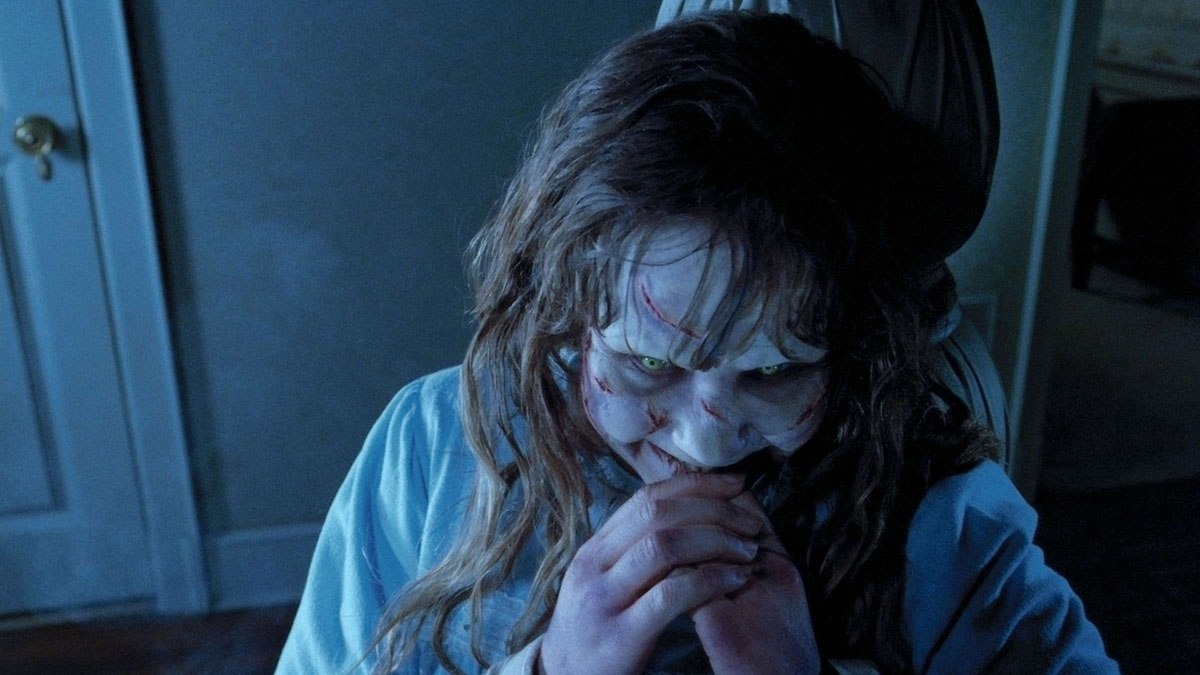
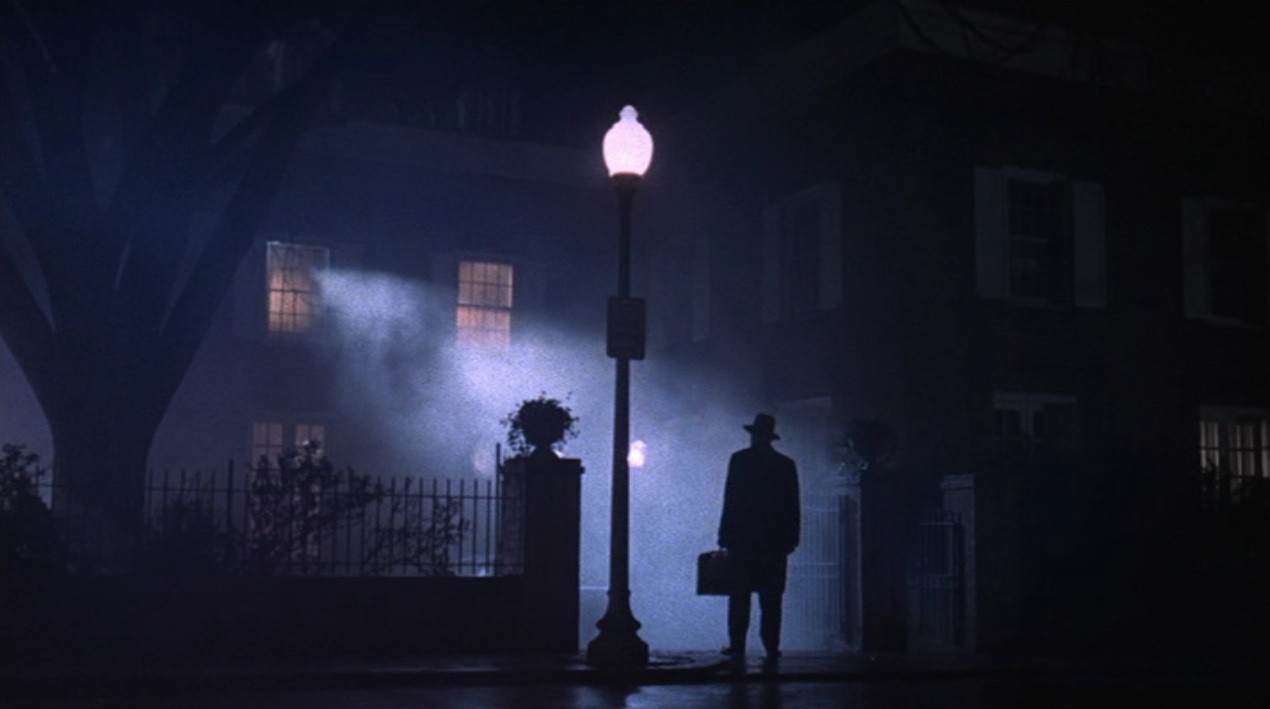
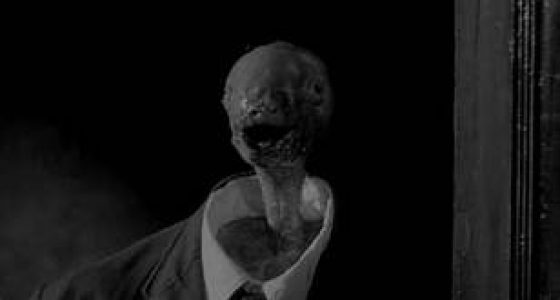
Which begs the question: How? The short answer is that it’s completely incredible. The long answer is that it was more or less completely different from anything else ever, and represented a huge change in a time when movies were changing rapidly. Prior to 1973, there’s not too much precedent for pure horror the likes of which The Exorcist is. Psycho in 1960 is far less sinister, more crowd-friendly (this is not a knock on Psycho, which is an even better film than The Exorcist is). 1968’s Rosemary’s Baby is probably the closest thing to it, but even that is more of a drama (also not a knock, it’s pretty unbelievable as well). So The Exorcist was different and new, and that’s attractive to a wide audience, no matter how nauseating and upsetting that new thing may be. There’s a different answer as to the critical and awards success it achieved, including ten Oscar nominations, including best picture and director (it won for best adapted screenplay and best sound). The reason for that is simply that it’s that good. Friedkin’s extreme methods paid off big time, as the final product is still the high-water mark for the genre, the thing that every great new horror movie (see last year’s Hereditary, which ascends to the level of such films as The Exorcist and The Shining). Images, lines, scenes from this film stay with every viewer, and for all of the great things about it, one of the best things you can say about The Exorcist is that it stays with you. That eerie atmosphere that is created with that first scene never leaves, it’s there long after the credits roll. For all of its incredible technical aspects, for every great performance, for every shot that’s the greatest single movie frame ever (it’s just the one (see above picture), but that’s enough), the triumph of The Exorcist is how damn unnerving it is. That’s what makes it the greatest horror movie ever made. 45 years on, we’re still waiting for something to top it.

Alien Day: looking back at the horror classic

Today, April 26th, is (unofficially) Alien day, named after the planet LV-426 in the legendary movie. So what better time to look back on Ridley Scott’s masterpiece (which turns 40 this year)? Spoilers ahead.

Image result for alien 1979

The original Alien, released in 1979, is quite simply legendary. It’s spawned a franchise and a multi-film crossover (it’s probably better not to think about that, though), features one of the most legendary horror movie monsters in history (see above) and one of the most absolutely terrifying jump scares ever filmed (also see above). It’s been endlessly parodied (most notably in The Simpsons and Spaceballs). It has possibly the single most iconic tagline ever. It provided the world with one of the greatest heroes in not just horror, but all of cinema. It’s built a reputation as an absolute touchstone in cinematic history, one of the greatest of all horror films and sci-fi films (and, to be honest, just kinda films). What’s truly amazing about Alien, however, is that it 100% deserves its legacy. Four decades after its original release, it still terrifies and amazes. The aforementioned jump scare somehow manages to maintain its horror on repeat viewings, the climax of the film is exactly as intense on every watch. Visually, Scott’s directorial brilliance shines through throughout the entire film, from the mysterious, alluring shots of the alien planet to the eerie, frightening darkness that conceals the monster for most of its existence aboard the Nostromo. How, after 40 years, does Alien hold up so well?

Image result for alien 1979

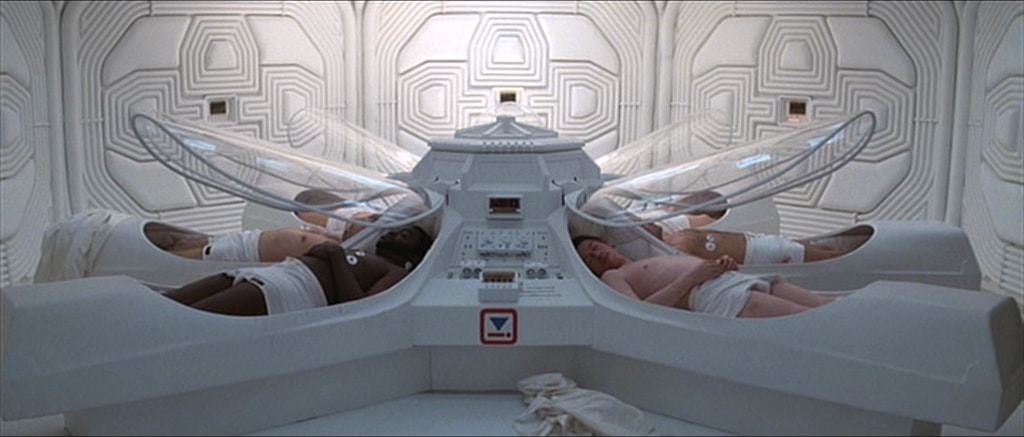
My first experience with Alien was a few months ago, before I was a horror movie fan. Alien is a major reason for my obsession with the genre, due to the experience that was my initial viewing. Alien was simply different from anything I had seen, and I’m positive that this has been the experience of many, many other people who have become acquainted with the film over the last 40 years. One thing that makes Alien so fascinating is that it famously isn’t in a hurry. The first half of the movie is building up the atmosphere that forms the crux of its greatness in the second. Alien unfolds at such a slow pace, and this is because there’s so little that happens. The major events are as follows: The crew of the Nostromo is woken from sleep due to a distress signal. Some of the crew embarks onto the planet that sent out the signal. One of them is attacked by an unidentified organism. He is brought onto the ship in a coma. He wakes up and is then immediately killed (in possibly the greatest death scene in the history of film, another accolade for Alien). The alien that bursts out of his chest escapes into the ship. The rest of the film is the surviving crew slowly getting picked off one by one (save for Sigourney Weaver’s iconic Ripley and Jones the cat) punctuated by a massive revelation that they’ve been set up to die so that the Weyland-Yutani corporation, which employs them, can get their hands on the alien. These events are stretched out over a runtime of 1 hour and 56 minutes, and Alien never manages to feel boring for a second. Ridley Scott’s skill is visible in every frame as he constructs a flawless masterwork of tension in which long periods unfold with legitimately nothing happening. Alien is undeniably sparse, and this is where it succeeds, where it finds the otherworldly excellence that evades the countless pretenders to the throne that followed it.

Image result for alien 1979

Alien’s unique style is a reason why it holds up today, but the reason why it’s entered the general consciousness in the way it has is because of single indelible moments and aspects of the film. Would Alien be the classic it is today if it weren’t for the legendary chestburster scene? Would it routinely crack top 10 lists of the greatest horror movies ever if the vent scene (the mere words make the hairs on the back of my neck stand up) had been done differently? How many movies can you name whose tagline is so intertwined with the film itself? The image of the egg cracking open to reveal a green glow. The facehugger. All of these are iconic images that any casual movie fan is familiar with. There is one thing, however, that is more memorable, more famous, more terrifying than any of those.

Image result for xenomorph alien 1979

I’m referring, of course, to the Xenomorph. The Alien itself. H.R. Giger’s notorious creature is an icon in its own right, a horror villain on par with Freddy Krueger, Jason Voorhees, Michael Myers, and Hannibal Lecter. There’s endless literature on how the creature was designed to elicit specific responses, how it was designed, created, etc. At the most basic level, the thing is just straight-up terrifying.

Image result for alien 1979

If Alien were simply the sum of its parts, it would be a pretty fantastic movie. But it’s not. There’s a quality to watching Alien that’s hard to pin down. It’s endlessly rewatchable, boundlessly iconic, and pretty close to, if not totally, perfect. Alien is one of the greatest cinematic classics there is. Over the last 40 years, you can hear a whole lot of people scream.