
“You can’t write, you can’t film, what will you do now?”
“Live, I guess”.
This exchange occurs in one of the first scenes in Pedro Almodovar’s latest, Pain and Glory. Antonio Banderas’ aging director, Salvador Mallo, has reached a point where he can no longer work, and is faced with the a tough question: what do you do once your life’s work is finished?
For Salvador, the answer is give up. He develops a heroin addiction and shirks all of his responsibilities, notably a q&a after a screening of a film he made 30 years prior. He reconnects with and subsequently re-alienates an actor he fell out with. He bounces around, seemingly spectating his own life, living more in the past than in the present.
Banderas plays the role with an indelible sadness, a heartbreaking nuance that should absolutely net him at least an Oscar nod. But the film clearly belongs to its director. Here Almodovar offers up his most personal film, an introspection that almost feels like it shouldn’t have been made public. But there’s the underlying theme of the film- art is never for the artist. It’s always for the people, one way or another. Salvador’s deeply personal monologue, that he wants to keep private, is performed publicly. Salvador doesn’t attend the performance, but someone else does- his ex-lover, who features prominently in the monologue. He seeks out Salvador and they talk. In this conversation, it becomes clear how much he was affected by Salvador’s work. Salvador speaks on numerous occasions about his film “Sabor”, once saying that it had been deemed a masterpiece. He says this in a wholly indifferent, even resentful manner. He hates the performance that his lead actor had delivered, claiming that it resulted in an entirely different character than the one he had written.
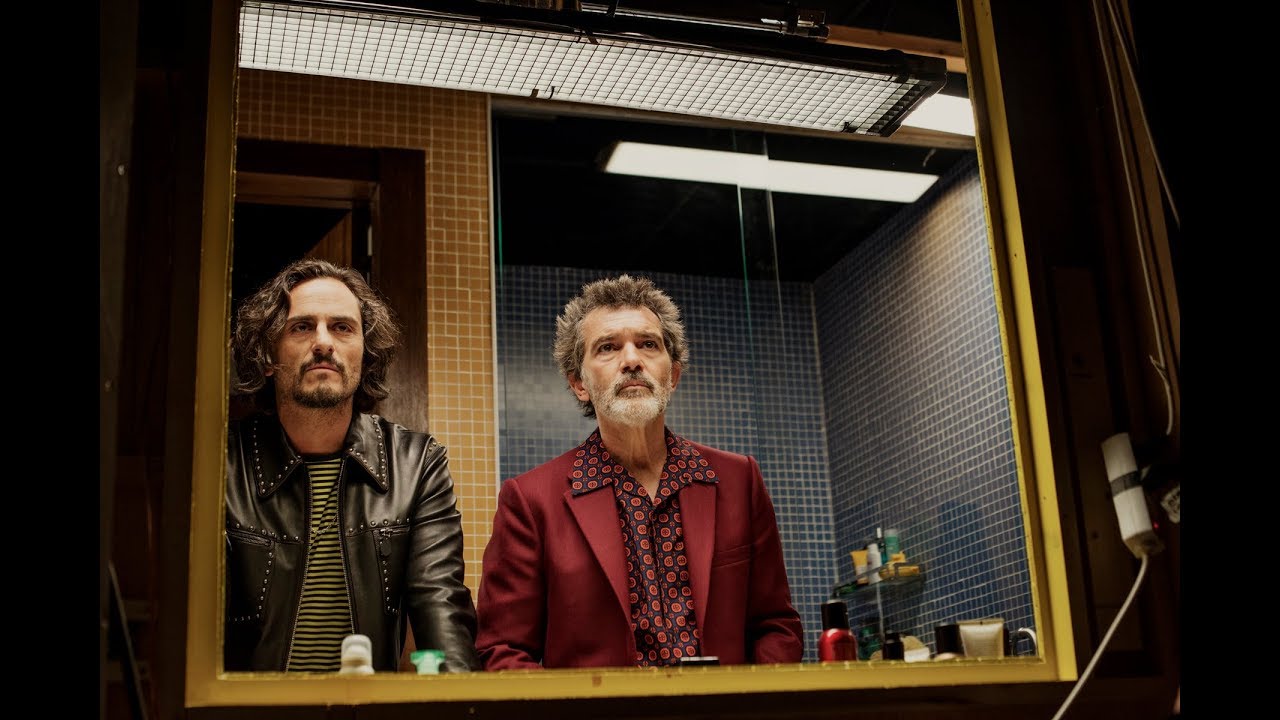
For all his meditations (and there are many) on the nature of art and artistry, Almodovar’s true focus is on his life outside of film. The title of the film is Pain and Glory, and the nature of those two concepts is what’s so fascinating here. The film alternates between Salvador’s childhood and the present. In childhood, he was poor. His mother struggled to support him. Her relationship with Salvador’s father was rocky. In the present day, he’s an internationally renowned filmmaker. He’s wealthy. He’s grown up to be more successful than he could’ve imagined. But yet he’s in constant pain. His physical ailments ensure this, and as such he’s miserable. Beyond physical pain, he’s forced to deal with his shortcomings as a friend, a son, and a lover. Yet in his childhood, he was constantly happy. When his family moves into a tiny cave home, his mother is inconsolable. Yet all young Salvador can think to be is excited about the light that seeps in through a grate in the ceiling. He teaches a man much older than him to read and write. He receives a scholarship to a seminary. His childhood, which by all accounts should be painful, is glorious, and his adulthood, in which he’s a glorious, famous figure, is painful for him. There’s Almdovar’s paradox- pain begets glory begets pain. You can never truly be happy as an artist, no matter how many people are made happy by your work.

Yet in the end, it’s still all worth doing. This film’s final scene is (spoilers, if you believe that a film like this can be spoiled, which would probably make you wrong, but it’s your life I guess) the perfect way to end things. There’s a scene of young Salvador and his mother (Penelope Cruz, in top form) on the night before they move to a new village. Young Salvador asks if there’s a cinema where they’re going. His mother replies that she’ll be happy if they have a house. The camera slowly zooms out to reveal a boom mic operator- the whole thing is a film. Cut to Salvador calling cut. The film ends with the crew setting up the next shot. The message is clear- life as an artist may be tough, and art may be for the consumption of others, but it can also be catharsis, therapy, affirmation of life.
In his childhood, Salvador was drawn by Eduardo, the man he tutored. He feels a connection with Eduardo, and it is implied that he’s the person that made him realize his homosexuality. Eduardo attempted to send Salvador the drawing, but it never made its way to him. In the present, Salvador finds it at an art exhibition. He buys it. The inscription on the back is a message from Eduardo to Salvador. Salvador comments that the picture finally made its way to the person who it was intended for. The scene with Salvador’s ex-lover is another instance of this, in some way. The central thesis of Pain and Glory turns out to be that art may not be for its creator, but it’s always for someone. And that makes it important. Almodovar certainly seems like he’s making this film for himself. It’s pretty much autobiographical, and it contains all of his principal obsessions: mothers, hospitals, the theater, and Penelope Cruz. But really it’s for his fans, or anyone who might want a glimpse into the psyche of a genius. At least that’s how it ends up. Almodovar has crafted a(nother) perfect piece of art, and a beautifully intimate one. One of the year’s greatest films, in a year with no shortage of excellence. For all the reasons it’s worth watching- the excellent cinematography, the career turn from Banderas, its intricate and rewarding psychological nature, the excellent bits of animation- the only thing I feel is necessary to recommend it are the four words that appear on screen at its onset- “Un film de Almodovar”. It most certainly is that.
Rating- 5/5
 The Movie Files