Crimes of the Future: David Cronenberg and the End of the Line

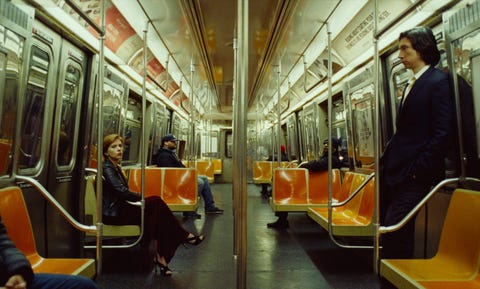
Just shy of 40 years ago, in February of 1983, Canadian horror filmmaker David Cronenberg received studio money to unleash Videodrome, a gruesome paranoid thriller about a sleazy TV executive who stumbles upon a channel airing, seemingly, snuff films. Smuggled into the film behind the likes of James Woods and Blondie frontwoman Debbie Harry were piles of Cronenberg’s trademark gore, viscera, and fascinations with transformations of the human body. He lost that studio money. Cronenberg was, by a month, still in his 30s at the release of Videodrome. He was young, spry, full of ideas. The poor box-office reception of that film wouldn’t slow him down, as for the foreseeable future he went further into his controversial, often unappealing idiom.

Today, David Cronenberg is 79. Eight years have passed since Maps to the Stars, until recently his latest film, debuted at the Cannes film festival. In those eight years, the popular wisdom seemed to become that he had entered a state of semi-retirement. No projects were announced, no indication of movement. In the 21st century, it was starting to look like he had outgrown his trademark body horror, moving towards more contemplative and dramatic examinations of his fascinations such as A History of Violence and Eastern Promises. The violence and tone remained, the running threads about blood, transformation, what it means to be human, all survived, all existed as an unmistakably distinct marker of the man’s work. But the man himself, in step with his career-long question about how much we can change before we are no longer ourselves, had encountered a fundamental shift. And then he stopped. It felt natural, in a sense. Maybe he had said all he had to say.

In 1970, Cronenberg directed Crimes of the Future. This was even before the early period when he first clicked with the body horror that would become his MO, putting out films like Shivers and The Brood. This was Cronenberg in his infancy. Crimes ran about an hour long, and its reputation in today’s Cronenberg canon is that of an oddity, even a failure, a diehards-only affair that really isn’t all that significant but for being prehistoric. It earns this, never seeming fully assured of its themes or why its visuals are the way they are. In the film, you can see Cronenberg forming, but it is unclear what he’s working towards. Something was missing.

In early 2021, Viggo Mortensen revealed that Cronenberg had something else cooking. It was to be his first body horror movie since 1999’s eXistenZ, his triumphant return to the genre with which his name was always fated to be intertwined. He was finally filming a script he had been kicking around for decades, since he was a younger man. Only in his late 70s was he ready to bring it to the screen. When originally conceived, Cronenberg had given it the name Painkillers, but for its long-awaited entry into reality, he decided upon another title: Crimes of the Future.

This marked the beginning of the end of a series of long processes for Cronenberg: returning for his first feature film since 2014, returning to body horror for the first time since 1999, returning to the script for the first time since its abandonment in the early 2000s, and returning to that title, vividly evocative but lost on a film nobody remembers, for the first time since 1970. In the eyes of the public, it was the beginning of a cycle leading to the film’s release. But, fittingly for a film about, among other things, the agony of artistic creation, the weight of the factors that had gone into its arrival meant that the remaining cycle was merely the tip of the iceberg.

So, in the end, what’s the film we got out of all this? In short, it’s a masterpiece, a vintage example of Cronenberg’s fixations and stylistic tics. But it’s also completely befitting of what led to it. As mentioned, the new Crimes of the Future focuses on artistic creation, legitimizing the term “suffering for your art” in new ways: the main character, Saul Tenser (Mortensen), is a performance artist of great renown whose performances consist of the surgical removal of internal organs. These organs are entirely new, heretofore unheard of ones that Tenser grows spontaneously. In this process, Cronenberg zeroes in on the subject of bodily transformation that he has confronted in his art for decades, but reaches a new, self-referential question: are these transformations, in and of themselves, art? It’s a question Saul Tenser seems wary of, despite his own role in perpetuating the idea that it is. His art seems to inspire people to reach a variety of different conclusions: government agent Timlin (Kristen Stewart) defends it at one point by saying “many people respond to it”, an idea that she exemplifies perfectly. The art speaks to her in a way that consumes her, rewires her personally. For others, it sparks a political drive, emblematic of the idea that these growths are beautiful. An underground network of radicals who believe in eating plastic and embracing evolution others see as dangerous views it as perfectly designed to deliver a message. For Tenser, at least at the film’s onset, the art simply seems to be in the act of removal, and even this is unsure to him. His partner, Caprice (Lea Seydoux), views this removal as both artistically resonant and functionally necessary. All of these interpretations, often confusing and overlapping, spring from an act that is, by its artists, viewed as something akin to removing tumors.

The obvious way to view Tenser, and almost certainly the correct one, is as an analogue for Cronenberg. In his decades-long career, he has prodded at visceral, ugly obsessions on screen to an incredibly wide range of reactions: disgust and admiration, derision and acclaim, designation as both a peddler of shlock and an essential artist. The forces pressing down on Tenser are so disparate that his indulgences of them are easy to take as cool ambivalence, furthering a portrait of Cronenberg himself as an artist lost in perception of his art. The political movement that seeks to recruit Tenser into their cause views his art as a rallying cry celebrating the inner beauty of the human body; Tenser points out that his art centers on the removal of that beauty, inherently uninterested in letting it exist inwardly, yet the idea stays with him. The government agent who serves as Tenser’s contact in his capacity as an informant doesn’t see the point in his performances. Neither, to some extent, does Tenser; they’re useful as a job, or as a cover for his work with the government. Yet he feels compelled to defend his art, maybe buying into his own myth, maybe truly connecting with it. As his body changes, the changes themselves start to change. Tenser understands these fundamental movements, and has made himself amenable to them, liquid. Nothing is set in stone. He doesn’t have the thread of his art.

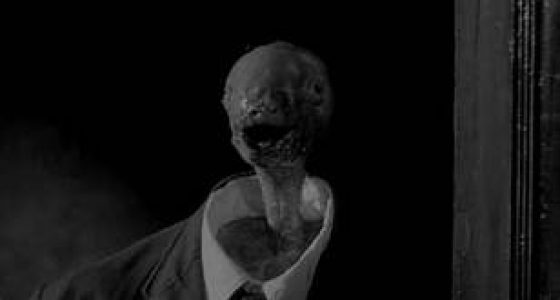
“Surgery is the new sex” is the film’s signature Cronenberg line. It’s what “Long live the new flesh” was to Videodrome. The invocation of the “new flesh” as something like a regime serves to depict the film’s conflicting cult interests in media and mutilation as all-encompassing, casting both hope and doom over the proceedings, giving them weight. In Dead Ringers, in an exchange not nearly as famous but just as essential to an understanding of Cronenberg’s self reckoning, one character responds to a comment that something is “so cold and empty” with “You can call it empty, or you can call it clean”. In that line, Cronenberg puts forth two options as to how one could view his films, not commenting, simply presenting them: his off-putting sterility could be for shock value, or it could be in service of a point about the sterility itself. The slogans of Cronenberg’s work have meaning; they worm their way into your mind, and they stick because of their resonance. “Surgery is the new sex” was designated as such before the film’s release, from its appearance in the trailers, before meaning could be adequately ascribed to it. We consume our media beforehand. Knowledge of Cronenberg’s prior work helps for context, for instance, alignment of the two concepts in films such as Crash and eXistenZ might help you to figure out what it means. So the phrase caught on, and in its actual application in the film, it’s fitting that it did. Spoken, again, by Stewart’s Timlin, the line comes to signify a deep personal response to Tenser’s surgical art that builds yet another example of weight he finds himself carrying. It’s also a commentary on Cronenberg’s own repeated depictions of mutilation, and how he has occasionally tended to present them as erotically charged (see, again, his Crash). This, like the Dead Ringers line, seeks to interrogate how we feel about these concepts. Cronenberg has always been invested in the concepts behind what he presents more than the presentation itself, which is of course, what has caught on. In one scene, Tenser views the performance of another body-based artist, the “Ear Man”, whose body is adorned with dozens of ears. Ear Man is suitably creepy, with sewn-shut eyes and mouth, complete with his own Cronenberg-esque slogan: the chillingly spoken “It is time to stop seeing”. Yet, as Tenser comments, the ears don’t even work. He dismisses this art, which he perceives as phony, due to its lack of functionality. Like Tenser, Cronenberg distinguishes himself by his concern with deeper meaning. The slogan of “Surgery is the new sex” prompts Tenser to ask Timlin why it’s necessary for anything to be “the new sex”. She responds simply, saying “It’s time”.

Crimes of the Future is, in a sense, Cronenberg taking back his own signifiers, coming to terms with what they mean to him rather than how they play to audiences. The movement of time was necessary to reach this point, this film could not have existed earlier. After spending so long away from body horror, mutations and mutilations of the flesh, his ideas have of course evolved. The world has evolved with them. These parallel evolutions are, in a Cronenbergian sense of fluid reality, mutations themselves: in The Fly, the central transformations are rapid, and in Crimes, they have slowed down to keep pace with natural human evolution. Is the implication that they’ve been happening to all of us since before we realized it? In this re-contextualization of what his signature transformations really mean, Cronenberg suggests just one of many late-career advances in his work’s philosophy. The more significant revelation in the film, however, concerns the work itself. The body horror of Cronenberg’s films has always teetered between something he’s been frightened by and enamored with, this unresolved internal tension part of what makes him so fascinating. By the film’s end, Tenser, who has resisted the more fringe political readings of his artistry, finds himself fascinated by them. In the final moments, he makes a move to break free from the rigid, mechanical structures he has let govern his life and embraces the philosophy of the plastic-eaters. In the last shot of the film, Mortensen’s face turns to elation, to release, for the first time in the film. His performance is a tormented one, pulled apart by surrounding forces externally and by the renegade forces of his own body internally. He never rests: he plays sleep as painful, and it’s no coincidence Cronenberg uses sleep as the state where he develops his art. Yet in that final image, he is at peace. He has made a truly independent choice for the first time that we see, and that choice is to give in to what his body wants, correct from the course of removal, and learn to love his evolution.

David Cronenberg has already announced his next film, The Shrouds, which is set to reunite him with Eastern Promises standout Vincent Cassel. From the available plotline, the film looks like it will center on ideas of death and the line between the living and the dead. Auteur filmmakers such as Cronenberg often tend to make late-career works fascinated with such themes, reusing motifs and images from their prior work to reach a uniting personal statement. Crimes of the Future certainly qualifies as that. In finishing the film with Saul Tenser’s moment of catharsis, Cronenberg seems to be justifying his return by delighting in the next step of his personal evolution. If the original Crimes of the Future was the work of a fledgling artist who had not yet found himself, the latest Crimes of the Future is the work of an artist who has reached not only maturity, but a final understanding of what he has been working towards. It is the beginning of some sort of end, yes, but it is also, in true Cronenberg fashion, an evolution of its own. An evolution he is more than happy to embrace.
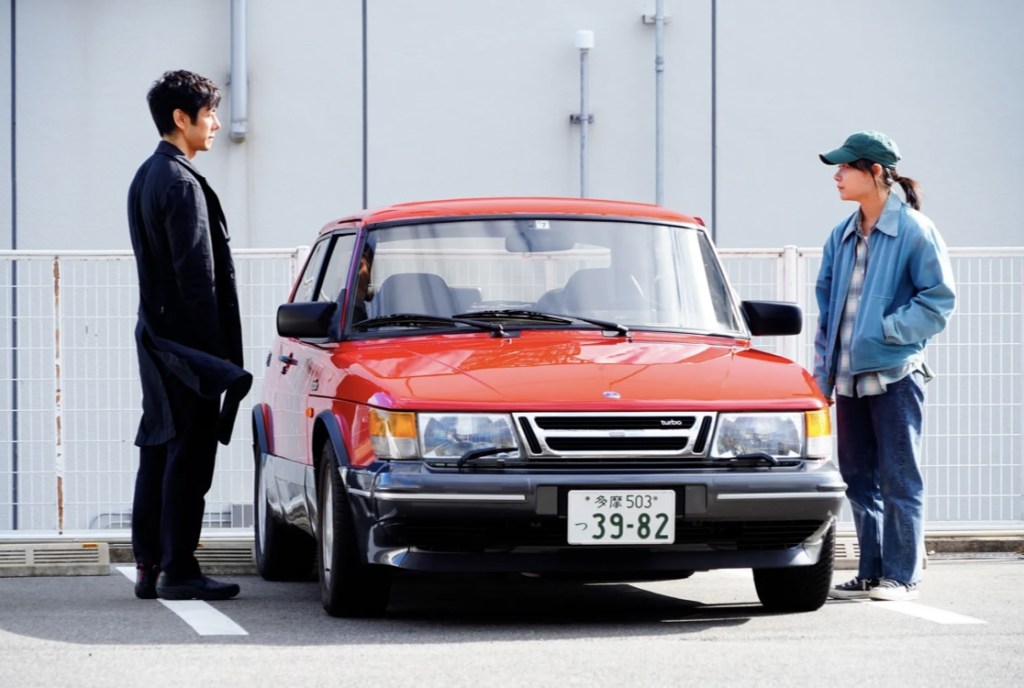
Please, Allow Me to Be the Seventy-Thousandth Person to Say that Drive My Car is Very Excellent

Over the past few months, the buzz on Ryusuke Hamaguchi’s Drive My Car among film circles has grown deafening. It’s the kind of thing that reminds me of Parasite’s ascendence through the second half of 2019; Cannes raves built up a hype train, and the film rolled out to wider audiences and blew collective minds, generating a rare (relative) lack of pushback. Drive My Car has now taken Best Picture prizes from both the New York and Los Angeles Film Critics’ Circles, achievements that have led the statue pundit class to designate the film an Oscar contender. It’s an unthinkable fate for the film, a three-hour Haruki Murakami adaptation from the aforementioned Japanese auteur Hamaguchi, a man whose stylings are not exactly crowd-pleasing. And yet here the film finds itself, coasting to popular celebration on the back of its pure, undeniable quality.

Of course, Drive My Car will absolutely not be nominated for Best Picture. Parasite had crossover appeal, the kind of thing that could coast on word of mouth and not let anyone down on its promised insanity. I alluded to Hamaguchi’s lack of that quality earlier: I wouldn’t describe him as slow, but he is deliberate, and he’s more than content to let his characters talk, to the exclusion of, say, the tension Bong Joon-ho imbues his films with. This is not a dig at Hamaguchi’s skill — he’s responsible for two of the year’s finest films in Drive My Car and the delightful omnibus Wheel of Fortune and Fantasy, and stands undoubtedly as one of the most exciting emerging voices in contemporary global cinema. But he’s not going to build the following Bong did. His film will not create the buzzed popular undercurrent of genuine excited recommendations. “Meditative” is not a word you really heard about Parasite. If you really want to go in depth on Drive My Car’s Oscar prospects, you can say that it’s almost a lock to take the International Film category, and if it gets lucky? Yeah, the much-lauded screenplay from Hamaguchi and cowriter Takamasa Oe could find its way into the Best Adapted section. This is a realistic scenario, and one that would probably have to stand as encouraging for popular reception to arthouse films. But it would not constitute popular acceptance thereof. Which is, honestly, fine: Drive My Car may be topping the year-end best-of lists of many people who put above-average time and effort into such things, but the fact that it’s not the type of film to go far beyond that should in no way constitute an indictment, regardless of the nature of the hype train it’s built up.

So, when you start to divorce the film from that, what is Drive My Car? In short, it really is that good, one of the best films in a big comeback year for cinema. It’s a stunning portrait of grief, an intricate commentary on the nature of performance, and a deeply resonant soft-spoken drama that’s been rattling around my brain since I saw it. The praise is all earned. Hamaguchi’s prowess with dialogue and verbal characterization is spectacular. Working with source material from Haruki Murakami certainly helps, but even here Hamaguchi excels in a way that feels singular: ideas Murakami foregrounds and makes explicit from the get in his short story are here fleshes out, made more subtle. Hamaguchi allows his characters to find them as they go, opening up the narrative to ideas about power, performance, and loss as it unfolds. The departures from the text are frequent, if subtle: the key one, in my mind, concerns the story’s protagonist, Yūsuke Kafuku (played here masterfully by Hidetoshi Nishijima) who in the film is a stage actor/director but in the story is only an actor. Kafuku is dealing with the death of his wife, a woman he had a complicated relationship to but whom he loved unreservedly. The thread that dominates the story is Kafuku’s habitual transformation, his tendency to be constantly acting, always putting forward a role, and his regret over how much of his time with his wife he spent in this manner. The film continues this, displaying Kafuku as a man tormented by his inability to escape this status. The film, consistent with the story, sees Kafuku engaged with a production of Chekov’s Uncle Vanya, which he directs in the film and does not intend to take a role in. It is mentioned by a side character that he is widely expected to take the title role, which he has performed in the past, and which he performs in the text. But he seems intent on staying off-stage, directing and passing the performance onto someone else. This is the critical difference from Murakami’s story: Hamaguchi’s Kafuku takes on direction as a means through which to escape his lifestyle of performance and gain a measure of control. His signature directing style in the film, also completely Hamaguchi’s invention, suggest a further renunciation of performance: he has all of his actors perform in their native language, memorizing their cues based on the ends of their castmates’ lines. It’s a gesture of universality, non-conformity, and naturalism, so important to a man whose life has been reduced to pre-ordained motions. It also forces a connection among his cast, another thing that Kafuku, a man who seems to lack a connection to any living person, seems fascinated with.

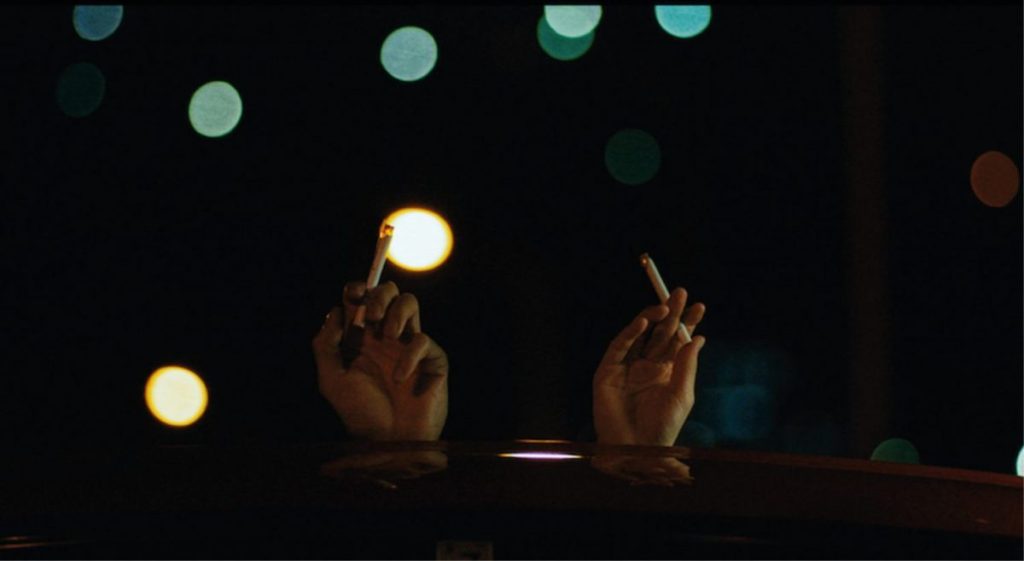
But the heart of Drive My Car lies in the driving. Massive sections of both the film and story concern Kafuku’s relationship with his hired driver, a young woman named Misaki Watari (brought to life in one of the year’s best performances by Toko Miura). The film does a better job than the story at fleshing out Watari into her own character, with her own guilt over her past actions. In both characterizations she is reserved, nearly silent, and wins Kafuku’s respect through one major quality: she’s a hell of a driver. She’s not particularly fast or flashy behind the wheel, but she’s extremely focused and, simply, astoundingly competent, with Kafuku likening the experience to occasionally forgetting a real person is driving. She is haunted, and channels her angst into driving much in the same way Kafuku channels his into the theater. It’s her art form. She maintains a constant focus on the road, on moving forward, on reaching her next destination. It’s an activity Kafuku finds freeing and deeply existentially meaningful. His bond with Watari grows as it becomes clear that they appreciate the same things about it, namely, the constant forward movement. Kafuku listens to recordings of whatever play he is putting on during his drives, seeing it as a time for rehearsal and introspection. Watari shows no preference at all for listening content; her chosen driving activity is smoking, something Kafuku initially prohibits in the car. Both of these habits are individual, based on a sense of the drive as ritual, and it is through this individuality that Watari and Kafuku eventually recognize their profound need for each other. It’s a relationship that is in no way romantic, and probably can’t even be described as a friendship. But they’re partners in grief, and in torment over their own roles in creating that grief. They understand each other, and they understand the catharsis inherent in the road, in the constant journey towards some destination or another. It’s something they’ve both adopted as a purpose in an attempt to deal with their pasts, and they allow one another to experience it. By the moment, late in the film, where Kafuku breaks his rule and offers her a cigarette, the connection between the two has built the film into something so rich and complex that you barely realize it was happening.

Drive My Car is the kind of film destined to have a million pieces written on it, to be discussed into oblivion, to be instantly characterized as a high water mark and confined to its status as a Great Movie. But it’s also the kind of film that’s worth keeping sight of as an actual film, on its own terms, away from any of the surrounding talk. The film itself would seem to support that idea, of interiority away from public perception. That perception has become a part of it, for better or for worse, and considering its own examination of that phenomenon, it’s worth mentioning. It postulates that existence in the public eye tells you exactly zero about a person, and uncovering the totality of a person’s inner being is impossible no matter how well you really know them. For a film with manifold mysteries and an actual character inconsistent with the awards-darling image that’s beginning to be foist upon it, that’s a fitting insight.

I’m Thinking of Ending Things Review

I'm Thinking of Ending Things Trailer Reveals Charlie Kaufman Netflix Pic |  Collider

I would love to say that my review of I’m Thinking of Ending Things, Charlie Kaufman’s latest, is so late because I’ve only just now figured the film out. This would be a lie for two reasons- one is that the reason I haven’t had time to write it is due to the return of school and all that brings. The other is that it implies I’ve figured it out at all. The latest directorial effort from the writer of Being John Malkovich and Eternal Sunshine of the Spotless Mind hit Netflix earlier this month, after months of silence from the streaming giant on a movie initially supposed to hit in early 2020, and the announcement of a release date immediately stirred fans of Kaufman’s particular brand of surrealism into a frenzy. Counting myself as one of those fans, I can assure you that the phrase “Charlie Kaufman does a psychological horror movie” is extraordinarily exciting. Kaufman is one of our greatest cinematic weirdos, and his totally singular view of the human psyche seemed like a natural fit for the psychological horror genre.

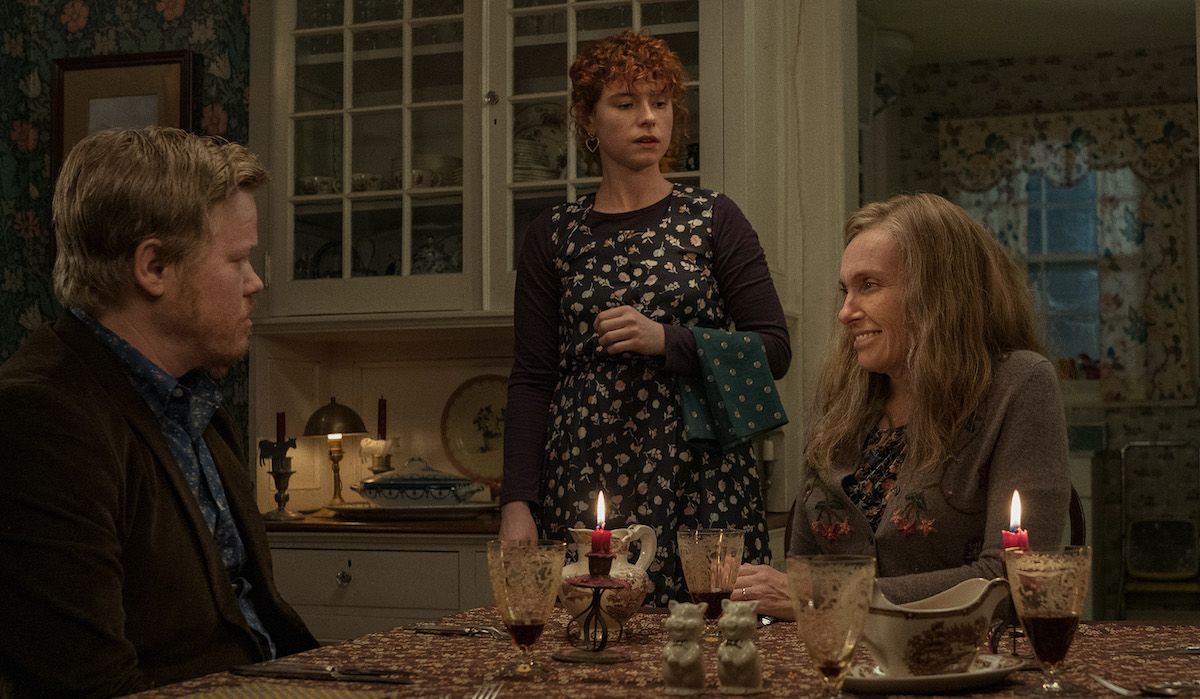
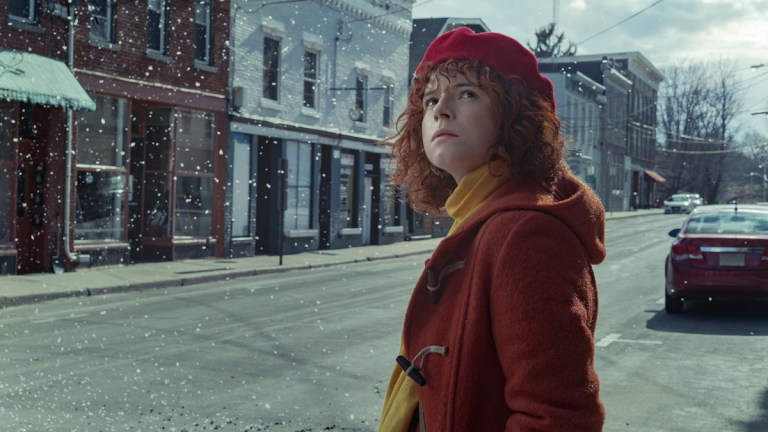
It was. Of course, it’s not exactly that simple. I’m Thinking of Ending Things is a horror film much in the same way Lynch’s Eraserhead is: it’s not exactly tangibly “scary” per se, but it’s so deeply wrong and upsetting that any other characterization would feel ill-fitting. Based on Iain Reid’s book of the same name, I’m Thinking of Ending Things delves into the mind of a woman (Jessie Buckley) who is dissatisfied in her relationship with Jake (Jesse Plemons) and is, uh, considering ceasing the relationship. The film concerns a road trip the two take to meet Jake’s parents (masterful lunatic actors Toni Collette and David Thewlis, perfectly cast). To describe the plot as it proceeds from here would be both useless and impossible, so let’s just skip that and talk about what the thing feels like to watch. Cinematographer Lukasz Zal (noted for his Oscar nominated collaborations with Pawel Pawlikowski, Ida and Cold War) bathes the film in snow and wintry aesthetics, and the vibe of the film is decidedly a wintry one. It is, no two ways about it, a dark movie- it quickly becomes clear that it possesses a fascination with aging and death, and the coldness throughout it really perpetuates this. Those seeking the humor of something like Being John Malkovich are out of luck with this one. But Kaufman obsessives will absolutely find plenty to love here- the best way I can put it is that if you haven’t already seen it while you’re reading this, it may not be for you. Personally, I marked September 4th on my phone calendar and watched the movie as soon as I woke up. If you felt a similar anticipation, then you’d probably love the film. If not, either stay away or immerse yourself into Kaufman’s films a bit first.

Charlie Kaufman Aches for More Time In I'm Thinking of Ending Things | Film  Review | Consequence of Sound

If you are, in fact, in this for the standard Kaufman oddities, Thinking of Ending Things has you covered. The central performance by Buckley is the obvious standout, a titanic feat of repressed melancholia by which the film lives and dies. When she’s not on screen, the film is worse off for it. But in terms of purely entertaining bizarro stuff, I have to direct you in the direction of Thewlis and Collette’s aforementioned gonzo turns. They play Jake’s parents throughout the duration of a mammoth dinner scene in the center of the film. I mentioned Eraserhead earlier as a tonal comparison, and this is where it really conjures up that film, specifically its early dinner sequence. No manmade chickens in this one, but you get that same deranged vibe from the parents. Collette and Thewlis sell it beautifully, alternating between unnerving and deeply sad. In the home stretch, Kaufman goes full-tilt crazy, descending the film into a disorienting array of farm animals and naked old people that can only be described as “day-ruining”. This is stuff that stays with you, and in the kind of way where you know it’s going to as soon as you see it.

So what does it all mean? Like I said earlier, I can’t claim to know. It’s as if it’s designed to be as impenetrable as possible, every potential revealing plot development overshadowed by misdirection and cascading cultural references. Everything is layered on top of everything else, conversations debating the ethics of “Baby it’s cold outside” collide with fake ice cream jingles before you can even recover from bizarre jabs at Robert Zemeckis. It gets to the point where it’s impossible to distinguish what’s important and the answer ends up seeming like “everything and nothing”.

How I'm Thinking of Ending Things Book and Film Differences Make For  Perfect Complements | Den of Geek

Where I’ve arrived is the idea that trying to figure it out is pointless. With I’m Thinking of Ending Things, the best way to go is to let it wash over you, to commit to the feeling of the film above all else. And that feeling is the film’s best asset. It makes you feel so uneasy yet so satisfied, so shaken yet so mystified and compelled. There’s not much like it. It’s a masterpiece, something so remarkable to watch that I feel bad to encourage people not to watch it. But unfortunately that’s what I have to do- this is decidedly not for everyone, and one of the biggest senses I got while watching it was that people would watch it just because it’s on Netflix and absolutely hate it. But for a certain type of viewer, I’m Thinking of Ending Things will resonate. If you think, based on all this, that you might be that, you probably are, and in that case, go check out one of the most beguiling and indelible films in recent memory. If not, you’re probably making a good call. Either way, one thing is for sure about I’m Thinking of Ending Things: it’s a real movie that actually exists. That’s about it.

Rating: 4.5/5

Palm Springs Review

New Movies to Watch July 9 Weekend: 'Palm Springs,' 'The Old Guard ...

One of the things I love most about movies is that they can do anything for you. For whatever mood you’re in, whether you’re craving light entertainment or deep thought, there’s a movie that can help with that. The beauty of film as a medium is the immense range of experiences it offers that still fall under the umbrella of “worthwhile”.

Palm Springs is a movie that makes me remember this about movies. Is it the year’s best film? Hardly. Is it any sort of masterpiece in its construction or themes or significance? Nope. But it’s a delightful experience nonetheless. It’s just under 90 minutes of pure diverting and breezy charm, and considering that I expected next to nothing from this film, I was taken completely by surprise by how well it works.

Speaking strictly to said expectations, I would have to credit my lack thereof with a portion of my enjoyment. So considering that I’m about to really hype it up, maybe just go watch it before reading further with only the promise that it’s a really good time. Because knowing what exactly to expect from Palm Springs would lessen a lot of the charm. Pressing play, I had no idea if I was getting a Lonely Island type raunchy comedy deal, a run of the mill Sundance romcom, an uninspired Groundhog Day ripoff, or some ungodly combination of all three. To be quite honest, it’s kind of all three, yet I somehow mean this in the best possible way. Palm Springs succeeds so much in that it doesn’t allow itself to get too caught up in being one tangible thing, and therefore it never falls into the negative trappings that being a defined thing entails. Take the opening scene, which gets a bit NSFW to say the very least, and might trick you into thinking that an hour and a half of Andy Samberg masturbation jokes was somehow the highest all-time sale at Sundance. But the film quickly progresses past its initial juvenalia, and ends up actually recognizing it as juvenalia and poking fun at it.

From here we move on to the main event of the film. Samberg’s Nyles is the boyfriend of Misty, whose friend (I’m pretty sure, I don’t think the movie ever actually explains their connection) Tala is getting married. Over the course of the wedding day, Nyles bums around carefree until the reception, in which Sarah (Cristin Milioti), the sister of the bride, forgets that she’s expected to make a speech, and Nyles bursts in with impromptu nonsense that distracts everyone and takes the spotlight off of her. So that’s the setup, and at this point I really do urge you to watch the film first if you’re sensitive to plot points, because from here the plot progresses into twisty ridiculousness that’s really better seen unspoiled. If this doesn’t matter to you, carry on.

So, that’s the meet-cute. Samberg and Milioti’s chemistry is undeniable, and the scenes of them together immediately following this are the first signs that this could be special (Milioti, by the way, is just absolutely exceptional in this. As consistently funny as he is, Samberg is basically just playing the Andy Samberg character, while Milioti gets simultaneously tasked with Bill Murray and Andie MacDowell in Groundhog Day and just absolutely nails it, adding an exceptionally entertaining emotional range into the proceedings while also providing her character with a depth that completely makes the film). So from that setup, things proceed rationally: they begin talking, they both express their dissatisfaction with their lives, Nyles reveals his girlfriend is cheating on him, they go into the desert to keep talking, JK Simmons shows up with a bow and arrow and begins hunting Nyles, the wounded Nyles crawls into a glowing red cave while imploring Sarah not to follow him, she follows him in and proceeds to be sucked in, then wakes up in her bed to find out that it’s the start of the previous day.

So that all happens, and then the movie chills out for a minute to explain some stuff. Yes, it’s a groundhog day situation. Nyles has been living in it for an indiscriminate amount of time, and he bypasses all the figuring-out-what’s-happening by explaining the whole thing to Sarah. It takes a little while for her to believe it, but eventually she recognizes what’s going on and continues looking to Nyles for guidance. From there come some more questions, first and foremost being (and I’m quoting directly here) “what the hell was the deal with JK Simmons and the bow and arrow?” The answer turns out to be that that was Roy, a distant relative and wedding guest Nyles partied with at one point and, under the influence of heavy drugs, dragged into the time loop with him. Naturally, Roy resented this, and has since committed time to torturing Nyles whenever he gets sufficiently mad enough to make the commute. It’s a hilarious plot point, but it’s also one that subtly plants a grim thought in the minds of the audience and characters alike: Nyles and Sarah are getting along great as it is, but infinity looks hard to stomach. Which is why Sarah takes the natural next step of trying to break free. She goes the Groundhog Day route of trying to be selfless and improve herself, to no avail. She tries just leaving palm springs, to no avail. After a short amount of time, she completely gives up and arrives at the conclusion Nyles did long before the events of the film began- that life is now meaningless and they can, nay, should do whatever they feel like.

This is where it starts to get really fun. Sarah embraces her newfound freedom and Nyles embraces his newfound lack of loneliness, and they embark on a range of activities including but certainly not limited to pool hustling, heavy alcohol consumption, and a spectacularly choreographed 80s dance routine. This is all absolutely hilarious, and it represents the key variation this makes on the Groundhog Day formula, which is the introduction of the cathartic element of another person to lessen the growing insanity of repetition. This tells such a fundamentally original story that even mentioning Groundhog Day this much feels reductive.

What's Up With Those Dinosaurs in Hulu's 'Palm Springs'?

Samberg and Milioti sell the comedy so well that it’s almost a shame that there’s more to it, but there is. As it charges headfirst into goofiness, it also lays on layers of character guilt and flaws. Sarah wakes up every morning having just slept with Abe, her sister’s fiance/husband. Nyles is forced to reckon with what he’s done to Roy and his own issues with maturity. Things hit a snag between the two when it becomes evident that Sarah needs to get out and Nyles doesn’t want to. The way the film builds the relationship between these characters into a romance is stunningly natural considering how little time it takes, and stunningly effective given how little time there is before they split apart. Sarah disappears. Nyles spins into despair and aimlessness. He drives to confront Roy, preparing to surrender himself to whatever torture is necessary to take his mind off of his life. Roy, in one of the film’s most resonant moments, explains his reckoning with the fact that he’ll never see his life progress past where it is. He wallows and wallows in a way that was foreign to him even at the beginning. All credit possible to Samberg, by the way. For such an established comedic talent- I even referred to him earlier as a kind of one note performer- he sells his misery here.

And then Sarah shows back up. We are informed, via montage, that she has spent this indiscriminate amount of time studying quantum physics to try to find a way out. This is the most brilliant jab the film takes at Groundhog Day– looking at the resolution of that film, spurred by a karmic character realignment, and saying “yeah no the answer is quantum physics”. What follows is the final reckoning of the characters with who they are, what they want, and what they must overcome. With dynamite.

Palm Springs is ultimately as impressive as it is for its deftness in juggling its higher-minded intentions with brilliant comedy. Samberg and Milioti sell the hell out of a brilliantly funny script, and they’re backed up capably by the likes of Simmons and I Think You Should Leave with Tim Robinson regular Conner O’Malley (I had no idea he was in this. His first appearance may have been my favorite moment of the whole thing). And these are still very real, complex, interesting characters, compulsively watchable ones who make you wish for a longer runtime, despite the brevity likely contributing heavily to the charming feel. Is this a movie that’ll be winning awards come… whenever awards season is happening next year? Nope. Would it have made a ton of money if given a regular release? I doubt it. It’s not the year’s best film or a towering achievement or anything of that ilk. But it’s just an absolutely delightful, fun experience, and a pretty great way to spend an hour and a half.

Rating: 4/5

Da 5 Bloods Review: Apocalypse Then, Now, and Later

From 'Apocalypse Now' to 'Da 5 Bloods,' a war that never really ended

The most persistent thing I’ve seen said about Spike Lee’s latest film is that it couldn’t have come out at a better time. And sure, with the heightened attention to racial issues currently sweeping the nation and the world, the moment is right to hear from America’s most important filmmaker on the subject. But to say that Da 5 Bloods “lucked” into the perfect time to release is to miss the point of the movie. Sure, the remarkably current setting plays a huge role- Delroy Lindo’s character’s MAGA hat becomes a plot point and major symbol- but the assertion of the film is that nothing differs from one cultural moment to the next when it comes to treatment of Black people in the United States. The civil rights movement was not the final frontier in racial equality, the assassination of Martin Luther King Jr. was not a lone atrocity perpetrated against the fight for justice. Some things never change, and Lee’s film laments this in a way that rings true in the aftermath of George Floyd’s death, but unfortunately has seen this before far too many times.

Lee’s opening montage takes the viewer through the turbulent end of the 60s in America, touching on the civil rights movement, Neil Armstrong’s landing on “Da Moon”, and of course, the Vietnam war. It’s not too long into the subsequent present-day scenes until these images are called into doubt through modern perspectives: war vet Paul (Delroy Lindo) has been driven away from his generation’s revolutionary spirit into voting for Trump. People party in front of a neon Apocalypse Now sign. We hear Vietnamese characters refer to the conflict as “The American War”. It’s this last one that hits the hardest, solidifying the aims of the film to present its audience with wider points of view that challenge common opinion. Vietnam in America might be viewed as a cultural moment, but in reality it was a war, a senseless one that had lasting impacts. And although those impacts may be overlooked in America, in Vietnam they haven’t been forgotten. Lee quickly settles down from the initial setting up of thematic concerns to put his story in the spotlight, but this thread never dissipates. There are still Vietnamese people who lost family members. There are still cultural wounds that haven’t healed. There are still active landmines in the jungles.

Four of the titular five (played by Lindo, Clarke Peters, Isiah Whitlock Jr, and Norm Lewis) have returned to Vietnam 50 years later to locate and retrieve the remains of their squad commander (Chadwick Boseman), as well as millions of dollars in gold that they stashed during the war. They set up a deal with a Frenchman (Jean Reno) to launder the gold for them. Paul’s son (Jonathan Majors) arrives with the intention of helping to find the gold and to make sure his troubled father is okay returning to Vietnam for the first time. So with their mission laid out for them, and their personnel finalized, they head into the jungle to confront their past.

Lindo, Peters, Whitlock, and Lewis stand in for the Vietnam generation, a lost group searching for some semblance of peace with their past. Majors, as well as the group of landmine disarmers he meets along the way (played by Melanie Thierry, Paul Walter Hauser, and Jasper Paakkonen) represent the next generation, one forced to clean up the sins of their parents. Thierry’s character comes from a family made wealthy through weapons dealing, and she decides that it’s her responsibility to help prevent further harm coming from her family’s legacy of destruction. Majors knows and resents the fact that his father fought in Vietnam and voted for Trump, and he sees it as his responsibility to put a more palatable face forward. One of the many themes of Da 5 Bloods is people held responsible for the actions of others: generations forced to atone for their parents’ shortcomings, but also those very same people being forced into a war they wanted no part of by a government that paid no individual price. It’s an endless cycle.

It continues. A landmine from the war claims the life of Lewis’s character and almost does the same to Majors. Lindo’s descent into madness endangers the lives of every other character. The soldiers are forced to defend their recently seized gold bounty from an armed Vietnamese group aided by Jean Reno’s character. Every inch in this film has to be fought for. Any time anyone sees anything as rightfully theirs, someone will disagree. The war ended a long, long time ago, but it lives on through an inability to leave it in the past. Vietnamese/American aggression persists, PTSD haunts these men every moment. Take an early scene, when the veterans leaving a club are taunted with firecrackers thrown in their direction by a vietnamese teenager. If Da 5 Bloods wants you to understand one thing, it’s that the legacy of the Vietnam war isn’t a legacy so much as a continuation.

Da 5 Bloods (2020) Review | CGMagazine

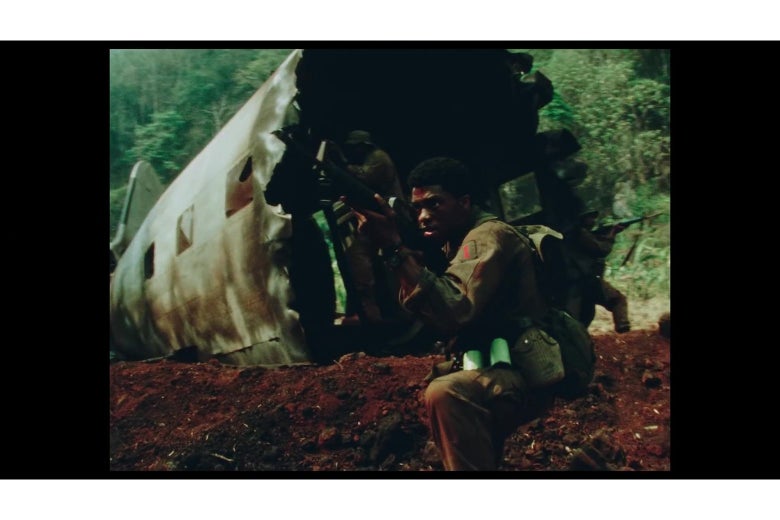
So the socio-political aspects of the film are myriad and endlessly thought-provoking, because come on, it’s Spike Lee. So the next question has to be- is it any good? Yes. It really, really is. Come on, it’s Spike Lee. Let’s start with the technical stuff: Terence Blanchard’s score is among his best work, which is saying a lot considering he’s one of the great American film composers of all time. The script, written by Lee and Kevin Willmott, is typically barbed and entertaining. And Newton Thomas Sigel’s cinematography… oh man. I’m going to rant about that for a second. The film looks great during the present day scenes, comprising the majority of the film, but the flashbacks back to Vietnam combat are so brilliantly shot that it almost wills the film to work on its own. Let’s have a look, shall we:

Da 5 Bloods' four aspect ratios, explained: the new Spike Lee ...

Okay that’s not a great picture of it but you have to trust me on how it looks in the film. In motion. The greens are so green, the shadows are so dark, the grain is trance inducing. I’m reminded of the Clockwork Orange quote about how colors don’t quite seem real until you see them on a screen. It’s almost a flaw of the film. The flashbacks are so important to the plot and characters, yet at times it almost got hard for me to focus because of how cool it looked. Okay so moving past the cinematography to the main event, the piece de resistance, the highlight of the whole thing: the acting. Clarke Peters needs to be in more things and only Spike Lee recognizes this. Jonathan Majors, who delivered one of 2019’s most unsung brilliant turns in The Last Black Man in San Francisco, continues to be just absolutely remarkable. Isiah Whitlock is good throughout, but obviously his moment comes with his eagerly-anticipated “shiiiiiiiieeeeeeet” that occurs deep into the film. Chadwick Boseman finally gets to go nuts in a legit movie, albeit with limited screentime, and nails it. And then, of course, there’s Delroy Lindo, the subject of all the critical adoration directed at the film. He lives up to the hype. If the film is to be taken as a modern update on Apocalypse Now‘s examination of the ravages of war, Lindo’s Paul is clearly positioned as its Kurtz. He’s haunted by demons and ghosts from the onset, and free falls into madness as the jungle begins to take its toll. He’s simply indelible, and his monologue towards the camera near the end is, in my mind, an Oscar clinching moment if there ever was one.

Spike’s style is on full display as well, with all of his traditional hallmarks showing up. Explicit pop culture references (a Treasure of the Sierra Madre shoutout may elicit groans from some), incorporation of real footage to prove his social points (creating a Brechtian effect that reminds the viewer that they’re not in store for idle entertainment), and yes, it’s probably overstuffed and messy. But the film uses this to its advantage in a strange way by containing its chaos: every plot point that initially feels tacked on comes back to play a part, every seemingly unnecessary stretch puts the viewer further into the minds of these characters. It’s not fun, but Da 5 Bloods leaves the audience sunburnt and delirious. I’m not making this sound enjoyable, because it’s not supposed to be, but it’s not exactly torture either. You can’t separate the politics from the film here, but it manages to work as a movie extraordinarily well. Even the scenes where nothing really happens feel gripping, and the two and a half hour runtime doesn’t wear out its welcome. Yes, it’s a social responsibility to watch Da 5 Bloods, but it absolutely isn’t a chore. This is Spike Lee at his most socially relevant and his most artistically brilliant, and it’s quite something to watch. If you haven’t already, I can’t stress this enough: watch this movie.

Rating: 4.5/5

1917 review: A Technical Knockout, Who Cares About the Rest?

1917 cheats. The done-so-as-to-look-like-one-take gambit? They cheat on it. There’s a smash cut to black about halfway through that, while technically not a traditional cut as in one that would break up the action in the middle of a scene, definitely violates the parameters that the film sets up for itself. It comes out of the cut to black, and it’s night, when it was previously day. So the movie uses a cut to circumvent the real-time standard that it has, again, confined itself to. The screen stays black for a little bit, enough time to contemplate the fact that they have blatantly violated their own illusion.

And then the next scene happens and you don’t care.

1917 is a film with many flaws. It feels excessively like a video game. It spreads no plot over two hours. There honestly isn’t anything really here beyond the technical wizardry. AND IT DOESN’T MATTER AT ALL. There’s a scene that’s dumb, and you’ll think “this is dumb”, and then Roger Deakins appears in the flesh on the screen in a tuxedo waving a magic wand and pulls something out of nowhere and you’re awestruck and you think “HOW DID THEY DO THAT” and Deakins disappears in a puff of smoke and shouts “I AM THE GREATEST OF ALL TIME”. This happens several times in the film.

I can’t really attempt to describe the plot, because there is none. It consists of a journey to deliver an important message by two people (incoming spoilers), and eventually one person. There is a lot of gunfire, there are a lot of explosions, there is everything that you typically attribute to a war movie. In a sense, we’ve all seen this movie dozens of times. So why is it different? How does it pull off becoming something truly great in the face of overwhelming flaws and a done-to-death concept? It does it by executing a gimmick that’s also been done before. And it doesn’t really nail it either.

1917 will no doubt be widely compared to Birdman, because both films utilize the one-take conceit. In a lot of ways, this comparison is justified. The two masters of contemporary cinematography (Deakins here and Emmanuel Lubezki in the other film) strutting their stuff in vehicles for their own greatness. Yet they couldn’t be more different in what they accomplish with this technique. Birdman is jazz. It uses the one-take idea to create a flow, to emphasize an all-encompassing smoothness in the face of the chaos of the subject matter. 1917 is hell. The unbroken take gimmick bombards the viewer with inescapable atrocity and overwhelming hopelessness. Deakins creates a world of omnipresent yet ever-dissolving hope, of sorely needed yet unfortunately fleeting escape. There are moments of bliss in this film, moments where the ticking clock stands still and everything is allowed to breathe. Here is where the film falters. The single take effect collapses when it isn’t propelling the film, when everything meanders, it feels out of place and unnecessarily showy. There were many moments when Jeff Goldblum’s immortal Jurassic Park line, “your scientists were so preoccupied with figuring out whether or not they could, they didn’t stop to think if they should”, came to mind. And then they pull of pure movie magic again and all is forgotten and forgiven.

Beyond Deakins’ cinematography, there isn’t much, but there isn’t nothing. A shockingly strong central performance by George MacKay of the earlier (and very bad) film Captain Fantastic anchors the film, and Thomas Newman’s brilliant score is deployed to perhaps an excessive extent, which isn’t really a problem. Like I said, this is a film with undeniable issues. Yet it overcomes these to make itself into something fantastic. This is a truly great film that I hope doesn’t take best picture over the far more deserving Parasite, as that would tarnish its legacy forever, and this is too good a film for that. Yes, it has problems, and yes, it’s nothing original, and yes, it’s overdone and showboaty. But at the end of the day, it delivers visceral thrills and awe, and that goes a long, long way.

Rating: 4.25/5. I told myself I had to pick between 4 and 4.5, the rational rating numbers, and then I realized that this is my blog and I can do whatever I want. So 4.25.

Uncut Gems Review: A Work of Unparalleled Anxiety

If you heard about or saw any promotional material for Uncut Gems and immediately got excited for a new Adam Sandler comedy, do not see Uncut Gems. If you have an aversion to watching movies that feature nothing but the lowest depths of human behavior, do not see Uncut Gems. If you detest the idea of sitting in a theater for two and a half hours and being bombarded with a nonstop cacophony of miscellaneous noise and stress, do not see Uncut Gems. If you have a heart condition, do not see Uncut Gems.

If none of the above applies to you, if you’re open to new and strange moviegoing experiences, if you’d get a kick out of watching Adam Sandler do Oscar-worthy work, and if you just generally want to have a really good time at the movies, see Uncut Gems.

The film, directed by brothers Josh and Benny Safdie of Good Time fame, stars Sandler as Howard Ratner, a gambling-addicted jeweler at a point of unending chaos in his life. Similar to the work they did with Robert Pattinson in Good Time, the Safdies draw an astounding performance out of an actor typically regarded as something of a punchline. Sandler, like Pattinson, is clearly a truly gifted dramatic actor who should be recognized by more people as such. His performance is truly excellent, yet he never veers far from his trademark style. Instead of the typical formulaic mindless slop he usually shovels (although a lot of it is very funny), he’s provided with complex material that allows his unique persona to shine. The determination of the Safdies to subvert expectations here is impressive. The brothers never surrender their commitment to abrasive chaos, never capitulate to the reality that people are going to see this and expect typical Sandler. That’s why the movie is doing so poorly with audiences, who have tagged the film with a less-than-optimal 52% Rotten Tomatoes audience score despite terrific box office numbers. Only a minority of theatrical Uncut Gems viewers had any idea exactly what they were getting into, and most others were appalled at what they got.

They probably felt this way from the moment, at the start of the film, when the camera zooms out of Howard’s colon. This initial colonoscopy honestly serves no major function to the plot and just two minor ones: it provides a really cool way to enter the film, and it sets up one of the funniest moments of the whole thing, where Howard receives a call in the middle of all the chaos to tell him that his results came back clean. The colonoscopy is, ironically, the most docile moment of the film for Howard. Immediately after he leaves, he enters a nightmarish hellworld of gambling debts, high stakes basketball games, and other stressful situations of his own creation. Howard is a man perpetually under attack by circumstances he could’ve easily prevented, yet he continues to plunge himself further into this heart of darkness. Why? He loves chaos. His life appears to be totally out of control, yet he never really loses his grip on his own situation, because he’s accustomed to it. He always has a handle on his life, he’s always playing the long game. He stirs up insanity because it’s all he knows. It’s like he says late in the film: “This is me. This is how I win.”

Howard’s jewelry shop is visited by Kevin Garnett (playing himself), then a massive superstar playing for the Boston Celtics. While Garnett is at the shop, Howard receives a package he’s spent a long time waiting for: an Ethiopian black opal that he says is worth over a million dollars. Upon being shown the gem and having its value explained to him, Garnett connects with it. He feels a sense of power relating to it, and offers to buy it from Howard. Howard explains that he’s already committed to auctioning off the gem and he can’t sell it. Garnett begs to keep it for just one night, for his game in the Celtics’ playoff series against the 76ers. Demany (Lakeith Stanfield), Howard’s assistant, vouches for Garnett, and Howard agrees to give him the opal in exchange for Garnett’s championship ring as collateral. Howard instantly turns around and pawns the ring, taking the money he gets and betting it on Boston, believing the stone will propel Garnett to play well.

That night, we get a glimpse into Howard’s domestic life. His relationship with his wife Dinah (Idina Menzel) has fully deteriorated, and they have agreed to an impending divorce. He has a loving relationship with his mistress Julia (Julia Fox), who also works in his shop. He owes $100,000 to Arno (Eric Bogosian), his brother in law, who isn’t shy about using violence to get his money. Arno and his goons have made it clear that they’ve waited long enough to be paid back, canceling Howard’s bet on the Celtics unbeknownst to him as it was placed with their money. Immediately after revealing this to him, they stuff Howard naked into the trunk of his own car. His relationship with Julia is really his only positive one: they really do clearly love each other. So when that crumbles, there’s nothing left for Howard but his gambling.

The plot is really just a sequence of increasingly devastating events: Garnett keeps the opal for longer than he was supposed to, Howard misses the date to get back Garnett’s ring from the pawn shop, the opal gets appraised by the auction house and valued at far less ($150,000) than what Howard believed he was getting, he enlists his father in law to bid up the gem to get Garnett to pay more, which backfires. Until Garnett comes with another offer to buy it after a weak performance in his first game without it.

At this point, the film devolves into an unbelievably intense experience like no other. From the moment Howard decides to bet the money on Boston to the very end of the film, I had pins and needles running throughout my entire body, a physical reaction to a film the likes of which were totally new to me. From this point forward we’ll be pretty far into spoiler territory, so you’ve been warned. Howard, knowing Arno is on his way to collect the money, acts fast and gives it to Julia to take to the Mohegan Sun casino, with instructions on a specific bet inside. If it pays off, he stands to make well in excess of a million dollars. Arno, upon learning of what’s happened to his money, is furious and sends his men after Julia. They get stuck in the entry vestibule to Howard’s shop on the way out, however, and Howard sees his opportunity and keeps them trapped there, where they remain as the game plays out. The game sequence is unbearably intense, as the circumstances of Howard’s bet slowly play out until the only one remaining is the Celtics winning the game. They do. It’s a moment of ecstasy unmatched in movies this year, and it’s quickly followed by a moment of similarly unparalleled devastation. Arno is astounded at Howard’s luck, and begins to show immense relief and happiness at the fact that he doesn’t have to harm a member of his family. Yet when the vestibule is unlocked, one of Arno’s henchmen shoots Howard in the head, killing him. It’s a moment too shocking to properly comprehend at first, which makes the ensuing chaos all the more insane. Arno rightfully flips out, causing his henchman to shoot him too. The remaining henchmen raid Howard’s store, while Julia boards a helicopter with the money, which will turn out to all be hers. The film ends by zooming into Howard’s bullet wound in a similar way to the zoom out of his colon at the start of it.

Uncut Gems is clearly not for everyone. Many will find it unbearable, while others will appreciate the artistry of it while marveling at the sheer insanity of it. It’s technically great. The cinematography by the great Darius Khondji is up to his high standards, and the Safdies direct the hell out of it. It’s Sandler’s movie, but the supporting cast is still on another level. Julia Fox is revelatory. Kevin Garnett joins the pantheon of all-time great self-portrayals. Eric Bogosian, for all of his character’s inherent malice, packs an understated emotion into his role and creates a stealthily complex villain. Lakeith Stanfield sensationally sells what it must be like to actually know Howard as a person while at the same time making you frustrated on Howard’s behalf. Mike Francesa is somehow tolerable. And Wayne Diamond’s brief appearance at the end as a spray-tanned older guy with a raging libido cements the entire thing as a masterpiece of epic proportions.

If you can handle Uncut Gems, you’re in for a truly unique and stunning experience and one of the year’s very best films. If you can’t, I honestly can’t blame you: it’s intentionally abrasive and hard to stomach. Yet it parlays this into a mood, an intoxicating one that doesn’t leave you alone once you exit the theater. It’s an absolute (sorry) gem.

Rating: 5/5

The Two Popes review: An Uneven, But Ultimately Successful Acting Showcase

The Two Popes doesn’t deliver what you’d expect from a biopic about some of the most powerful men in the Catholic Church. That much is clear from the moment ABBA’s Dancing Queen makes an appearance over the onset of the process to vote for the next Pope. It’s an almost surreal moment, and a hilarious one. It’s by far the most memorable part of the movie, and it’s one of my favorite moments from any movie this year. It’s a gutsy call, and it’s the kind of thing the movie does a lot. For the most part, it leans into being something of a comedy. For these parts, it’s glorious, a brilliant display of the power of its stars. Jonathan Pryce is in top form, and Anthony Hopkins is with him every step of the way (I can’t really say he’s in top form, because come on, he’s Anthony Hopkins). Yet on occasion, it forgets that it’s an offbeat comedy-drama and begins to take itself too seriously, in these segments it drags and threatens to fall apart completely. But overall, it works, if only barely.

The movie begins at a time of great sadness for the Catholic Church. Pope John Paul II has died, and the search for his replacement has come down to Cardinals Bergoglio (Pryce) and Ratzinger (Hopkins). Bergoglio is a progressive reformer, while Ratzinger is a conservative who is disgusted by Bergoglio’s ideas. Ratzinger is elected by the College of Cardinals in a spellbinding scene (that begins, as I said, with Dancing Queen), and proceeds to rule as Pope Benedict XVI. Benedict’s term is riddled with controversy, and causes the disillusionment of both himself and Bergoglio. Bergoglio has decided that he can’t effect change under the conservative leadership, and requests permission to retire to a career of a simple priest. Benedict has lost touch with God, and faces a crisis, questioning his position of leadership. He also proves unpopular, with his German origin serving as a jumping off point for his critics to label him a Nazi. He flies Bergoglio to his summer house, ostensibly to discuss his retirement. So begins the point of the film where Hopkins and Pryce interact. The two deliver some of the best performances of the year, playing off each other in an endlessly watchable way. Bergoglio seems determined to bring some sort of joy into Benedict’s life, while Benedict aspires to figure out what exactly makes Bergoglio tick. Pryce plays the role with contagious enthusiasm, while Hopkins is a supremely entertaining curmudgeon (think Al Pacino in The Irishman, with the bombast of that role substituted for the grumpy-old-man-ness of some of that film’s other characters). The film is shot with a handheld effect that feels unnecessary and at times distracting, but the cinematography also sometimes produces gorgeous results. As the two men spend more time together, they form a bond, an unlikely one given their polar opposite world views. The interplay between the two is delightful, both hilarious and a magnificent show of acting power. Then the film is transported to Rome due to a controversy that requires Benedict’s presence, and it becomes… interesting.

Benedict tells Bergoglio that he won’t permit his retirement. He cites the fact that it would look bad for the church, although it’s clear that he has ulterior motives. Bergoglio spends the night in Rome, heading into a sports bar to watch his Argentinian national soccer team play. After an Argentinian goal, Bergoglio begins a prayer that, although initially well received by the man besides him, is rejected once he gets to Benedict. The man says that Benedict is a Nazi, which causes melancholia in Bergoglio that makes him leave the bar (Pryce’s devastated line reading of “No” in response to the Nazi remark is one of the film’s most indelible moments). The next day, Bergoglio and Benedict have a long discussion in the Sistine Chapel, one that features both brilliant acting and the threat of demise of the film.

Benedict states his desire to resign from the Papacy, citing his physical state and the disarray of the Church under him. He tells Bergoglio he can’t resign because he wants him to become the next pope. Bergoglio tells him that he could never be. The two mull their options, including having them rule simultaneously, which is dismissed due to the sheer insanity and lack of precedent (I mean, there was a time where there were multiple Popes simultaneously and the film just kinda ignores this, but that’s because it didn’t go great and I don’t think that Church officials like talking about it). When pressed as to why he could never be pope, Bergoglio launches into some backstory. The film takes way too long here, for several reasons. The cardinal (pun intended) sin of this section is that it takes us away from Hopkins and Pryce. The flashback scene utilizes a far younger actor, (who is actually pretty good, but he’s no Pryce) and it uses him for too long. At this point, it forgets its lighthearted tone and launches into full-blown Oscar-bait-y historical drama, and it suuuuucks. The movie completely kills all its momentum, taking what feels like 45 minutes (I have no idea how long it actually was, I don’t care enough to go back and check) on a backstory that honestly doesn’t really seem to matter. Cutting it down to a fraction of its size would’ve helped the movie immensely, and in fact, nixing it entirely couldn’t have hurt. But it miraculously comes back from the dead, returning at long last to the main characters. The interplay is back as if nothing happened, and the film works again. Later, after Bergoglio’s return to Argentina, Benedict retires, and is called back to Rome to select the next Pope. He is chosen, and becomes Pope Francis. As Pope, he gets right to work doing what he sees as good, while Benedict watches on like a proud parent of sorts. As it reaches its conclusion, the film becomes cathartic, a depiction of the triumph that Francis not only achieved as Pope, but achieved in changing Benedict’s worldview. The film ends with the German Benedict (indifferent to sports) and Argentinian Francis (massive soccer fan) watch the FIFA World Cup Final between their two nations.

Overall, the film is shockingly close to a buddy comedy in tone, and it works (its biggest detour from this formula costs it dearly). Ultimately, despite the fact that the film is fun, odd, and refreshing overall, its unfortunate dip into historical biopic territory prevents it from being a truly great film. But the acting is some of the year’s best, and ultimately it saves it. Are there better things you could be doing with your time than watching The Two Popes? Of course, Netflix’s other two titanic originals The Irishman and Marriage Story are better films. But if you’ve seen those and are looking for something different, The Two Popes might just be your thing.

Rating: 4/5

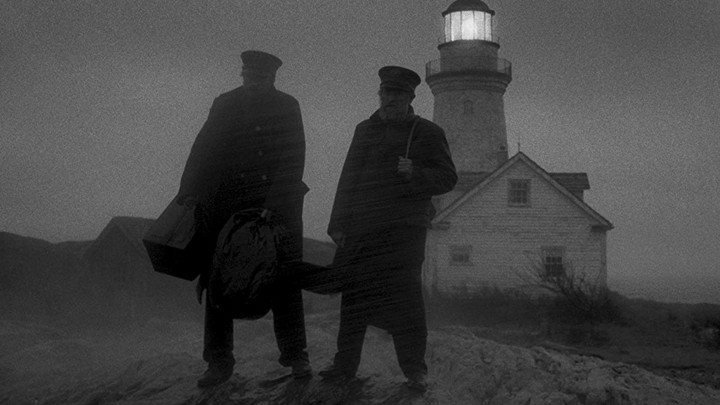
The Lighthouse Review: A Disorienting Masterpiece

What is The Lighthouse? After finishing Robert Eggers’ follow-up to his 2015 horror sensation The Witch (or The VVitch), a viewer could not be blamed for asking that question. Going into the film, you’d likely have a better grip on it than when you come out. Is it a horror film? It’s scary enough at points, at times even going so far as to invoke The Shining, yet as a whole it never reaches the plateau of total terror that is emblematic of horror movies. It begins in an uneasy, uncomfortable state, and finishes there. Is it a comedy? It’s certainly funny, with enough farts to make Blazing Saddles impressed. Is it a romance? Absolutely not, but there are enough homoerotic undertones (and one, uhh, interesting subplot involving a mermaid) to make you at least slightly convinced. The Lighthouse defies easy categorization, instead belonging to a genre of its own, one that seems to have arrived from some other dimension. It reminds one of horror movies from the 60s, when they were just starting to figure out what the genre was, such as Carnival of Souls, or going back even further, Nosferatu (a remake of which Eggers has been rumored to be attached to). Yet despite the fact that it feels like a movie made 50 years ago, nobody has ever come close to making anything like this. The Lighthouse is a true original, and this makes it an absolute marvel to behold.

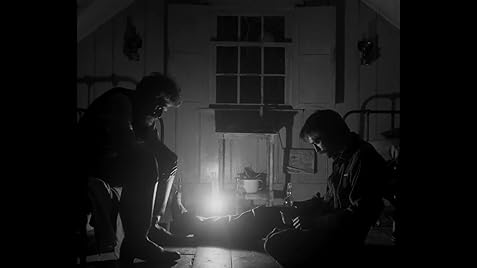
The Lighthouse opens with Robert Pattinson and Willem Dafoe arriving at the titular structure. It is there that they will spend the rest of the film, alone with only each other, some really mean seagulls, and their rapidly deteriorating mental states. Dafoe quickly establishes to Pattinson that he’s the one in charge, and the two squabble over who gets to tend to the light up in the lighthouse. Pattinson insists that they should alternate, while Dafoe maintains that it belongs to him. So begins the central conflict between the two, a struggle for power and dominion over the light. Dafoe controls the light, and so he controls everything. The light takes the form of a savior, a source of divinity and enlightenment that allows Dafoe to rule absolutely while Pattinson toils, performing menial labor, suffering debilitating injuries, and subjecting himself to subservience. The two have a love-hate relationship from the start. Dafoe’s insistence on his power puts Pattinson off, and the young Pattinson’s arrogance appalls Dafoe. They bicker over everything, access to the light, the quality of the food (one particularly spellbinding and hilarious sequence features Dafoe ranting deliriously after Pattinson admits his distaste for the lobster he cooks). The master/servant dynamic comes in and out like the tide, with the two setting aside their differences to get drunk, sing and dance, and “spill their beans”, a term Dafoe uses to refer to the unwarranted telling of personal secrets. As the weather takes a turn for the worse following Pattinson’s brutal murder of a seagull, the two become stranded on the island longer than they expected to be, and their grips on their sanity dissipate. Pattinson begins to hallucinate a sexual relationship with a mermaid. Dafoe’s alternations in perception of Pattinson become more rapid and more violent. They dance, they sing nonsense, they shout at nothing. They take turns trying to murder each other. Pattinson makes a move to escape, at which point his boat is hacked to pieces by an axe-wielding Dafoe. They maintain a tenuous connection to the outside world by threatening to report each other to the organization they work for, despite the fact that it’s clear to them both that there is functionally no world to either of them besides the rock they inhabit. Pattinson threatens to report Dafoe and Dafoe threatens to dock his pay, but they both know it’s meaningless. This bedlam can clearly only have one conclusion- one of them ends up dead.

At this point there will be spoilers, if that matters to you.

One of them does, or at least comes close to it. Pattinson beats Dafoe within an inch of his life, steals his key to access the light, and leaves him half-buried in a ditch to die. As Pattinson pauses before his final ascent to the light, Dafoe charges at him, with the intent to kill him to prevent someone else from accessing the light. But he’s no match for Pattinson, who overpowers him and brutally kills him with an axe. Now totally alone on the island, he climbs the spiral staircase of the lighthouse.

What follows will probably be hard to describe. Upon reaching the light, which he has shed so much blood and sacrificed so much of his mind for, he has a visceral reaction, the light cleaning the dirt from his face, emanating out of his eyes and mouth, and giving him the appearance of something more than human. It’s as is he’s staring God in the face and not being able to handle what he’s seen (in many ways, the scene echoes the finale of The Witch). He falls down the staircase, back to the ground, away from the light. Where he belongs. He’s a sort of Icarus- he flew too close to the sun. He tempted fate. He killed a seagull.

Early in the film, Dafoe cautions him against violence against the seagulls, despite their persistent assaults on him. Dafoe states that the gulls contain the souls of dead sailors, and killing one would mean bad luck. Yet in a moment of unbridled rage, he grabs one of the creatures and smashes it repeatedly against a rock. The brutality of the act leaves no question about the fate of the seagull, nor does the sight of its pulverized remains in Pattinson’s hand. It is his ultimate act of hubris, of youthful ignorance and disobedience. And it costs him as such. For after it’s been done, the wind changes and a storm begins to roll in.

The final shot of the film sees Dafoe, lying naked on the floor, surrounded by seagulls. He’s in bad shape, to put it nicely. His body has been destroyed. Yet he’s clearly not where he was when we last saw him: he was killed indoors, yet he’s outdoors here, and he was fully clothed. So is he dead? Yes, his soul has left to go join the ranks of the seagulls. Fitting, after he’s spent weeks tormenting Pattinson, he becomes one of the animals he hates the most.

At a technical level, The Lighthouse is aces. Cinematographer Jarin Blaschke, who did phenomenal work on The Witch, one-ups himself here, working in hypnotic black and white and an almost-vertical aspect ratio to create a curious visual stunner. The actors are both unbelievable. Anyone who still sees Pattinson, one of our most versatile contemporary actors, as “the Twilight guy” will be astounded by his work here. Dafoe is somehow maybe better, never faltering from his character’s ridiculous persona and dialect and never going fully over the line into parody. Robert Eggers cements his status as one of the most fascinating young directors, showing off an even better example of his distinct style and unique genre. The Lighthouse is one of the year’s best films, and it comes in under the wire as one of the most essential works of the decade. It’s weird, it’s radical, it demands to be seen and admired.

Rating: 5/5

Marriage Story review: a fantastic portrait of people at their worst

There are many things about Marriage Story that you’d have to be insane not to love- watching Adam Driver act, watching Scarlett Johansson act, watching Laura Dern, Alan Alda, Ray Liotta, et al. act, and hearing Noah Baumbach’s dialogue. So it stands to reason that watching Adam Driver, Scarlett Johansson, Laura Dern and others perform Baumbach’s dialogue would make for a truly excellent film. Marriage Story is funny, as you’d expect it to be based on its pedigree, it’s well acted, as you’d expect from that cast, but the overwhelming aspect of the movie is a sobering weight that occupies every scene. The funniest moments are complicated due to their accompanying heaviness, the saddest moments are exacerbated by this sensation, the angriest moments communicate a feeling like no other based on the darkly intoxicating fusion of anger and pervasive grief. Marriage Story invites you to wallow in this noxious sludge of emotions, and treats you to some of the finest performances of the year along the way.

Marriage Story opens on the main characters, Driver’s Charlie and Johansson’s Nicole, reading voiceover descriptions of what they love about each other over footage of their relationship. It then cuts to a separation counselor instructing them to read what they read to each other. From this moment, Marriage Story lets you know it will pull no punches. The next two hours chronicle their divorce as it progresses from an amiable affair to a bitter street fight involving ruthless, expensive L.A. lawyers, the public revelation of private information, and shouting matches based around emotion so raw you run the risk of salmonella just watching. The film tells a cohesive story, yet it’s first and foremost a collection of these moments, these primal expressions of anger and sadness and pain. Driver and Johansson sell these moments with the skill of the best actors in the world, which is because they are. Despite Driver being best known for Star Wars and Johansson being best known for the Marvel movies, they’re brilliant actors, more thespians than superstars here. This film will be most people’s introduction to the full extent of Driver’s brilliance (those who didn’t see Inside Llewyn Davis), and that’s fine, he’s at his career best here. This is an acting-based film, despite its brilliant screenplay, direction, and technical aspects. And while, going into it, you can expect to be crushed by an overwhelming tidal wave of emotion, a rewatch based just around focusing on the acting would be interesting.

This will get Driver his first Lead Actor Oscar nod (he was nominated for supporting last year for Blackkklansman), it remains to be seen whether or not he can win. It will also hopefully be Laura Dern’s Oscar, although there is substantial chatter for her Little Women performance, not to mention Jennifer Lopez in Hustlers. Johansson appears to be the only plausible challenge to Renee Zellweger in Judy, yet she’d still feel like a miracle winner at this point. The film is a major Oscar contender, and (in my mind), the likely winner of the big one (although 1917 could still blow the whole thing up). And like most of the current awards contenders right now, this one wouldn’t be a bad winner.

Everything here is firing on all cylinders. Driver and Johansson reach every extreme of emotion. These are people going through the worst experience of their life, and they sell it. One absolutely breathtaking sequence begins as a routine argument between the two and devolves into a shouting match of epic proportions, and features the best acting in the film on both ends. Another brilliant scene involving a knife features top notch work from Driver, who communicates the absolute disarray of Charlie’s life so perfectly. Johansson’s work is less explosive, with fewer signature moments and less bombast, but she’s equally powerful, giving a performance of quiet devastation and anguish that makes it impossible to dislike her despite the emotional attachment Driver’s performance requires you to give him. The scene early on where Johansson cries in the office of Laura Dern’s divorce lawyer Nora comes to mind as an example of her acting at her best.

Dern and Ray Liotta, opposing divorce lawyers, serve as foils to Charlie and Nicole. While the separating couple clearly have severe personal issues, they try their best to remain civil throughout the process of divorce. Dern and Liotta, prior to their courtroom showdown, interact completely amiably, showing that they clearly have no personal issues with each other. Then they have to do their jobs, and they’re at each other’s throats. And so are Nicole and Charlie, by proxy. The whole process is depicted as a circle of hell Dante never dreamed of, and its total insanity is best portrayed by the lawyers. Not just Dern and Liotta, however- Alan Alda’s kind older lawyer, who Charlie works with at the start, represents a kinder side to the process, one who’s optimistic and sensitive to Charlie’s wants. But he proves ineffective in the face of Nora’s tenacity and is let go. The message is clear, there’s no room for reason, no room for sanity, no room for kindness. Only malevolence and pain remain.

And then you have the Being Alive scene. The scene, in which Driver’s defeated Charlie belts out the song (from the conclusion, I believe, of Stephen Sondheim’s famous 1970 musical Company) in a bar quickly became the most talked-about moment in the film upon its festival premiere months ago. Now, a day after its wide release via Netflix, it’s been so talked about and dissected that we’ve reached the point in the Take cycle where people are talking about how it’s overrated to the point that it’s now underrated. The scene is fantastic, it’s Charlie laying bare his soul (maybe I’m just a big fan of Baumbach musical moments, Frances Ha‘s “Modern Love” scene is one of my favorite cinematic moments of the decade). Charlie has lost everything, his wife, his Broadway play, really his son. Now, when he’s already lost his life, he decides that it’s time to start living. And you feel for him, despite the fact that he’s been in the wrong the entire time. The dissolution of the marriage is clearly his fault, he’s shown to be an insensitive and at times deeply jealous husband and father. Yet the film avoids taking sides by a) portraying both characters as, at some level, wrong, and b) making you empathize deeply with both of them. These are complicated people: Charlie is self-centered and manipulative, but he’s facing down an unfair system designed to hurt him, and he still really does love Nicole and his son. Nicole is overly ruthless and cruel during the divorce, but she still cares for Charlie and doesn’t want to split their time with their son 55/45 in her favor because she still believes their situation should be amicable. In the end, the characters want nothing more than to be alive. Whether they succeed or not is debatable.

Rating: 4.5/5