The 25 greatest shots in cinematic history

I should begin this list with a disclaimer: it isn’t really meant to be taken seriously. At some point the ranking becomes pointless, as some shots aren’t deceptively better than others, or it’s too hard to choose. This was a fool’s errand, and I don’t necessarily stand by my ranking. Except number one, that one is absolutely and indisputably correct.

There are a lot of factors at play here- how well they fit in with their individual films is a big one, as is visual stunning-ness (I think that’s a thing). However, because of the former, I didn’t feel as though I should incorporate shots from films I haven’t seen. So before the list begins, a quick look at a few absolutely stunning shots from films I haven’t seen yet:
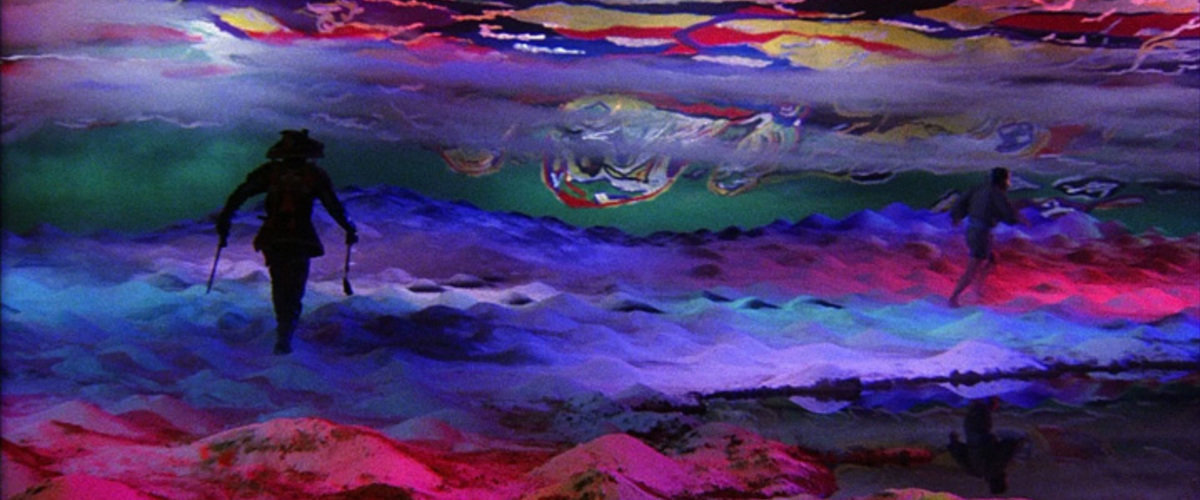
Kagemusha, 1980, Akira Kurosawa
Barry Lyndon, 1975, Stanley Kubrick
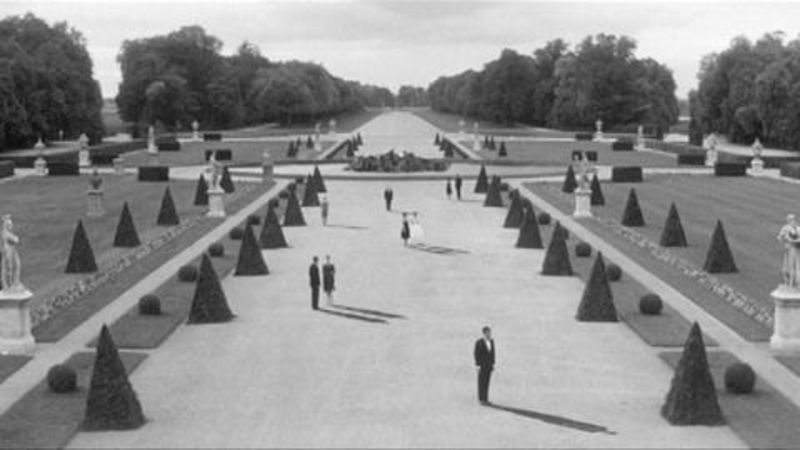
Last Year at Marienbad, 1961, Alain Resnais
Blade Runner 2049, Denis Villenueve, 2017

And now for the list (and again, this is a largely arbitrary ranking):

25- The Grand Budapest Hotel (2014, Wes Anderson)

Wes Anderson’s magnum opus possesses his trademark visual perfectionism in intense and overpowering excess. The use of color in the film is one of its more notable qualities, and this is on display in the above shot.

24- L.A. Confidential (1997, Curtis Hanson)

Curtis Hanson’s brilliant look at corruption in the 1950s LAPD, adapted from the James Ellroy novel of the same name, isn’t known for its visuals- the film is one of the all time greats (and very high up on my list of all-time favorites) due to the masterful character study at its center. And the culmination of the arc of one said character, Guy Pearce’s Ed Exley, takes place immediately preceding this shot. The moment that it’s associated with doesn’t entirely get this shot on the list- it’s pretty fantastic visually, too.

23- There Will be Blood (2007, Paul Thomas Anderson)

There Will be Blood is a dark movie (massive understatement). In this shot, the idyllic blue sky is violently interrupted by a manifestation of Daniel Plainview’s thirst for oil- an explosion of darkness, flame, and smoke that disrupts its peaceful surroundings. It’s hard to think of a better metaphor for There Will be Blood’s central conflict.

22- Kill Bill vol. 1 (2003, Quentin Tarantino)

I just want it to be known that the House of Blue Leaves scene at the climax of Kill Bill’s first half is an awesome, perfect scene in which stuff like this happens every so often and also hundreds of people lose limbs and lives in swordfights. Nuts.

21- Blue Velvet (1986, David Lynch)


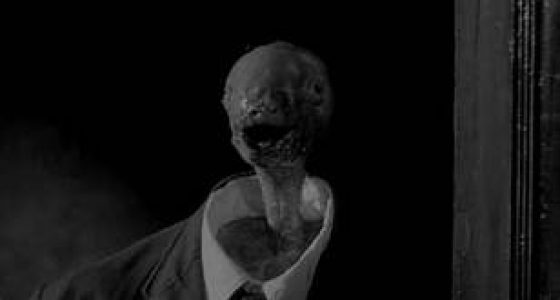
I couldn’t explain the significance of the central metaphor of Blue Velvet in a paragraph that’s supposed to be this short, so suffice it to say that if you haven’t seen this film, this image isn’t as haunting to you. If you have, you know why it’s up this high. If you haven’t, you probably shouldn’t watch it unless you can handle some upsetting stuff.

20- Reservoir Dogs (1992, Quentin Tarantino)

Reservoir Dogs’ opening credits sequence is pure style- the slo-mo, the music, the close-ups. The first shot of said sequence is iconic, and it lands on this list as both a perfect intro to the film and to Tarantino’s career.

19- Seven (1995, David Fincher)

By now you know the finale of Seven- even if you haven’t seen it, you probably know what happens after this. But if you have seen it, it holds more weight- it’s the first shot that isn’t drenched in the perennial rain, smog, and despair of the unnamed city in which the majority of the film takes place. This is a reprieve from that, although it’s soon revealed that just as much sinister stuff can happen in brightness as in darkness.

18- Sunset Boulevard (1950, Billy Wilder)

Man, the guts it takes to open your film with narration from the main character’s dead body floating in a swimming pool. Sunset Boulevard was directed by legendary auteur and Super Gutsy Filmmaking Guy™ Billy Wilder, who completely redefined the American cinema for decades. Shots like this go a long way towards explaining why.

17- A Clockwork Orange (1971, Stanley Kubrick)

By FAR the most represented filmmaker on this list is Stanley Kubrick, and his A Clockwork Orange (based on an equally astounding book by Anthony Burgess) is one of four films to be represented twice (one of those was also directed by Kubrick). A Clockwork Orange’s opening scene ranks among the greatest ever- the slow pan back accompanied by Malcolm McDowell’s menacing narration and the chilling synth score form something legendary, indelible, and terrifying.

16- Moonlight (2016, Barry Jenkins)

This list’s most recent film, and a deserving one- Moonlight is, in my opinion, the greatest film of the 21st century, and one of the greatest of all time. Jenkins, between this and last year’s If Beale Street Could Talk (robbed of a best picture nod), has cemented himself as maybe the best filmmaker in the world, mainly due to his gift at creating brilliant and beautiful imagery, much like one of his greatest influences…

15- Fallen Angels (1995, Wong Kar-Wai)

…Wong Kar-Wai, who rules. There’s no way to differentiate between any given artistically brilliant frame in Wong’s masterpiece, In the Mood For Love, so I opted for this shot from the ending scene of Fallen Angels, a movie drenched head-to-toe in the auteur’s legendary and intense style, yet in possession of the same inner longing as ITMFL. I almost prefer Fallen Angels (well, it’s obviously not better, but I almost like it better), if only because of that final scene, which is one of the all time greats. The collaboration between Kar-Wai and longtime DP Christopher Doyle has rarely been better. The neon green of the tunnel that has been seen many times before in the film finally reaches its conclusion, its final purpose, before the camera pans upwards to reveal a glimpse of sunlight, a first in a movie completely bathed in neon and darkness.

14- Vertigo (1958, Alfred Hitchcock)

There isn’t much more to be said about Vertigo, the king of the most recent Sight and Sound poll. There is no misplaced step, no frame unnecessary. The scene where Madeline jumps into the water is incredible, because it displays this shot, illustrating the beauty of San Fransisco and the surrounding scenery before immediately depicting an attempted suicide. Alfred Hitchcock, ladies and gentlemen.

13- Apocalypse Now (1979, Francis Ford Coppola)

Apocalypse Now’s vibrant, surreal, and dangerous atmosphere is its most important quality, as the film’s crux is the slow descent of everything in its universe into madness, into hell on earth. The visuals of Coppola and cinematographer Vittorio Storaro go a long way towards turning the film into what it as become, as it has two spots on this list.

12- Fight Club (1999, David Fincher)

David Fincher’s dark visual style is incredibly effective in films such as Seven and The Social Network, but it’s at its apex in Fight Club. The best shot in the film is the last, as the film’s themes- of inner conflict and lunatics causing destruction- come full circle in the last scene. The narrator and Marla Singer look out on the mayhem that’s been caused, The Pixies’ Where is My Mind plays, “You met me at a very strange time in my life”, it all comes together to form one of the all time great endings. I’m just now realizing I shouldn’t have said any of that.

11- The Shining (1980, Stanley Kubrick

Out of all of the brilliant shots in The Shining (in the snow, “HEEEEEEEEERE’S JOHNNY!), this is the greatest and most haunting one. Kubrick deploys his trademark one point perspective and fames this scene in an unforgettable way. It’ll stay with you forever, and ever, and ever (sorry).

10- The Third Man (1949, Carol Reed)

Honorable mention to the final shot, but my love of the final scene will have to wait for another time. The one that makes the cut is this one, at the conclusion of the climactic chase in the sewers. Reed’s legendary noir puts Joseph Cotten’s Holly Martins through hell, but at the end of it all, there is a way out. There’s a light at the end of the darkness.

Ok I couldn’t help it here’s the last scene.

9- The Seventh Seal (1957, Ingmar Bergman)

Ingmar! This shot has ingrained itself into popular culture more than any other from Bergman’s legendary career (thanks Bill & Ted, I guess), and come on- it’s a guy playing chess with death. That’s awesome. This shot rules, this scene rules, this film rules.

8- Apocalypse Now (1979, Francis Ford Coppola)

The vast majority of Apocalypse Now’s imagery can be described best as haunting. The film portrays Vietnam as a hell unlike anything else, and it all comes down to that one symbol- the helicopters. They are the lasting legacy. Out of all of its most parodied moments, the helicopters rank near, if not at, the top.

7- Vertigo (Alfred Hitchcock, 1958)

One of Vertigo’s defining aspects is the revolutionary and hypnotic use of color. The use of green in this scene, when Judy “becomes” Madeline, is downright trance-inducing. It’s the kind of visual artistry that causes the viewer to experience a bit of the titular condition. On a side note, Hitchcock is one of the greatest directors ever in terms of visuals, and it’s a pity he didn’t make more appearances on this list (this is it).

6- 2001: A space odyssey (1968, Stanley Kubrick)

Well, here it is: the most visually stunning film of all time. This list could’ve pretty much been “Top 25 shots from 2001” (I held myself to 2). Kubrick’s supreme artistry has never been better, as he creates a masterpiece by stringing together awe-inspiring and astounding images. More on 2001 to come, but I’d like to take this opportunity to push my propaganda that HAL has one of the greatest deaths in movie history.

I mean COME ON.

5- A Clockwork Orange (1971, Stanley Kubrick)

Seriously, a fifth of the entries on this list are from Kubrick films, and one of the four from before the list. That’s insane. This Clockwork Orange shot is one of the best from his illustrious career. It frames Alex and his droogs in the background, their shadows occupying the foreground. It’s ominous, brilliant, and it does so much to communicate the themes of the film, which (hot take time) is Kubrick’s best. Don’t hold me to that, I could change my mind in favor of 2001 or even The Shining tomorrow.

4- Mulholland Dr. (2001, David Lynch)

I couldn’t tell you what Mulholland Dr is actually about, but it seems pretty clear that one of the themes is, in some extremely twisted way, being lost in the nightmare that is Los Angeles. This shot puts the figure at its center in at the very bottom, allowing her to occupy an extremely little amount of space. What fills the rest? Towering palm trees, telephone poles, and eerie light. Mulholland Dr is an astounding, dumbfounding, totally nonsensical, brilliant, perplexing film that makes no sense and compels an insane amount of thought (I saw it five months ago and still dedicate a lot of time to trying to crack it). This shot communicates both the alluring beauty and sinister atmosphere of the film, which is why I love it so much.

3- Ikiru (1952, Akira Kurosawa)

Ikiru, Kurosawa’s best film (fight me), culminates in heartbreaking fashion. The protagonist, resigned, spends his final night basking in the result of the only thing that he did in his life- his government work. He enjoys the park he helped make possible, and this act is the most fun he’s ever really had. It snows, and he gets one final moment of beauty in his life. If you needed confirmation as to how great this scene is, it gets homaged in Scott Pilgrim vs. The World. For real, watch this movie, even if you’ve never seen a foreign film in your life. It’s so great.

2- 2001: A Space Odyssey (1968, Stanley Kubrick)

I’ve said all I can about 2001 and about Kubrick. This is one of the film’s most legendary shots, and with good reason. Kubrick’s one point perspective returns, and the sci-fi brilliance of the film shines through in this iconic, fantastic shot. It probably would be number one on the lists of most people dedicated enough to make one. But it has to settle for number two here, taking a backseat to…

1- The Exorcist (1973, William Friedkin)

C H I L L S. The Exorcist spends most of its runtime building to a conclusion in which nothing good can happen. It reaches that conclusion with this- the arrival of Father Merrin. This is the last thing that happens before the exorcism, and everything about it works. The silhouette of the priest, the streetlight, the mist coming from the house. Perfection.

That’s it. Again, I take no responsibility for the rankings except number one, which I completely stand by. Feel free to disagree, and if you take one thing from this, let it be that Stanley Kubrick was a god.

Every Quentin Tarantino movie, ranked

Quentin Tarantino shouldn’t be a household name.

His films are brutally violent and insanely profane. His influences are mainly films that the average person has never heard of, and he borrows from every last one of them. His dialogue-driven films stand out in an era when box office titans are comprised of explosions and chase scenes (although Tarantino can do that well, too). A major component of his body of work is including songs that nobody’s ever heard of. He shouldn’t have any sort of mass following.

Yet he does. He’s one of the only auteur directors that still drives people to the theater in droves. And with good reason. His films are flashy and alluring, he attracts major talent (Samuel L. Jackson, Brad Pitt, Leonardo DiCaprio, etc.), and he’s just a straight-up cinematic genius. All of the aforementioned songs nobody has heard never of immediately become super popular. Individual moments, lines, and images from his filmography have become imbedded into popular culture. He deserves his fame simply because he’s just that good. He’s so good, in fact, that he’s never made a bad film. And that is where we begin in this ranking of all 9 Quentin Tarantino films. (Only counting directed films, so no True Romance or From Dusk Till Dawn. Kill Bill counts as one film. Spoilers ahead).

9- The Hateful Eight

Again, there’s no bad Tarantino film. There’s a bad half of one, however. The first half of The Hateful Eight serves one purpose, and it’s to get all of its characters into one place. That’s it. That’s half of a close to three hour movie. Now, that’s not to say that the first half is a total failure. It looks fantastic, and it’s incredibly well acted, especially on behalf of Samuel L Jackson, Kurt Russell, Jennifer Jason Leigh, and Bruce Dern. The reason that the movie itself isn’t bad is the second half. From the halfway point on, The Hateful Eight is so great that you almost forget how slow the first half is. Characters die at an alarming rate and every death comes out of nowhere. The tension built up in the first half pays off big time as everything comes to a head in a masterwork of tension. Most importantly, it’s an essentially Tarantinoesque film. It’s very dialogue driven and features almost all of his recurring actors, such as Jackson, Michael Madsen, Tim Roth, and Zoe Bell, among others. And Ennio freakin’ Morricone did the score! But still, something had to be last.

8- Death Proof

It is perhaps my most unpopular opinion on Tarantino’s films that Death Proof is actually really good. It’s especially good for what it is, which is an intentionally cheap and sleazy tribute to the grindhouse movies of the seventies. And it works absolutely perfectly as that. It’s sleazy as hell and twice as gritty. It’s brutally violent and super cheap (which, again, is by design). It all comes together perfectly as a brilliant storm of pure cinematic bliss. The key to the whole thing, however, is Kurt Russell in one of his career best performances. His psychotic Stuntman Mike is one of the greatest villains in the Tarantino canon, and he’s the reason that what otherwise wouldn’t work works. It’s one of the greatest performances in all of Tarantino’s movies, and it’s so much fun (but also really guilt-inspiring) to watch him exact works of sheer evil and psychosis spanning both parts of the movie, the only thing tying both acts together. Both car scenes are masterful. The first, at the conclusion of the first half, is a brilliant scene, combining Tarantinoesque tension and elements of slasher horror to create something so brutal yet so utterly fantastic. The second, the climactic chase scene that runs for pretty much the entire fourth quarter of the film, is a work of pure technical precision. Tarantino directs the chase masterfully, and it’s fun to see him work outside of his typical comfort zone in trying (and succeeding) to craft an action sequence. Death Proof is not without its shortcomings, though. The third quarter of the film is just kinda nothing, and the premise really limits what it can be by design. Not a masterpiece, but it’s truly great and likely his most underrated film.

7- Jackie Brown

Tarantino’s films are their own genre, but yet they all seem to pay tribute to others. Reservoir Dogs is a heist movie, Pulp Fiction is an homage to the titular works, Django Unchained and The Hateful Eight are westerns, Inglourious Basterds is a war movie, Kill Bill is like 19 different ones and Death Proof is a grindhouse film. Jackie Brown is Tarantino’s contribution to the early-70s blaxploitation genre, even going so far as to cast the biggest star of the movement in the title role. Pam Grier is phenomenal, but Jackie Brown (the film) is complicated enough that she’s not really the main character. Samuel L Jackson’s charismatic gun nut Ordell Robbie steals the show, Robert DeNiro’s (!) depraved, burnt-out Louis and Bridget Fonda’s sardonic Melanie play major roles, and Michael Keaton’s agent Ray Nicolette is… there. And of course, there’s Robert Forster (who earned Jackie Brown’s only oscar nomination for this role) as bail bondsman Max Cherry, who delivers the fifth best performance in this movie. The issue with this film isn’t that there’s too much going on, it’s that it isn’t handled well. Tarantino is adapting here, from Elmore Leonard’s novel Rum Punch. Watching Jackie Brown, it’s visible that it’s not entirely his work. It’s definitely a Tarantino film, but it’s not all there. Nevertheless, Jackie Brown can be fantastic at times. Jackson’s car-trunk assassination of one of his henchmen is a stellar scene, and his AK-47 monologue is so much fun. The plot is delightfully twisty and complex, and it has the vague feel of an Ocean’s 11-type heist thriller. It runs a little long and, unlike Pulp Fiction (which shares the runtime down to the minute), feels like it. Jackie Brown falls short of masterpiece status, but it’s still pretty great.

6- Django Unchained

We’re in the truly great stuff now. Everything from this point on, including Django, is a masterpiece, and it’s ridiculous that a film of this quality, a film that features Christoph Waltz as a bounty hunting dentist, falls on the bottom half of this list. Jamie Foxx’s fantastic lead role as the title character is overshadowed by some of the best performances in any Tarantino movie, on behalf of Waltz, Samuel L Jackson, and Leonardo DiCaprio (more on that one in a little bit). It’s a brilliant redemption story, and it contains one of the finest (and bloodiest) scenes in Tarantino’s filmography in the Candieland Massacre. It’s nothing short of an epic, something that might’ve been made by Sergio Leone or David Lean if they were buried in the pet sematary and came back more disturbed and violent. It’s also far more exhilarating and fun than any movie about slavery has any right to be, in kind of an Inglourious Basterds-type way. As for DiCaprio’s role, it’s one of his career best and it’s a shame he wasn’t even nominated for an oscar for it. His vindictive plantation owner, Calvin Candie, is nothing short of terrifying as he menaces over every single frame he’s in with conniving faux-properness. Django’s quest is probably the most compelling Tarantino has ever crafted, as the audience is with him all the way in the quest to find his wife. Django Unchained comes together in the kind of way that all of Tarantino’s best films do, and it’s certainly one of them.

5- Kill Bill

It’s one film. This is not negotiable. It’s one story and Vol. 2 picks up at the conclusion of Vol.1. It works best as a complete, glorious, 4-hour whole. The Bride is the second best Tarantino character (the best has yet to come on this list), and she’s played with masterful determination and sorrow by Uma Thurman. None of the main villains aren’t fleshed out (especially the eponymous one). In a feat incredibly rare for something of its length, not a single scene feels out of place. The house of blue leaves scene is one of my absolute favorite scenes in cinematic history, and Bill’s death is one of the greatest death scenes ever constructed. It’s a first-order epic, and everyone either loves or hates it. I’m a full-on devotee to the “love” side. It spans pretty much every genre, zigzagging from a Samurai film to anime to a western to a sort of exploitation horror-type thing (the box). The cliffhanger at the end of volume 1 is one of the best, and it’s scientifically impossible to watch it without immediately watching volume 2 (trust me, I know science and stuff). It’s impeccable, awesome, and brilliant. It’s the film that Quentin Tarantino would make if given an infinite budget and access to any actor he could want. How Thurman and David Carradine didn’t get oscar consideration baffles me.

4- Reservoir Dogs

Where it all started. Reservoir Dogs launched a half-dozen careers (including QT’s), revitalized a couple more (Harvey Keitel and Lawrence Tierney) and firmly entrenched itself into cinematic history. It’s one of the all time greatest independent films, and it’s an independent film to its very core (although it doesn’t really feel like it). It’s so famously low-budget that the iconic suits were provided for free by a crime film fan and the other clothes worn by the characters were the actors’ own. There’s so many iconic scenes, such as the opening diner scene (Like a Virgin and Steve Buscemi’s tipping monologue in the same scene), the slow-mo opening credits scene (one of the greatest opening credits sequences ever) and of course, that one. Michael Madsen’s psychotic lunatic torturing a cop to Stealer’s Wheel’s Stuck in the Middle with You is many things, including the greatest needle drop ever, possibly Tarantino’s finest scene, and the beginning of one of the greatest filmmaking careers of the modern era because, let’s face it, without it the film wouldn’t have been as big of a success. Reservoir Dogs is another one that just comes together perfectly, combining stellar performances, spectacular writing, and tension that you can cut with a knife on every single watch. Reservoir Dogs is a pop culture landmark and a cinematic masterwork, and it doesn’t even manage to crack Quentin Tarantino’s top 3 films.

3- Once Upon a Time… In Hollywood

Tarantino’s latest is one of his absolute best, which is odd considering how much it diverges from his other work. It’s far less urgent and tense, it progresses slowly, and it takes a far more humane and tender approach to its characters. (What could be construable as spoilers approaching) Its revisionism is done with glee, similar to Basterds and Django, but there’s a softer edge to it. These characters, for all of their outward projections of toughness and machismo, care about each other. But yet for all of Hollywood’s rarities, it couldn’t have been made by anyone else. It meanders and often stands still, but it contains sequences of tension unparalleled even in his own filmography. The Spahn Ranch sequence is one of his absolute best- it felt to me reminiscent of Basterds’ basement bar scene. And the climax is as shocking, violent, and brilliant as anything he’s ever done. Overall, Once Upon a Time in Hollywood is essential Tarantino. It’s a completely unforgettable masterpiece. The further removed I am from my first viewing, the more I feel that this placement is right. Who knows? After further viewings, it might be even higher.

My full review of this film is here.

2- Inglourious Basterds

This was unbelievably close to taking the top spot. It’s another one of Tarantino’s latter-career revisionist history epics, an oddly specific genre he would return to for Django Unchained and The Hateful Eight (and, as it turns out, Once Upon a time in Hollywood). Basterds seems to get better with every rewatch, as every one of the aspects that makes it great holds up. Brad Pitt is at his best, Michael Fassbender is ridiculous in his two or three (not so brief) scenes, Christoph Waltz (duh) turns in an all time performance, and god it’s so much fun to watch Hitler’s skin slide off of his head. The climactic theater scene is incredible and it’s still not the best scene in the film. The half hour basement bar scene is possibly the greatest thing Tarantino has ever done, and it’s a masterclass in screenwriting, acting, and tension (soooo much tension). It’s so much fun, brilliant on a technical level, and unexpectedly funny (Hugo. Stiglitz.). It’s worth noting that Mike Myers is in it, and also Winston Churchill is played by Rod Taylor, who happens to be the male lead in Hitchcock’s The Birds (this isn’t necessary information, I just want as many people to know as possible). And now the time has come to talk about Waltz. His Nazi Hans Landa is disarmingly courteous and sophisticated, and he views his work as just that: work. He’s conniving, he’s terrifying, and worst of all- he’s charming. He’s Tarantino’s greatest character, period. He’s an all time great villain, and the secret to the whole thing. The opening scene at the farmhouse is one of the best acted ever, and it would work as a short film on an oscar-worthy level. Inglourious Basterds is perfect. It just might be Tarantino’s masterpiece.

1- Pulp Fiction

Shocker, right? There’s a reason that Pulp Fiction is consistently hailed as Tarantino’s masterpiece, and it’s that it’s simply one of the greatest films ever made. Endlessly rewatchable and quotable, Pulp Fiction is another one that has totally ingrained itself into pop culture. It features one of the all time best death scenes (Aw man, I shot Marvin in the face), is absolutely hilarious, (He hid this uncomfortable hunk of metal up his ass…, also Marvin’s aforementioned demise). It’s Christopher Walken at his absolute best, if only for one scene (similar to his role in Annie Hall). Harvey Keitel is at a similar best in his iconic turn as The Wolf. Any number of scenes have become iconic, from the jackrabbit slim’s twist contest to the scene in Brent’s apartment (try to pick a favorite between “SAY WHAT AGAIN” and “ENGLISH, MOTHERF***ER”). Bruce Willis is in peak form, as are (obviously) Samuel L Jackson and John Travolta. The final scene in the diner stands out as one of the most well-written in all of Tarantino’s films. Don’t even get me started on the theory that the briefcase contains Marsellus Wallace’s soul. There’s too much to talk about with Pulp Fiction and most of it has been said already, so suffice it to say that it’s a masterwork that works ceaselessly throughout its entire runtime. As close as Inglourious Basterds may be, this is the obvious number one. In the 25 years since its release, Tarantino has never topped it, nor has anyone else (with the exception of maybe Barry Jenkins with Moonlight). Tarantino’s career is as illustrious as anyone’s, and this is the film that epitomizes that. I’ve been writing for two hours now, so if you’ll excuse me I’m going to go home and have a heart attack.