
Today, August 17th, is the 76th birthday of one of the greatest actors of all time. His career spans his early work with Martin Scorsese in the 70s to his more recent supporting turns in David O. Russell’s films. His roles have become iconic- lines, scenes, and moments have become so indelible that they’ve etched themselves into popular culture permanently. He needs no introduction, and yet I’ve given him one anyway because that’s just how great of an actor he is. So here are the top ten performances of the one and only Robert De Niro.
10- Jackie Brown (1997)

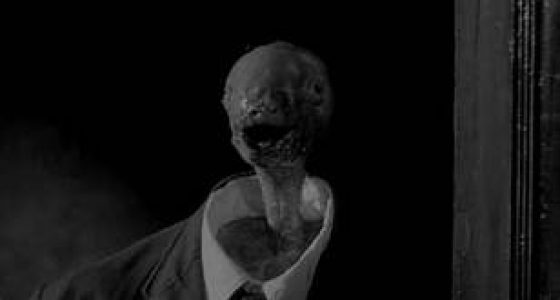
My initial feelings on De Niro’s role as Louis Gara in Jackie Brown (and the movie in general) were lukewarm. the further removed I get from it, however, the more I appreciate it. In ways similar to Casino (not on this list. That movie sucks.), Jackie Brown features De Niro in an against-type performance. His character here is more timid than you typically get from him. Louis is a unique character in the film for that reason. Every other character is a typically Tarantino-esque, suave, smooth talker that’s always thinking ahead. Louis is pretty much a loser. He’s responsible for many of the best and most shocking moments in the film (parking lot scene, above) that don’t belong to Samuel L Jackson’s character. He’s a welcome presence in the film, and an interesting part of De Niro’s career.
9- The Godfather part II (1974)
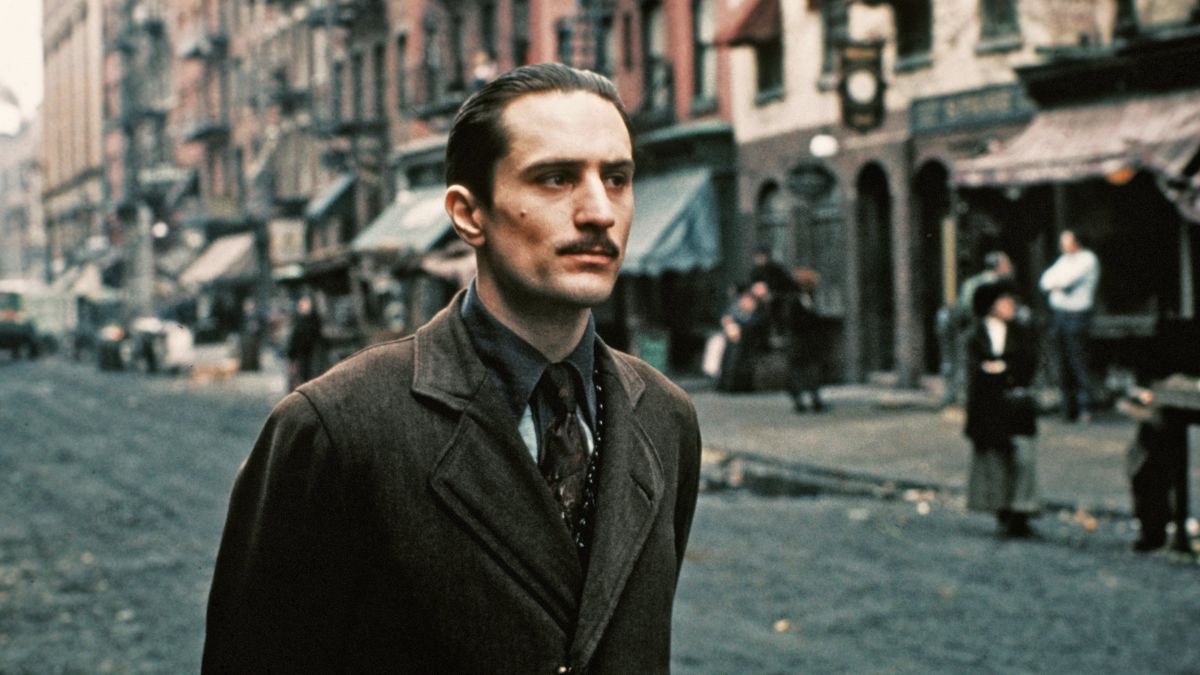
If the thing that sets the first Godfather movie apart is the presence of Marlon Brando, the thing that helps its sequel is De Niro (in the same role, fittingly enough). He won his first Oscar for his portrayal of Vito Corleone in his younger years. The most impressive thing about this part, in my opinion at least, is that almost all of his lines are in Italian. Additionally, he does a truly excellent job of maintaining the character that Brando established in the first film. Whenever he’s on screen, the film revolves around him. It takes skill to build on such an iconic character and make it your own, and that’s what De Niro does here.
8- The Untouchables (1987)

Enthusiasms, enthusiasms. What are mine? What draws my admiration? What is that which gives me joy? That would be De Niro’s brilliantly over the top performance as Al Capone in Brian De Palma’s crime classic. He’s unfortunately not in the film that much, but when he is the quality skyrockets. Which is saying a lot considering how great it is. De Niro delivers every line with an insane bravado that completely makes the movie and creates several classic scenes (I wanna go there in the middle of the night AND PISS ON HIS ASHES, etc.). There may be more nuanced performances in De Niro’s filmography, but I’m not sure if there are any that are this fun.
7- Mean Streets (1973)
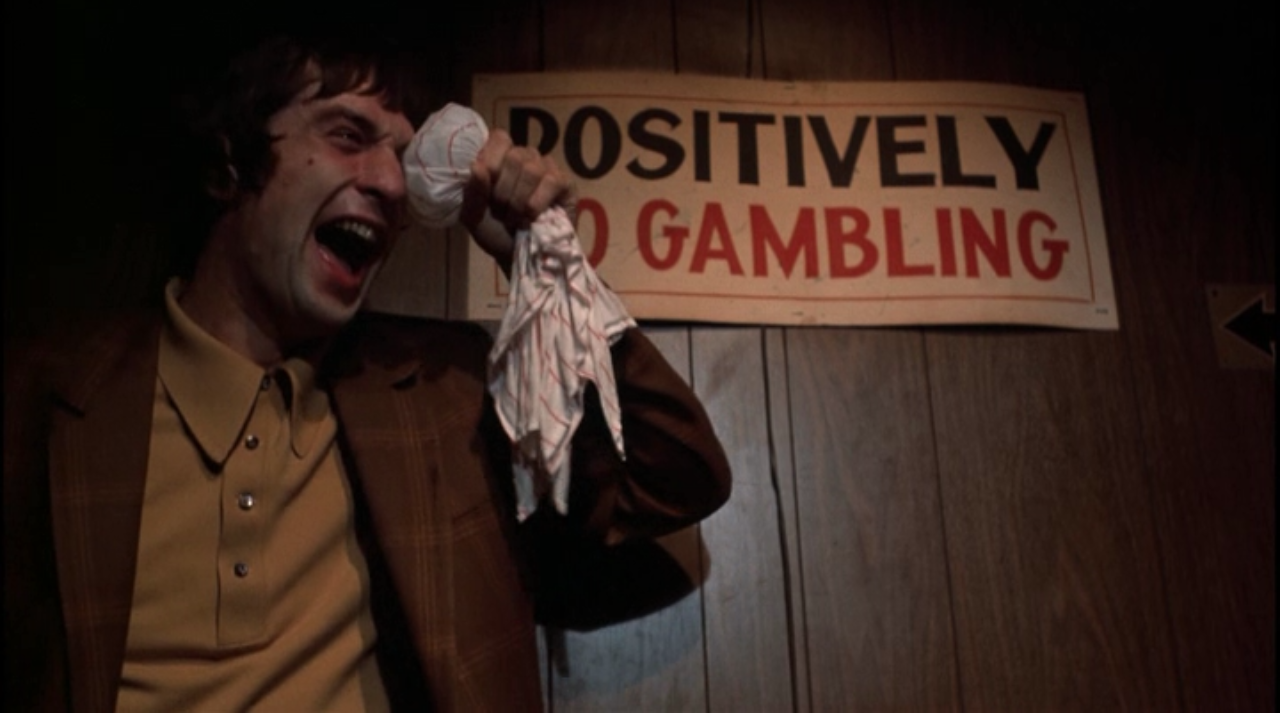
Harvey Keitel may be the star of Scorsese’s early masterwork Mean Streets, but De Niro steals the film with this completely bonkers turn. Here he plays a lunatic that doesn’t quite resemble his later roles in The King of Comedy and The Untouchables, but possesses an air of sheer madness that might make you think he’d make a good Joker. This film served as the starting point for his career and a stunning breeding ground for talent (David Proval, Richie Aprile on The Sopranos, is here, as is David Carradine) that remains fascinating to watch today, especially because of De Niro.
6- The Deer hunter (1978)

The Deer Hunter is a staggering, massive, emotional epic that is sure to resonate deeply with any viewer. Everyone here is in top form. Christopher Walken gives his best performance ever (the Pulp Fiction fan in me hates to say that, as does the Annie Hall fan in me), John Savage is tremendously and impeccably broken, and Meryl Streep is Meryl Streep. De Niro is the center of it all. He’s responsible for the most intense moments the film has to offer (russian roulette with more bullets), some of the most resonant (his return home from the war), and some of the saddest (NICKYYYY). He displays a brilliant range over the course of one film. He undergoes one of the greatest transformations in cinematic history (maybe even the second best in the movie). It’s an epic performance that perfectly suits the epic film.
5- Cape Fear (1991)

Never in his career has De Niro simply been this scary. He brings a palpable menace to every scene, even when he’s being outwardly friendly. His scene with Juliette Lewis, where he poses as her drama teacher, is one of the best scenes of his career. The above scene in the movie theater is a classic. He’s the second best thing about one of the best remakes in cinematic history (the best being the Simpsons episode that parodies it, obviously). He simultaneously oozes evil and charisma in a way he’s never typically done. Similar to the way he expands upon Brando’s Don Corleone in Godfather 2, he builds his own character on top of Robert Mitchum’s in the original.
4- Goodfellas (1990)
That is all.
3- The King of Comedy (1983)
:no_upscale()/cdn.vox-cdn.com/uploads/chorus_asset/file/13167865/king_of_comedy.jpg)
There are elements of Travis Bickle in Rupert Pupkin, De Niro’s unhinged title character. In fact, it could be said that he’s the anti-Bickle. Whereas Bickle’s worldview is dark and nihilistic, Pupkin is an eternal and relentless optimist and opportunist. Bickle’s obsession is with (as he sees it) making the world a better place, Pupkin sees the world as a perfect place already: he wrongly views it as a world where anyone, himself included, can make it. In this way, The King of Comedy is maybe a more cynical film than Taxi Driver. It’s occurring to me that this would be better as a full-length post, so I’m gonna stop for now. De Niro absolutely owns in this movie, and that’s really all there is to it.
2- Raging Bull (1980)

In Raging Bull, De Niro creates a character so repulsive and awful that it’s incredible just how empathetic you become with him. We revel in LaMotta’s victories and suffer with his lows. De Niro creates a character with so much depth, but whose only emotion at all times is rage. This is what drives his every action, his every explosion, his every fight. Raging Bull is a boxing movie in two ways- there’s the actual boxing, and there’s LaMotta’s tragic and constant fight with everyone in his life. De Niro here is a person who is constantly fighting, that’s his nature, that’s all he can do. And De Niro does it so well that it completely makes the movie.
1- Taxi Driver

When I started this post, it occurred to me that I’d have to pick between Raging Bull and Taxi Driver for the top spot. I thought I’d go with Raging Bull, but when I thought about it, I decided that Taxi Driver was the true number one. Travis Bickle is one of the greatest characters in the history of American fiction, and he couldn’t have been without De Niro (who improvised his most iconic scene). This role singlehandedly created an entirely new character archetype- “God’s lonely man”, which has been seen in the likes of last year’s terrific First Reformed and Jake Gyllenhaal’s character in Nightcrawler. But nobody (although Gyllenhaal and Hawke are both fantastic) has pulled it off quite like De Niro. His insanity here is not below the surface and malicious, it’s well-intended and right there for the world to see. This is a man who has nothing to lose. This is a character of unbridled depth and a performance of unparalleled skill. This is De Niro’s greatest contribution to film, to art, and to the world as a whole. Decades later, it’s the crowning achievement of one of the best careers in film history.
\\
 The Movie Files