Every Paul Thomas Anderson Film, Ranked

It’s entirely possible that there’s no better track record in recent cinematic history than Paul Thomas Anderson’s, and just because that’s been said a million times doesn’t mean it isn’t true. 8 films over the last 24 years, and not one of them is less than “very good”. And most of them end up falling in the “masterpiece” range. How has he pulled it off? How is it possible that I went into the last few of his movies saying to myself “maybe this is the one that won’t be great” and it never happened? The answer is simple: talent. From his first feature in 1996, PTA has displayed a level of pure skill behind the camera and with his actors on par with the greatest filmmakers in history. He’s become one of the most exciting working directors- these rankings are subject to change whenever in the (hopefully near) he releases his next film. But for now, here are all 8 of his feature films, ranked.

8- Hard Eight (1996)

Hard Eight | The Soul of the Plot

Something has to be last. On this list, as on most such lists, it’s PTA’s 1996 debut, one of his shortest and smallest in scope, and certainly his messiest. It’s his only film that never feels like it knows exactly what it’s doing, and there are moments where you can tell he just wanted to show off. But those moments can be as glorious as the rest of the showy moments in his filmography: it’s clear he had his skill in constructing long takes from the very beginning. This is an indispensable film in Anderson’s body of work for three reasons: 1 is that it’s his first, and those are always fun to watch to see where it all started. 2 is that it’s the initial appearance of one of his central themes, which is oddball outcasts finding solace in a morally gray group of other misfits. He would expand on this concept spectacularly the next year in Boogie Nights, before cruelly inverting it a decade and a half later with The Master. The third reason this can’t be ignored is that it’s actually a really good movie. The performances are brilliant: Philip Baker Hall has never been better (save maybe for Seinfeld) as the sorrowful, pensive center of the film, Gwyneth Paltrow and John C Reilly impress in supporting roles, and Samuel L Jackson is outstanding as always. There are barely any moments where this plays like a first film. It carries itself with immense confidence and backs it up with high-quality execution. It’s as sleek and entertaining as the best of his work, only occasionally faltering or losing its footing. However, those occasions sink Hard Eight into the eighth spot on this list, restoring the poetic justice of The Hateful Eight being in last on the Tarantino list before Once Upon a Time in Hollywood blew that whole thing up.

7- Inherent Vice (2014)

Inherent Vice – FILMGRAB [ • ]

Inherent Vice is probably the most “love it or hate it” work of Anderson’s career. Personally, I love it, although (as you can tell by the placement) not as much as some of its most dedicated believers. To attempt to describe the plot would be impossible and useless, as it’s not of much concern to anyone watching the film. This is a movie that you have to get swept up in the mood of or get left behind. Joaquin Phoenix does typically tremendous work as confused and perennially stoned PI Doc Sportello, who’s surrounded by a cast of bizarre and wildly entertaining characters who serve only to further complicate things. Highlights include Josh Brolin’s uptight and angry cop Bigfoot Bjornsen, whose weed-eating meltdown in the final scenes might just be the best moment in the whole thing, as well as Martin Short as a certifiably insane dentist and Katherine Waterson as Sportello’s ex-girlfriend who seems to be at the center of the whole thing. This is dense, impossible to follow, and just absolutely delightful to watch. Cinematographer Robert Elswit does possibly his best ever work, creating an early-70s L.A. that fits the world of the film perfectly. This is a singular experience like nothing else on this list, and it has to get major points for that. I can see it sliding up higher on repeat viewings. If you haven’t seen this one, just don’t go in expecting a standard crime yarn and you’ll be fine.

6- The Master (2012)

The Master | Metrograph

It just doesn’t feel right to have something as great as The Master this low on this list. But, like I’ve said, this is an atypical filmography to sort through. The selling point here is that it features the greatest performances in the careers of two of the greatest modern actors: Joaquin Phoenix and Philip Seymour Hoffman have never topped their grandstanding yet deeply emotionally wounded roles in this film. The scene that stands out the most from The Master is the famed “processing”, which is pretty much just those two talking back and forth. It’s among the best things PTA has ever filmed. The rest of it isn’t half bad either, although I’d be hard pressed to explain what exactly that is. It’s a story of power dynamics, of control, of the need for a sense of belonging, all of which have come up at other points in Anderson’s work (Phantom Thread, There Will Be Blood, literally all of it, respectively). But this feels darker and more unsettlingly off than any of those. Anderson loves to train his camera on broken individuals, but rarely does he depict people this messed up. This is an intoxicating attempt to get behind the psychology of cult membership, but it’s also designed to make the viewer confront their own inner workings. The actions depicted within are alien and disturbing, but Anderson’s goal is to make you wonder if you could ever fall for something like this. Lancaster Dodd is a con artist, a fraud, but you end up wondering if he has a point in his musings on our relationship to society. The Master is PTA’s hardest film to watch, both in that it’s not particularly fast paced and it’s darker thematically than almost anything else he’s done. This is a movie that’s designed to stick with you, which it undeniably does.

5- Phantom Thread (2017)

Film of the Week: Phantom Thread

I understand the gravity of this statement, given the two previous entries that I’ve gone over, but I do believe the following to be true: Phantom Thread is Paul Thomas Anderson’s weirdest film. It’s grounded firmly within the real world, yes, but there’s an otherworldly quality to the way the characters behave and the conclusions they end up reaching about their lives. When this wraps up, nothing especially strange has happened, yet you’re left wondering what on earth you just watched. It builds up a world of intricate exactitude and then begins to slowly wither it away, culminating in a film that defies easy categorization in its constant self-upheaval- it’s not a comedy, although it’s quite funny at times and inhabits a reality of decided absurdity. For those reasons, it’s not a drama, despite the dramatic machinations at play. And it’s definitely, in my opinion, not a romance, despite the fact that it charts the rise, fall, and rebuilding of a romantic relationship. The overall statement doesn’t hit until the very end, and it recontextualizes the entire film to reflect a perverse yet oddly endearing view of reality. I guarantee you, it’s more fun than I’m making it sound. No period piece outside of The Favourite has a right to be this entertaining, but how many of them feature Daniel Day-Lewis in the mode he’s in here? There isn’t much else to say about DDL, in this or in general, but he hasn’t been this elegant since The Age of Innocence and he hasn’t snapped this well since There Will Be Blood. A winning combination. Vicky Krieps hangs with him the entire way, and Lesley Manville steals every scene she’s in. It’s also secretly a horror movie- the driving in this is agony-inducing.

4- Punch-Drunk Love (2002)

Punch-Drunk Love (2002) - Rotten Tomatoes

When Uncut Gems was unleashed upon the world in December of last year, there was a collective wave of thought that “woah, Adam Sandler can act“. While it’s great to see this finally recognized, and it’s great that people liked Gems so much, it’s mildly frustrating, because a lot of us already knew that. 2002, 17 whole years before Howard Ratner, brought the first glimpse of Sandler crossing over from generational comedic talent to generational dramatic talent. Yes, there’s an argument to be made that he’s just playing a Sandler character here, but in this film he’s tasked with embodying an existential melancholy foreign to the likes of The Waterboy. This movie hits on an emotional level that wouldn’t be possible without Sandler’s positively brilliant work, and while he may have surpassed this performance in Uncut Gems, this role shouldn’t be forgotten. Outside of that, the rest of the movie is pretty astonishing too. There’s an ethereal, dreamlike feel to it, to the point where the rage feels adequately subdued due to uselessness and the ecstasy is similarly reined in due to a feeling that it can’t last. Punch-Drunk Love offers up a man devoid of any reason to feel emotion and then gives him one. It watches him work to capitalize on the first shot he’s ever been given to make something out of his life, and it ends up the warmest and most cathartic thing in PTA’s work. OH and remember that thing I said earlier about Philip Seymour Hoffman never being better than in The Master? That’s still true, but shoutout to his profanity-laced revelation of a role in this. He’s only in two or three scenes, but take a look at this:

3- Magnolia (1999)
hal0000: magnolia (1999)

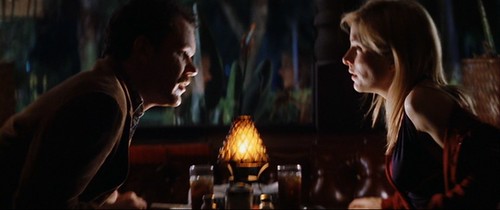
Magnolia is impossible to describe, but so are Inherent Vice, The Master, and Phantom Thread, and I’ve managed some writing on them, so let’s see. First off, this is a massive film. I’m not even talking about the 189-minute runtime or the gargantuan cast of characters, I’m talking about the broader philosophical aspirations of Magnolia. At times it can feel like it’s lost track of what it’s trying to say and is just vaguely galavanting around shouting “LONELINESS” and “INTERCONNECTEDNESS”, but that’s also really the point. This has points it wants to make, but it never allows them to become the whole movie. The characters and their lives and struggles come first, and through them we see what Anderson’s gesturing at. Three hours is a long time to fill if you’re trying to make a moral lecture about the insanity of human interaction, but it whizzes by when it’s more of an attempt to depict such a concept rather than make a statement on it. That’s really what Magnolia is- it’s a translation of the vast highs and lows of human follies and triumphs to the screen. It’s remarkable that Anderson manages to pull it off: it could’ve been unwatchable nonsense like Crash (the Best Picture winner, not the Cronenberg one) or marred by its pretentiousness like The Tree of Life (I do like this one, but it’s so damn high on itself that I’m not as in love with it as everyone else is). His talent as a filmmaker makes Magnolia not only in defiance of its sky-high aspirations but genuinely affecting. Plaudits for this also go heavily to the ensemble cast. Every actor is outstanding in their own way. It’s hard to pick a best performance, well, actually, it’s Tom Cruise, but maybe my favorite after removing him from the equation is Melora Walters. She sells the overwhelming brokenness better than anyone else, and every time she’s on the screen she’s equally heartbreaking and compelling to watch. Or is John C Reilly the MVP? This is the best of his early-career dramatic outings, all of which are underrated, but none of which are as memorable as this one. Or is it an obvious answer, like eternal acting gods Julianne Moore and Philip Seymour Hoffman? I know I’ve said this about a lot of these movies, but there’s no other cinematic experience that feels like watching Magnolia. It’s a bona fide masterpiece, and it can’t crack the top 2 on this list.

2- Boogie Nights (1997)

Boogie Nights': Where Are They Now? | EW.com

Boogie Nights has required a reputation as “the porn movie”. And yes, it is the porn movie, but it’s also about family, and about finding acceptance. The real porn… was the friends we made along the way. It’s also a brilliant stylistic showcase for Anderson, who pulls out all the stops and creates his showiest film. The first of PTA’s “big” movies (pun very much intended), followed immediately by the even more ambitious Magnolia. This, like that film, is broad in scope and in character count, and it leaves none of them behind. Every person here gets their moment, their interior conflict, their depth. Everything here is expanded upon to the point of an abundance of riches. When the bombast cools off and the second half rolls around, it makes sure we watch everyone hit their low point before starting them on the path towards redemption. As always, the performances are terrific, but the standout is Burt Reynolds as porn producer Jack Horner. It’s an unbelievable and unforgettable turn, one that almost overshadows the career work done by familiar names such as Moore, Hoffman, and Reilly, as well as Mark Wahlberg, who would only match this level of performance once again (The Departed). For a movie made so notorious by its subject matter, it’s a shock how human it is. It’s my favorite PTA film, and it contains my favorite PTA scene:

Impossible to hear Sister Christian or Jessie’s Girl the same way after that. Or watch Spider-Man 2.

1- There Will Be Blood (2007)

There Will Be Blood movie review (2008) | Roger Ebert

Recently it occurred to me that I remember very few plot details from There Will Be Blood, despite the fact that I’ve seen it multiple times and consider it maybe the defining masterpiece of 21st century American film. I then realized that this was yet another mark of the genius of this movie: most of the details of the plot are pretty much totally inconsequential and yet you still come away getting exactly the point the movie wants you to get. It’s like The Wolf of Wall Street in that regard: the oversaturation is the point. The sensual assault is the point. This is a movie that wants to hit you over the head with what it’s saying because it’s talking about things that bypass the realm of subtlety. This is as astonishing a portrait of individual greed as has ever graced the screen, and it really needs to rub in the evil of its central figure simply because he’s a figure that so relishes in rubbing it in. Blood drips excess because it needs you to emerge from the viewing experience exhausted, because it wants to drain you as if it’s Daniel Plainview and you’re oil-rich land. Nothing is left in Plainview’s path of destruction, not even his own humanity. You could argue Blood as a horror movie, because the monster at its center is terrifying enough. Sure, it helps that Day-Lewis turns in literally the greatest performance in film history, but the ambition of the story alone creates a larger-than life figure. Daniel Plainview is a seminal character in American fiction: he’s the 21st century Charles Foster Kane or Jay Gatsby, only without any sheen of high society. There Will Be Blood is an unforgettable accomplishment- from Jonny Greenwood’s world-altering score to Robert Elswit’s haunting cinematography. Every so often I find myself thinking about it, about random scenes. Maybe it’s Day-Lewis screaming about abandoning his child or about drainage (DRRRRRAAAAAAIIIIIIIINNNAAAAAAAGGGE), or maybe it’s something quieter, like those wordless opening 15 minutes. Either way, There Will Be Blood is hard to shake, and it’s Paul Thomas Anderson’s greatest masterpiece.
The greatest scores in movie history

A great score has more power to make a film great than almost anything. Think about Spielberg’s masterworks: Jaws, Raiders of the Lost Ark, Jurassic Park. The odds are pretty good that music popped into your head. Think about the shower scene in Psycho, a scene so iconic that it only needs those three words to appear in your head. Now think about the music that goes with it. That’s what makes a score great- when it transcends its role and becomes an essential part of the viewing experience. Here are some such scores, ranked in objectively correct order (except probably not).

Really quickly- an honorable mention to Nicholas Britell’s score for If Beale Street Could Talk, the best score of last year. Completely robbed of the oscar. Also a best picture nod. Go watch this film.

10- Jurassic Park (John Williams)

John Williams is gonna be pretty represented on this list. 4 out of the 10 entries are his scores (and 4 out of the 6 scores on the list composed by people named John). His Jurassic Park score is as iconic as the rest of them- the theme song is perfect for the atmosphere of wonder Spielberg conjures up in the beginning of the film. It’s one of Williams’ best themes, which as you’ll see, is saying a lot.

9- Halloween (John Carpenter)

Creating one of the most iconic and terrifying villains in horror movie history is no small feat, and it probably couldn’t have been done without the brilliant theme that director/composer John Carpenter cooked up. Extra points for the fact that Carpenter himself did it, he’s done a lot of his own scores throughout his career. The most notable exception is probably The Thing, which was scored by Ennio Morricone, who makes this list multiple times and very nearly made it for his truly excellent Thing score. Said score, by the way, was nominated for a razzie award. Wild.

8- Raiders of the Lost Ark (John Williams)

One of the most legendary action and adventure films of all time holds that position because of its score. Try to imagine the boulder scene with any other music. You can’t. Physically impossible. It’s around this point that I’m realizing that my argument for Morricone being better than Williams in terms of film score composers is in bad shape.

7- The Untouchables (Ennio Morricone)

Here he is! The legendary Ennio Morricone’s career has spanned decades, culminating in his long-overdue first Oscar win for The Hateful Eight in 2016. One of his career highlights is the 1987 Brian De Palma film The Untouchables. Morricone uses his score to add excitement to action sequences, menace to Robert De Niro’s indelible Al Capone, and overall further one of the greatest gangster films of all time.

6- The Godfather (Nino Rota)

Speaking of all time great gangster movies, here’s The Godfather, a film that certainly needs no introduction. It’s one of the most perfect films of all time, right down to the ionic theme music. Watching The Godfather for the first time, you realize that the hype is all true the moment that theme kicks in for the first time.

5- Jaws (John Williams)

Jaws has to be one of the most well-known films of all time, and yet the thing it’s most known for, the most ubiquitous aspect of it in popular culture, is the theme. It’s the go-to for any situation in which something is approaching something, or something scary is about to happen. It’s as used as the Jeopardy theme. It wouldn’t be a bad bet to say that like 90% of the world’s population knows it. When I write “Duuuuh nuh” the odds are good you think of Jaws, and that’s why it’s an all time great score.

4- There Will be Blood (Johnny Greenwood)

There Will be Blood is a film about greed and its destructive power over people. Director Paul Thomas Anderson conveys this through haunting imagery, brilliant writing, and a career best performance by one of the greatest actors of all time. But none of it would really work without Radiohead guitarist Johnny Greenwood’s score. Famously ineligible for an oscar nomination, the score is unique among ones on this list in that there’s no one piece of music that jumps to mind. It works because it’s perfectly suited to the film, it complements it incessantly and continuously drives it forward. It’s an overpowering score, creating an atmosphere so totally essential to one of the greatest films of the 21st century.

3- Star Wars (John Williams)

HEEEEEEERE’S JOHNNY! Williams’ highest entry on this list is his only listed one not in collaboration with Steven Spielberg. It gets this ranking simply because of how linked it is to such an iconic film. In short, without this score, there is no Star Wars as we know it today. And without Star Wars as we know it today, the movie world (and actually, probably, real world would be quite different. Nobody tell Danny Boyle.

2- Psycho (Bernard Herrmann)

There are no words for how hard is was not to put this at number one. This score changed everything. It was the first time music was fully entwined with drawing emotion out of the audience. The shrieking strings in the shower scene are legendary, featuring prominently in every one of the many (many) parodies of it. The theme that plays over the opening credits is iconic. It’s the best work the legendary Bernard Herrmann ever did, and he did the scores for Citizen Kane, Vertigo, and Taxi Driver, among other things. He also did the score for Twisted Nerve, which is only notable because the theme is the song that Elle Driver whistles in Kill Bill. So the guy is a legend. And Psycho still stands out as his greatest achievement.

1- The Good, The Bad, and The Ugly (Ennio Morricone)

Ennio Morricone’s legendary score for Sergio Leone’s masterpiece The Good, The Bad, and the Ugly gets the top spot on this list for a few reasons. It’s the only score on this list that I felt absolutely required two videos, and it’s the only score ever that I have listened to on spotify (it came up as suggested and I decided to go with it). It completely makes the film, which would be great otherwise but not nearly on the same level. The legendary final scene (one of the best ever) wouldn’t be the same without it. It features The Ecstasy of Gold (second video above), which is one of the rare pieces of film music to transcend its film and become used regularly in other ways. The theme is absolutely iconic. The whistles are so famous that hearing them reveals to anyone what movie is being watched. It’s impossible to imagine the film with any other score, and that’s why it’s number one.

The 25 greatest shots in cinematic history

I should begin this list with a disclaimer: it isn’t really meant to be taken seriously. At some point the ranking becomes pointless, as some shots aren’t deceptively better than others, or it’s too hard to choose. This was a fool’s errand, and I don’t necessarily stand by my ranking. Except number one, that one is absolutely and indisputably correct.

There are a lot of factors at play here- how well they fit in with their individual films is a big one, as is visual stunning-ness (I think that’s a thing). However, because of the former, I didn’t feel as though I should incorporate shots from films I haven’t seen. So before the list begins, a quick look at a few absolutely stunning shots from films I haven’t seen yet:

Kagemusha, 1980, Akira Kurosawa
Barry Lyndon, 1975, Stanley Kubrick
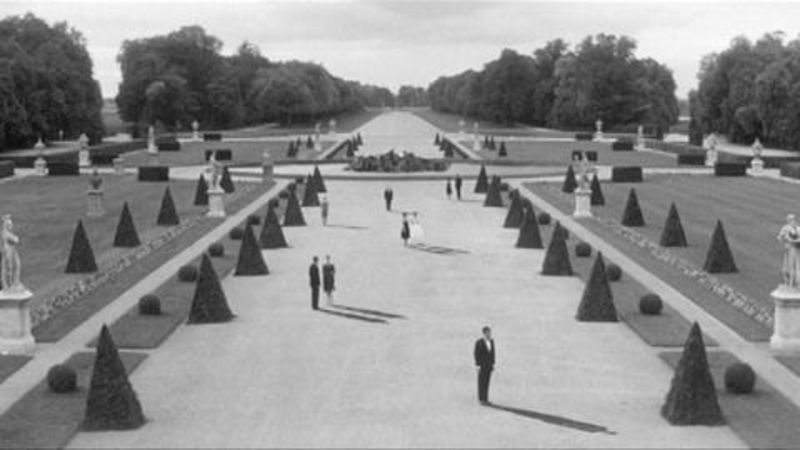
Last Year at Marienbad, 1961, Alain Resnais
Blade Runner 2049, Denis Villenueve, 2017

And now for the list (and again, this is a largely arbitrary ranking):

25- The Grand Budapest Hotel (2014, Wes Anderson)

Wes Anderson’s magnum opus possesses his trademark visual perfectionism in intense and overpowering excess. The use of color in the film is one of its more notable qualities, and this is on display in the above shot.

24- L.A. Confidential (1997, Curtis Hanson)

Curtis Hanson’s brilliant look at corruption in the 1950s LAPD, adapted from the James Ellroy novel of the same name, isn’t known for its visuals- the film is one of the all time greats (and very high up on my list of all-time favorites) due to the masterful character study at its center. And the culmination of the arc of one said character, Guy Pearce’s Ed Exley, takes place immediately preceding this shot. The moment that it’s associated with doesn’t entirely get this shot on the list- it’s pretty fantastic visually, too.

23- There Will be Blood (2007, Paul Thomas Anderson)

There Will be Blood is a dark movie (massive understatement). In this shot, the idyllic blue sky is violently interrupted by a manifestation of Daniel Plainview’s thirst for oil- an explosion of darkness, flame, and smoke that disrupts its peaceful surroundings. It’s hard to think of a better metaphor for There Will be Blood’s central conflict.

22- Kill Bill vol. 1 (2003, Quentin Tarantino)

I just want it to be known that the House of Blue Leaves scene at the climax of Kill Bill’s first half is an awesome, perfect scene in which stuff like this happens every so often and also hundreds of people lose limbs and lives in swordfights. Nuts.

21- Blue Velvet (1986, David Lynch)


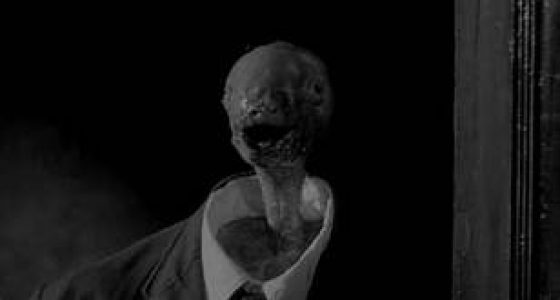
I couldn’t explain the significance of the central metaphor of Blue Velvet in a paragraph that’s supposed to be this short, so suffice it to say that if you haven’t seen this film, this image isn’t as haunting to you. If you have, you know why it’s up this high. If you haven’t, you probably shouldn’t watch it unless you can handle some upsetting stuff.

20- Reservoir Dogs (1992, Quentin Tarantino)

Reservoir Dogs’ opening credits sequence is pure style- the slo-mo, the music, the close-ups. The first shot of said sequence is iconic, and it lands on this list as both a perfect intro to the film and to Tarantino’s career.

19- Seven (1995, David Fincher)

By now you know the finale of Seven- even if you haven’t seen it, you probably know what happens after this. But if you have seen it, it holds more weight- it’s the first shot that isn’t drenched in the perennial rain, smog, and despair of the unnamed city in which the majority of the film takes place. This is a reprieve from that, although it’s soon revealed that just as much sinister stuff can happen in brightness as in darkness.

18- Sunset Boulevard (1950, Billy Wilder)

Man, the guts it takes to open your film with narration from the main character’s dead body floating in a swimming pool. Sunset Boulevard was directed by legendary auteur and Super Gutsy Filmmaking Guy™ Billy Wilder, who completely redefined the American cinema for decades. Shots like this go a long way towards explaining why.

17- A Clockwork Orange (1971, Stanley Kubrick)

By FAR the most represented filmmaker on this list is Stanley Kubrick, and his A Clockwork Orange (based on an equally astounding book by Anthony Burgess) is one of four films to be represented twice (one of those was also directed by Kubrick). A Clockwork Orange’s opening scene ranks among the greatest ever- the slow pan back accompanied by Malcolm McDowell’s menacing narration and the chilling synth score form something legendary, indelible, and terrifying.

16- Moonlight (2016, Barry Jenkins)

This list’s most recent film, and a deserving one- Moonlight is, in my opinion, the greatest film of the 21st century, and one of the greatest of all time. Jenkins, between this and last year’s If Beale Street Could Talk (robbed of a best picture nod), has cemented himself as maybe the best filmmaker in the world, mainly due to his gift at creating brilliant and beautiful imagery, much like one of his greatest influences…

15- Fallen Angels (1995, Wong Kar-Wai)

…Wong Kar-Wai, who rules. There’s no way to differentiate between any given artistically brilliant frame in Wong’s masterpiece, In the Mood For Love, so I opted for this shot from the ending scene of Fallen Angels, a movie drenched head-to-toe in the auteur’s legendary and intense style, yet in possession of the same inner longing as ITMFL. I almost prefer Fallen Angels (well, it’s obviously not better, but I almost like it better), if only because of that final scene, which is one of the all time greats. The collaboration between Kar-Wai and longtime DP Christopher Doyle has rarely been better. The neon green of the tunnel that has been seen many times before in the film finally reaches its conclusion, its final purpose, before the camera pans upwards to reveal a glimpse of sunlight, a first in a movie completely bathed in neon and darkness.

14- Vertigo (1958, Alfred Hitchcock)

There isn’t much more to be said about Vertigo, the king of the most recent Sight and Sound poll. There is no misplaced step, no frame unnecessary. The scene where Madeline jumps into the water is incredible, because it displays this shot, illustrating the beauty of San Fransisco and the surrounding scenery before immediately depicting an attempted suicide. Alfred Hitchcock, ladies and gentlemen.

13- Apocalypse Now (1979, Francis Ford Coppola)

Apocalypse Now’s vibrant, surreal, and dangerous atmosphere is its most important quality, as the film’s crux is the slow descent of everything in its universe into madness, into hell on earth. The visuals of Coppola and cinematographer Vittorio Storaro go a long way towards turning the film into what it as become, as it has two spots on this list.

12- Fight Club (1999, David Fincher)

David Fincher’s dark visual style is incredibly effective in films such as Seven and The Social Network, but it’s at its apex in Fight Club. The best shot in the film is the last, as the film’s themes- of inner conflict and lunatics causing destruction- come full circle in the last scene. The narrator and Marla Singer look out on the mayhem that’s been caused, The Pixies’ Where is My Mind plays, “You met me at a very strange time in my life”, it all comes together to form one of the all time great endings. I’m just now realizing I shouldn’t have said any of that.

11- The Shining (1980, Stanley Kubrick

Out of all of the brilliant shots in The Shining (in the snow, “HEEEEEEEEERE’S JOHNNY!), this is the greatest and most haunting one. Kubrick deploys his trademark one point perspective and fames this scene in an unforgettable way. It’ll stay with you forever, and ever, and ever (sorry).

10- The Third Man (1949, Carol Reed)

Honorable mention to the final shot, but my love of the final scene will have to wait for another time. The one that makes the cut is this one, at the conclusion of the climactic chase in the sewers. Reed’s legendary noir puts Joseph Cotten’s Holly Martins through hell, but at the end of it all, there is a way out. There’s a light at the end of the darkness.

Ok I couldn’t help it here’s the last scene.

9- The Seventh Seal (1957, Ingmar Bergman)

Ingmar! This shot has ingrained itself into popular culture more than any other from Bergman’s legendary career (thanks Bill & Ted, I guess), and come on- it’s a guy playing chess with death. That’s awesome. This shot rules, this scene rules, this film rules.

8- Apocalypse Now (1979, Francis Ford Coppola)

The vast majority of Apocalypse Now’s imagery can be described best as haunting. The film portrays Vietnam as a hell unlike anything else, and it all comes down to that one symbol- the helicopters. They are the lasting legacy. Out of all of its most parodied moments, the helicopters rank near, if not at, the top.

7- Vertigo (Alfred Hitchcock, 1958)

One of Vertigo’s defining aspects is the revolutionary and hypnotic use of color. The use of green in this scene, when Judy “becomes” Madeline, is downright trance-inducing. It’s the kind of visual artistry that causes the viewer to experience a bit of the titular condition. On a side note, Hitchcock is one of the greatest directors ever in terms of visuals, and it’s a pity he didn’t make more appearances on this list (this is it).

6- 2001: A space odyssey (1968, Stanley Kubrick)

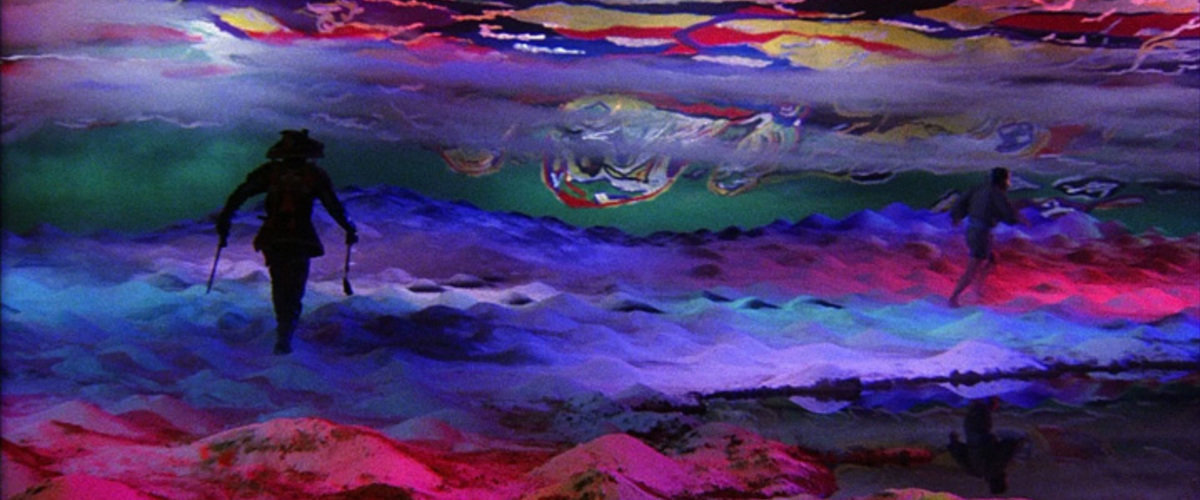
Well, here it is: the most visually stunning film of all time. This list could’ve pretty much been “Top 25 shots from 2001” (I held myself to 2). Kubrick’s supreme artistry has never been better, as he creates a masterpiece by stringing together awe-inspiring and astounding images. More on 2001 to come, but I’d like to take this opportunity to push my propaganda that HAL has one of the greatest deaths in movie history.

I mean COME ON.

5- A Clockwork Orange (1971, Stanley Kubrick)

Seriously, a fifth of the entries on this list are from Kubrick films, and one of the four from before the list. That’s insane. This Clockwork Orange shot is one of the best from his illustrious career. It frames Alex and his droogs in the background, their shadows occupying the foreground. It’s ominous, brilliant, and it does so much to communicate the themes of the film, which (hot take time) is Kubrick’s best. Don’t hold me to that, I could change my mind in favor of 2001 or even The Shining tomorrow.

4- Mulholland Dr. (2001, David Lynch)

I couldn’t tell you what Mulholland Dr is actually about, but it seems pretty clear that one of the themes is, in some extremely twisted way, being lost in the nightmare that is Los Angeles. This shot puts the figure at its center in at the very bottom, allowing her to occupy an extremely little amount of space. What fills the rest? Towering palm trees, telephone poles, and eerie light. Mulholland Dr is an astounding, dumbfounding, totally nonsensical, brilliant, perplexing film that makes no sense and compels an insane amount of thought (I saw it five months ago and still dedicate a lot of time to trying to crack it). This shot communicates both the alluring beauty and sinister atmosphere of the film, which is why I love it so much.

3- Ikiru (1952, Akira Kurosawa)

Ikiru, Kurosawa’s best film (fight me), culminates in heartbreaking fashion. The protagonist, resigned, spends his final night basking in the result of the only thing that he did in his life- his government work. He enjoys the park he helped make possible, and this act is the most fun he’s ever really had. It snows, and he gets one final moment of beauty in his life. If you needed confirmation as to how great this scene is, it gets homaged in Scott Pilgrim vs. The World. For real, watch this movie, even if you’ve never seen a foreign film in your life. It’s so great.

2- 2001: A Space Odyssey (1968, Stanley Kubrick)

I’ve said all I can about 2001 and about Kubrick. This is one of the film’s most legendary shots, and with good reason. Kubrick’s one point perspective returns, and the sci-fi brilliance of the film shines through in this iconic, fantastic shot. It probably would be number one on the lists of most people dedicated enough to make one. But it has to settle for number two here, taking a backseat to…

1- The Exorcist (1973, William Friedkin)

C H I L L S. The Exorcist spends most of its runtime building to a conclusion in which nothing good can happen. It reaches that conclusion with this- the arrival of Father Merrin. This is the last thing that happens before the exorcism, and everything about it works. The silhouette of the priest, the streetlight, the mist coming from the house. Perfection.

That’s it. Again, I take no responsibility for the rankings except number one, which I completely stand by. Feel free to disagree, and if you take one thing from this, let it be that Stanley Kubrick was a god.