
As readers of this blog likely know, Quentin Tarantino is one of my favorite directors of all time. I, to some extent, love every one of his films. So his latest offering, Once Upon a Time in Hollywood, was a big deal to me. The day leading up to it I could concentrate on nothing else (if we’re being honest, weeks is a more accurate term). My expectations were so high that anything short of a complete masterpiece would’ve left me disappointed.
Reader, I was not disappointed.
As for exactly where it ranks in Tarantino’s filmography, my updated ranking can be found here. But suffice it to say that it’s on the high end. It’s among my favorite Tarantino films, which places it with my absolute favorite films of all time. It dethrones Jordan Peele’s masterful Us as the best film of the year so far. It doesn’t merely create or recall a world, it is a world. A world so distinct and enjoyable that leaving it isn’t a lot of fun. So I’m not going to rush in exploring it.
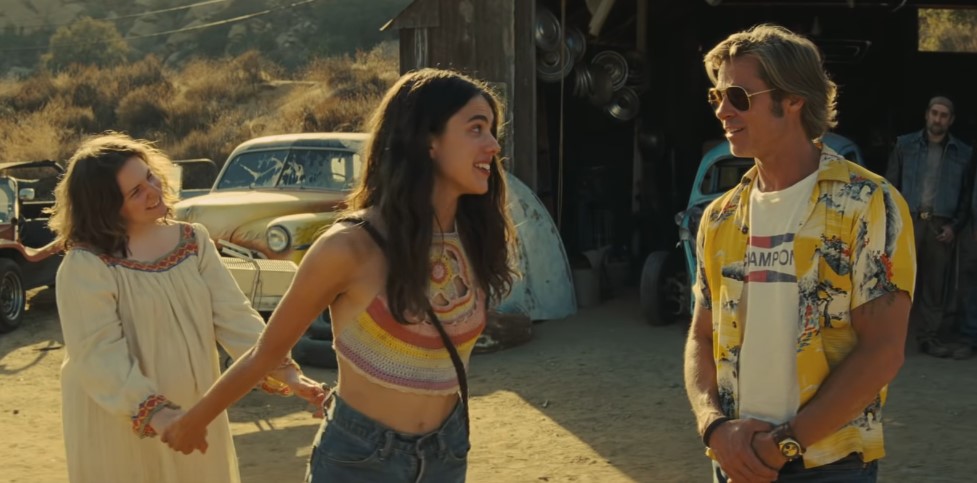
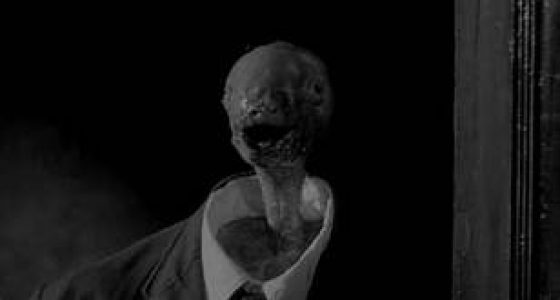
Hollywood is many things, but the most notable thing it is is Quentin Tarantino’s depiction of an age that died with Sharon Tate in the summer of 1969. It’s also Tarantino asking us a question that many will find in poor taste: what if it didn’t have to end? Tarantino’s obsession with revising history began with 2009’s Inglourious Basterds, and it persists a decade on. The subject this time is the Manson family murders. Tarantino teases these throughout the movie, penetrating the deliberate atmosphere he creates with occasional reminders that there is a darkness lurking beneath the surface here. Take the sole appearance of Damon Herriman’s Manson- he can’t be on screen for a minute. For the most part his face isn’t even shown. But the scene is terrifying. This is the pattern Tarantino employs when he wants to build tension in this film- he relies on the history surrounding the events. One of the other brilliantly tense scenes involving the family is far less brief and far less vague- the danger is clear and present. This scene, in which Brad Pitt’s Cliff Booth visits the Spahn Movie Ranch at which the Manson family is residing, is a classic Tarantino masterclass in tension akin to the opening scene of Inglourious Basterds or the bar scene in Inglourious Basterds or the restaurant scene in Inglourious Basterds or the adrenaline shot scene in Pulp Fiction (you thought I was gonna go with Basterds again, didn’t you?). This scene is the centerpiece of Pitt’s performance, one of the best of his career. The other scene in which Pitt shows off his skill is the finale, which I will address later. But Pitt’s performance is one of many in the film. Margot Robbie is brilliant as Sharon Tate, 10 year old Julia Butters astounds in her tragically limited role, and stars who only appear in one or two scenes (Al Pacino, Kurt Russell, the late Luke Perry, etc) make strong impressions. But the film’s defining performance belongs to Rick f***ing Dalton himself, Leonardo DiCaprio. It’s his performance in this film that dethrones The Wolf of Wall Street‘s Jordan Belfort as his career best (something I’m proud to say I called from the first trailer). His meltdown in his trailer after flubbing his lines is an all time moment that will live on as one of the film’s most famous. The all-around great acting is what solidifies the film as a masterpiece, and it makes the film fun to watch even as it doesn’t really seem to be doing anything.

That’s where I think people will be divided on this film. For the vast majority of its runtime, nothing really happens. It mainly consists of its characters hanging out and enjoying 1969, or at least Tarantino’s 1969. But even if you (wrongly) dislike this part, you’re bound to like what happens in the film’s brutal finale. The murders at the film’s center finally happen… kind of. The day before the Manson family members descend on Cielo drive is gone over in meticulous detail, with every action of Dalton and Booth and Tate and her housemates described by Kurt Russell’s narrator. Then it gets dark. Cliff smokes an acid-dipped cigarette and takes his pitbull for a walk, Rick gets even drunker than he already is and relaxes in his pool. But not before taking some time to scream at some hippies that he doesn’t want doing drugs in his neighborhood. The hippies, of course, are members of the Manson family, intent on committing the murders the film has been building up to (a TV in the final segment of the film even announces that what is happening next is “the moment you’ve all been waiting for” in an extremely self-aware and tongue-in-cheek moment). Cliff gets back just in time, resulting in a brilliant and quintessentially Tarantino sequence involving pitbull maulings, the consequences of the acid-dipped cigarette, and Chekhov’s flamethrower. It’s glorious. It’s fantastic to see the Manson family get what they deserve, and it’s exhilarating to watch Tarantino’s cinematic prowess make it happen.
Once Upon a Time in Hollywood is essential viewing for anyone who loves movies, the era of history in which it’s set, and especially those who love the work of Quentin Tarantino. If it is indeed his last film, it’s hard to think of a more fitting finish. It’s full of references to his previous work (Antonio Margheriti!) and it’s so distinctly Tarantino-esque that, maybe more than any other of his films, you’d be able to figure out who directed it in the opening five minutes. It’s been over a week since I saw it for the first time, and I still haven’t all the way processed how great it was. This film is perfect. If you haven’t seen it already, go do it. Something this good doesn’t happen often.

 The Movie Files
One thought on “Once Upon a Time in Hollywood, Reviewed in Super-Spoilery and Obsessively Fanatic Fashion”